Introduction
Chronic back disorders can last for a long time. They may affect work, sleep, movement, and daily tasks. Back problems can have many different causes. Proper medical evaluation can help find the cause. BestOrthoHospitals helps people explore orthopedic care and spine health information.Long-term back pain can feel hard to manage. But the right care can support daily function. Care plans often depend on each person’s needs. A spine or orthopedic specialist can help plan care.
What Are Chronic Back Disorders?
Chronic back disorders are long-term back problems. They may cause pain, stiffness, or limited movement. Symptoms may continue or return over time.
Short-term back pain often improves with time. Chronic back problems may need ongoing care. The cause can also differ from person to person.
Some problems affect muscles and joints. Others affect discs, nerves, or the spine. So, professional evaluation is important before choosing treatment.
Common Types of Chronic Back Disorders
Several conditions can cause long-term back problems. A herniated disc happens when a disc bulges or tears. A disc is a soft cushion between spine bones.
Degenerative disc disease means discs may change over time. Spinal stenosis means the space around nerves becomes narrow. Sciatica can cause pain along a nerve path.
Spondylosis means age-related changes in the spine. Spinal arthritis affects joints in the spine. Long-term muscle or joint problems can also cause pain.
These terms do not tell what condition someone has. A professional assessment is needed for proper diagnosis.
Common Symptoms of Chronic Back Problems
Chronic back problems can cause ongoing pain. Some people also have stiffness or reduced movement. Pain may spread toward the legs in some cases.
Numbness or tingling can happen when nerves are affected. Muscle weakness may also occur. Daily tasks can become harder as symptoms continue.
Symptoms differ from person to person. Their severity can also change over time. New or changing symptoms should be discussed with a healthcare professional.
Why Can Back Problems Become Chronic?
Back problems can have many causes. Previous injuries may affect the back for a long time. Disc and joint changes may also cause lasting symptoms.
Long periods of sitting can affect comfort. Repeated physical strain may also play a role. Poor posture can affect back comfort, but it is not the cause of every disorder.
Reduced activity may affect strength and movement. Some medical conditions can also affect the back. Finding the exact cause needs professional evaluation.
How Is Chronic Back Pain Evaluated?
A healthcare professional usually starts with questions. They may ask about pain, movement, and daily activities. They may also review past injuries and health problems.
A physical exam may check movement and strength. A nerve check may also be part of the exam. These steps can help guide further care.
Imaging may sometimes be needed. Examples include X-rays, MRI scans, and CT scans. Doctors choose tests based on symptoms and medical history.
When Are Imaging Tests Used?
Imaging is not needed for every back problem. Doctors may consider it when symptoms continue or change. It may also help when a structural problem is suspected.
An X-ray can show certain bone changes. MRI scans can show soft tissues and other structures. CT scans can create detailed body images.
A doctor decides which test may be useful. Test findings should be reviewed by a trained professional. People should not try to read their own scans.
Managing Chronic Back Disorders Without Surgery
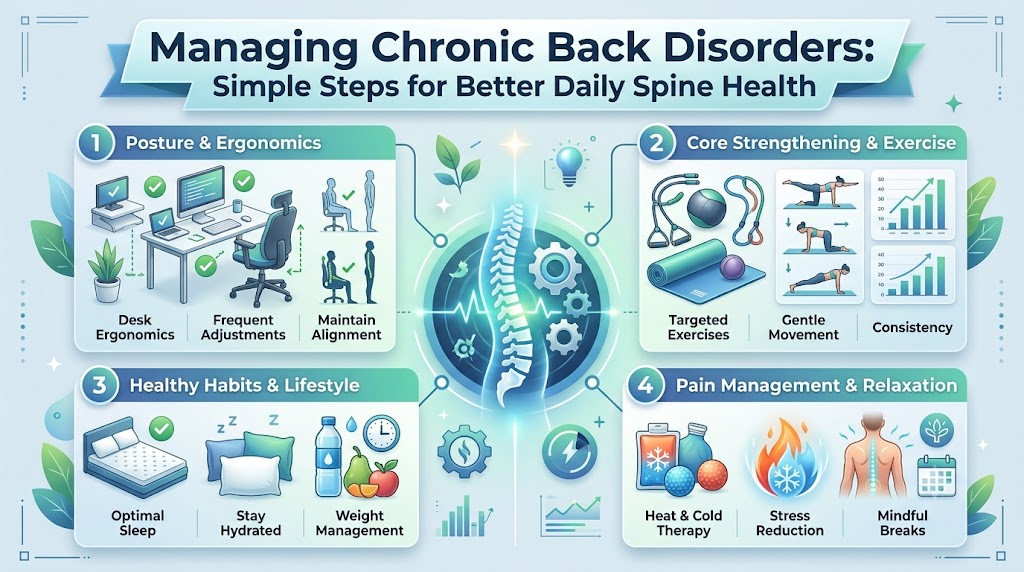
Some chronic spine disorders can be managed without surgery. Care may include physical therapy and activity changes. Posture and work habits may also need review.
Ergonomic changes can support better daily movement. Ergonomics means setting up work spaces for safer use. Healthy movement may also support strength and function.
Pain management may be part of care. A professional can help create a safe plan. Treatment should match the person’s health and symptoms.
Physical Therapy and Back Health
Physical therapy uses movement to support better function. A physical therapist may work on strength and flexibility. They may also focus on safe movement.
Therapy plans differ between patients. Some people may need help with daily activities. Others may need support after an injury.
Physical therapy does not guarantee a cure. Progress can also vary between people. A professional can adjust care as symptoms change.
Posture and Ergonomics
Daily habits can affect back comfort. A good desk setup may reduce unnecessary strain. The screen should be placed at a comfortable height.
Sitting for long periods may also feel uncomfortable. Regular work breaks can support movement. Standing habits and safe lifting methods also matter.
Posture is only one part of back health. It does not explain every chronic back disorder. A healthcare professional can help identify other factors.
Exercise and Chronic Back Problems
Movement can be part of chronic back pain management. It may support strength, flexibility, and daily function. But the right activity depends on the person.
Some people may need guidance before increasing activity. This is important when symptoms are severe or complex. A physical therapist can help choose safe movements.
There is no single exercise plan for everyone. People should follow professional advice for their condition. Exercise should not be used as a guaranteed cure.
Healthy Weight and Spine Health
Body weight can affect stress on the spine. Healthy weight management may support overall joint health. However, weight should always be discussed with care and respect.
People have different bodies and health needs. Weight alone does not explain chronic back pain. Many other factors can affect spine health.
A healthcare professional can offer suitable advice when needed. Healthy food and regular movement can support overall health. Avoid strict plans without proper guidance.
Sleep and Chronic Back Problems
Chronic back problems can affect sleep quality. Pain may make it harder to rest well. Poor sleep can also make daily pain feel harder.
A comfortable sleep setup may support better rest. A calm bedtime routine can also help. Regular sleep habits may support overall health.
Persistent sleep problems should not be ignored. Talk with a healthcare professional if pain keeps disturbing sleep. They can review the possible cause.
Stress and Chronic Back Pain
Stress can affect how people experience pain. It does not mean stress causes every back disorder. However, stress may make coping with pain harder.
Simple habits can support better daily balance. Relaxation, good sleep, and regular routines may help. Support from family or friends can also matter.
Professional support may help when stress feels difficult. Chronic pain management often includes both physical and emotional needs. A calm routine can support long-term care.
Medicines and Chronic Back Disorders
Doctors may use medicines in some back-pain plans. The choice depends on health history and symptoms. Different medicines also have different risks.
Medicine decisions should come from a healthcare professional. Do not start or stop medicines without medical advice. Do not change doses on your own.
Medicines are only one part of back disorder care. Physical therapy and daily habits may also matter. The full plan should match individual needs.
When Surgery May Be Discussed
Surgery is not needed for every chronic back disorder. Doctors may discuss it when certain structural problems exist. Severe symptoms or nerve problems may also affect the decision.
Other clinical factors can also matter. The decision needs careful medical evaluation. Different treatments may be considered before surgery.
There is no single best treatment for everyone. Patients can ask about benefits, risks, and other options. A spine specialist can explain the available choices.
Rehabilitation and Long-Term Care
Back pain rehabilitation can support long-term function. It may focus on movement, strength, and flexibility. Daily activity and follow-up may also be part of care.
Recovery and management plans can vary greatly. Some people may need longer support than others. Regular reviews can help adjust care when needed.
Long-term care is not only about pain. It can also focus on sleep and daily function. The goal is to support safe and useful movement.
How to Track Chronic Back Symptoms
Simple symptom notes can help during medical visits. Write down when pain starts or changes. Also note activities that seem to affect symptoms.
You may record sleep problems and work limits. Numbness or weakness should also be noted. These notes can help explain changes over time.
Symptom tracking should not replace medical care. It also should not become self-diagnosis. Use the notes to support better discussions with professionals.
Warning Signs That Need Medical Attention
Some symptoms need urgent medical assessment. New or worsening weakness is an important warning sign. Significant numbness also needs medical attention.
Difficulty walking can need prompt evaluation. Severe pain after a major injury is also concerning. Fever with severe back pain needs medical review.
Loss of bladder or bowel control is an emergency warning sign. Numbness around the groin area also needs urgent care. Seek local emergency medical care when these symptoms appear.
Chronic Back Disorders and Daily Life
Chronic back problems can affect many parts of life. Work and school may become harder. Travel and household tasks may also need planning.
Sleep and exercise can also be affected. Social activities may need changes during painful periods. Planning ahead can make daily tasks easier.
People may need different levels of support. A healthcare team can discuss safe daily activities. Avoid making major restrictions without professional advice.
Choosing an Orthopedic or Spine Hospital
Choosing a hospital can take some research. Look for access to spine and orthopedic specialists. Diagnostic services may also be important.
Physical therapy and rehabilitation can support long-term care. Follow-up services may also help. Good patient communication is another useful factor.
Some hospitals offer multidisciplinary care. This means different healthcare professionals work together. BestOrthoHospitals.com can help readers explore these types of orthopedic resources.
Questions to Ask a Spine Specialist
Good questions can make a medical visit more useful. Ask what may be causing the symptoms. Also ask what evaluation may be needed.
Patients can ask about non-surgical care options. Questions about physical therapy can also help. Ask when imaging may be useful.
It can also help to ask about follow-up care. Ask which warning signs need quick medical attention. Clear answers can make long-term back disorder care easier.
Chronic Back Disorder Care vs Short-Term Back Pain
Long-term conditions often need ongoing care. Short-term back problems may improve sooner. The care focus can therefore be different.
| Area | Short-Term Back Problem | Chronic Back Disorder |
|---|---|---|
| Duration | Usually shorter | Continues or returns over time |
| Main focus | Recovery and symptom care | Long-term management |
| Follow-up | May not be needed | May be more important |
| Rehabilitation | Depends on the problem | May support ongoing care |
These are general differences. Individual back problems can follow different patterns.
How BestOrthoHospitals.com Can Help
BestOrthoHospitals.com helps readers explore orthopedic hospitals and spine care resources. The platform also provides information about orthopedic services and specialists.
Hospital services can differ from one location to another. Readers should confirm available services with each hospital. BestOrthoHospitals.com does not replace professional medical advice.
Practical Example
Imagine someone has recurring back pain. The pain affects work and sleep. They also notice changes during certain activities.
Keeping simple symptom notes can help. They can record pain patterns and daily limits. They can then discuss these changes with a healthcare professional.
This example does not identify the cause. Many conditions can cause similar symptoms. Proper evaluation can help guide the next steps.
Clear Answers for Better Back Care
Good back health information should be simple and clear. Readers need direct answers to common questions. They also need safe advice without treatment promises.
Clear content can support SEO and answer-based search. It can also help local and AI search systems. Accurate information supports trust and better health decisions.
BestOrthoHospitals.com focuses on useful orthopedic and spine information. Readers can use such resources to prepare for professional discussions. Medical decisions should still come from qualified healthcare professionals.
Frequently Asked Questions About Chronic Back Disorders
1. What are chronic back disorders?
Chronic back disorders are long-term problems affecting the back. They may cause pain, stiffness, or movement changes.
2. What can cause long-term back pain?
Causes can include injuries, disc changes, joint problems, and nerve issues. A professional evaluation can help find the cause.
3. What are common symptoms of chronic back disorders?
Common symptoms include pain, stiffness, weakness, numbness, and tingling. Some people may also have limited movement.
4. Can physical therapy help with chronic back problems?
Physical therapy may support movement, strength, and function. The plan should match the person’s condition.
5. Can poor posture affect back health?
Posture can affect back comfort for some people. However, posture does not explain every chronic back disorder.
6. When should someone see a spine specialist?
A spine specialist may help when symptoms continue or change. New weakness or numbness also needs medical attention.
7. Are imaging tests always needed for chronic back pain?
No. Imaging is not needed for every back problem. A doctor decides when testing may be useful.
8. Is surgery needed for every chronic back disorder?
No. Many back problems may be managed without surgery. Surgery is considered only in certain clinical situations.
9. What warning signs need urgent medical attention?
Severe injury, new weakness, major numbness, and walking problems need attention. Loss of bladder or bowel control needs urgent care.
10. How can chronic back disorders be managed long term?
Care may include professional treatment, movement, rehabilitation, and follow-up. The plan should match each person’s needs.
Final Thoughts
Chronic back disorders can have many different causes. Symptoms can also change from person to person. Proper evaluation helps guide safe and suitable care.
Long-term management may include professional care and rehabilitation. Movement, healthy habits, and symptom tracking may also support daily function. Regular follow-up can help monitor changes.
Back pain should not always be managed alone. Seek medical help when symptoms change or become severe. BestOrthoHospitals.com can help readers explore orthopedic and spine care resources.
With proper support, people can better understand their back health. Care should always focus on safety, function, and individual needs.