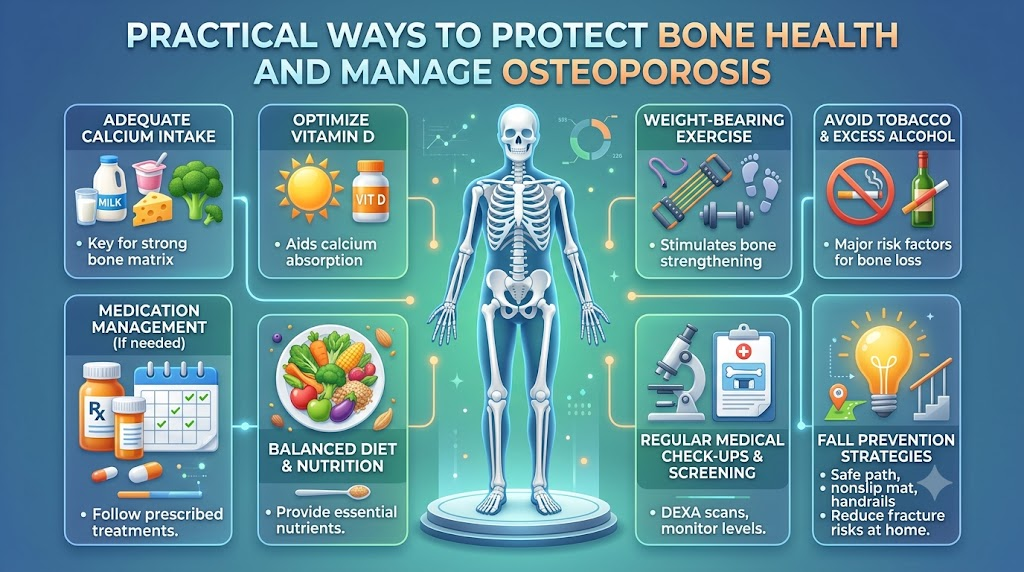
Osteoporosis makes bones thinner and weaker. Weak bones can break more easily after a fall or small injury.The good news is that osteoporosis can often be managed. Care may include healthy food, safe exercise, fall prevention, and medical treatment.Early attention can help lower the risk of future fractures. You can also explore orthopedic hospitals, doctors, and bone care information through BestOrthoHospitals.This article explains simple ways to manage osteoporosis. It also covers tests, medicines, exercise, and daily safety.
What Is Osteoporosis?
Osteoporosis is a condition that makes bones weak. Bone is living tissue that changes throughout life.Healthy bones are strong and able to support the body. With osteoporosis, bones lose strength and become easier to break.Osteoporosis may not cause clear symptoms at first. Many people learn about it after a fracture or bone test.Osteoporosis is not the same as normal joint pain. It mainly affects bone strength.
What Causes Osteoporosis?
Many factors can raise the risk of osteoporosis.Some factors cannot be changed. These include age, family history, and some hormonal changes.Other factors may be changed. These include smoking, low activity, poor nutrition, and heavy alcohol use.Certain medicines and health conditions can also affect bone strength.
| Risk Factor | Why It Matters | What You Can Do |
|---|---|---|
| Aging | Bone loss may increase with age | Discuss bone health with your doctor |
| Low activity | Bones and muscles may become weaker | Stay active safely |
| Low calcium intake | Calcium supports bone structure | Eat calcium-rich foods |
| Low vitamin D | It helps the body use calcium | Discuss needs with a doctor |
| Smoking | It can harm bone health | Avoid tobacco |
| Heavy alcohol use | It can raise health risks | Limit alcohol |
| Family history | Risk may run in families | Discuss your risk |
Having one risk factor does not mean you have osteoporosis.
What Are the Signs of Osteoporosis?
Osteoporosis often has no clear early signs. A person may feel well even when bone strength is low.A fracture after a minor fall can be a warning sign. Loss of height may also need medical review.Back pain may occur with some spine fractures. Changes in posture can also develop.These signs can have many causes. A healthcare professional should assess them.
How Is Osteoporosis Diagnosed?
- Doctors use several types of information to assess osteoporosis.
- They may ask about your health history and family history. They may also ask about past fractures and medicines.
- A bone mineral density test may be recommended. One common test is called a DEXA or DXA scan.
- A DEXA scan is a low-dose scan that measures bone density. It can help doctors assess bone strength.
- Blood tests may also be used in some cases. Other imaging tests may be needed when a fracture or another problem is suspected.
- Doctors look at the complete picture. A single test result should not be used for self-diagnosis.
How to Manage Osteoporosis
Osteoporosis management usually has more than one part.The plan may include food, exercise, fall prevention, lifestyle changes, and medical treatment.The right plan depends on your fracture risk and overall health. Your doctor can help create a plan that fits your needs.
Eat for Better Bone Health
Good nutrition supports healthy bones and muscles.Try to eat balanced meals with calcium-rich foods. Dairy foods, some leafy greens, and other calcium-rich foods can help.
Protein also supports muscle health. Fruits, vegetables, and whole foods can support overall health.Food needs can vary from person to person. A healthcare professional can help if your diet is limited.
Calcium and Vitamin D
Calcium is an important part of bone structure. Vitamin D helps the body absorb and use calcium.Some people get enough from food and normal daily habits. Others may need extra support based on their health and diet.Do not take large amounts of supplements on your own. Too much of some supplements can cause health problems.Ask your healthcare professional if you need supplements or testing.
Exercise Safely
- Regular physical activity can support bones, muscles, balance, and movement.
- Weight-bearing activity can help maintain bone strength. Strength exercises can also support muscles and daily movement.
- Balance exercises may help lower fall risk. Walking may be suitable for many people.
- Exercise needs to match your health and fracture risk. People with severe osteoporosis or past fractures may need professional advice before starting new exercises.
- Do not start very hard or high-impact exercise without guidance.
Prevent Falls at Home
Fall prevention is very important when bones are weak.Keep floors clear of loose objects. Use good lighting in rooms, halls, and stairs.Use handrails when needed. Wear shoes that fit well and provide safe support.Have your vision checked when needed. Ask your doctor to review medicines that may cause dizziness.Balance training can also help. Some people may benefit from a walking aid when advised by a professional.Preventing a fall can help reduce the chance of a serious fracture.
Medicines for Osteoporosis
- Some people need prescription treatment for osteoporosis.
- Different medicines work in different ways. Some slow bone loss, while others can help build bone in selected patients.
- The right medicine depends on many factors. These include fracture risk, bone density, age, health conditions, and past treatment.
- Your doctor may also consider other medicines you take. Do not start, stop, or change osteoporosis treatment without medical advice.
- Treatment is only one part of bone care. Food, safe activity, and fall prevention may also be important.
Should You Stop Osteoporosis Medicine?
Do not stop prescribed osteoporosis medicine on your own.Some treatments need regular follow-up. Your doctor may need to review your response, side effects, or fracture risk.A treatment plan may change over time. Any change should be discussed with your healthcare professional.Regular follow-up helps keep your care safe and suitable.
Lifestyle Changes for Better Bone Health
Daily habits can support bone and muscle health.Avoid tobacco because it can harm bone health. Limit excessive alcohol use.Stay active within safe limits. Eat balanced meals and maintain a healthy body weight.Good sleep also supports general health. Reducing fall risks at home is another useful step.Lifestyle changes can support care. They do not replace medical treatment when treatment is needed.
Osteoporosis in Women and Men
Osteoporosis can affect both women and men.Bone loss may increase after menopause in women. Men can also lose bone strength as they age.Both groups can have similar risk factors. These include low activity, poor nutrition, smoking, and certain medicines.Men should not ignore fracture risk. Women should also not assume every bone problem is caused by menopause.Individual assessment is important for everyone.
Osteoporosis in Older Adults
Bone health can become especially important with age.Older adults may face a higher risk of falls and fractures. Muscle weakness and balance problems can add to this risk.Safe movement can help support independence. Strength and balance work may also support daily activities.Nutrition and fall prevention are important too. Rehabilitation may be useful after a fracture.Different healthcare professionals may work together. This can include orthopedic doctors, primary-care doctors, therapists, and other specialists.
Osteoporosis After a Fracture
- A fracture after a minor fall may need further evaluation.
- Fragility fractures can affect the hip, wrist, spine, or other bones. Not every fracture is caused by osteoporosis.
- Doctors may suggest bone density testing or other checks. They may also review medicines and fracture risk.
- Rehabilitation can help after some fractures. Future fracture prevention is also an important part of care.
When to See an Orthopedic Specialist
Professional evaluation can help in many situations.Consider medical advice after a fracture from a minor fall. Repeated fractures also need attention.You may also need care for significant bone loss or ongoing back pain after an injury.An orthopedic specialist may help with fracture care and movement problems. Other specialists may be involved based on your health needs.Care may include primary care, endocrinology, rheumatology, geriatrics, or physical therapy.
Role of Orthopedic Hospitals
Orthopedic hospitals can provide several services for people with bone problems.When choosing care, look for qualified orthopedic specialists. Access to imaging and bone testing can also be useful.Fracture treatment and rehabilitation may be important. Physical therapy can support recovery and safe movement.Follow-up care is also valuable. Some patients may need support from more than one specialist.BestOrthoHospitals.com can help people research orthopedic hospitals and doctors. It can also support searches for bone care, fracture services, specialist profiles, and appointment-related information.
How to Choose the Right Orthopedic Care
Think about your personal care needs when choosing a hospital.Look for relevant specialist services and suitable diagnostic facilities. Rehabilitation and follow-up support may also matter.Consider hospital location and appointment availability. Clear communication can make care easier.You can also ask about insurance and expected costs. Choose care based on your needs rather than simple rankings.
Cost and Insurance
Osteoporosis care can involve different costs.These may include doctor visits, bone density scans, blood tests, medicines, physical therapy, and fracture care.Costs vary between people and healthcare providers. Insurance coverage can also differ.Check your insurance plan before planned care. Ask the healthcare provider about expected costs when needed.
Osteoporosis Management Basics
| Management Area | Why It Matters | Simple Example |
|---|---|---|
| Nutrition | Supports bones and muscles | Eat balanced meals |
| Exercise | Supports strength and balance | Walk or exercise safely |
| Fall prevention | Helps reduce fracture risk | Clear loose items at home |
| Medical treatment | May lower fracture risk | Follow your prescribed plan |
| Follow-up | Tracks your bone health | Attend planned visits |
Common Mistakes to Avoid
Ignoring a Minor Fracture
A small fall can sometimes cause a serious fracture. Tell your doctor about unexpected fractures.
Assuming Osteoporosis Always Causes Pain
Osteoporosis may have no clear symptoms. Do not wait for pain before discussing bone health.
Taking Supplements Without Advice
More is not always better. Ask whether supplements are suitable for you.
Avoiding All Exercise
Safe movement can support muscles and balance. Ask for guidance if you have a high fracture risk.
Starting Hard Exercise Too Quickly
High-impact activity may not suit everyone. Get advice before starting a demanding exercise plan.
Stopping Treatment Without Advice
Never stop prescribed treatment on your own. Discuss concerns with your healthcare professional.
Ignoring Fall Risks
Loose rugs, poor lighting, and clutter can increase fall risk. Make your home safer.
Missing Follow-Up Visits
Bone care may need regular review. Keep planned appointments when possible.
A Simple Osteoporosis Management Plan
- Step 1: Understand your fracture risk.
- Step 2: Discuss bone density testing when needed.
- Step 3: Review your diet and nutrition.
- Step 4: Stay active in a safe way.
- Step 5: Improve balance and muscle strength.
- Step 6: Make your home safer.
- Step 7: Review medicines with your doctor.
- Step 8: Follow prescribed treatment.
- Step 9: Attend follow-up visits.
- Step 10: Ask questions about long-term bone health.
- This plan is not a replacement for medical care. Your needs may be different from another person’s needs.
Frequently Asked Questions
1. Can osteoporosis be managed without treatment?
Some people may manage risk with lifestyle changes. Others need medical treatment based on fracture risk.
2. What foods help support strong bones?
Calcium-rich foods, protein, fruits, and vegetables can support bone health.
3. Is walking good for osteoporosis?
Walking may help many people stay active. Your activity should match your health and fracture risk.
4. Can osteoporosis be cured completely?
Osteoporosis cannot always be reversed. Treatment aims to support bone health and reduce fracture risk.
5. Do men get osteoporosis?
Yes. Osteoporosis can affect men as well as women.
6. Is a DEXA scan painful?
A DEXA scan is a low-dose bone density scan. It is generally a simple test.
7. Can calcium alone manage osteoporosis?
Calcium supports bone health but may not be enough for everyone. Some people need other treatment.
8. Should I exercise if I have osteoporosis?
Safe exercise can be useful. Ask your healthcare professional about activities that fit your fracture risk.
9. What should I do after a fracture?
Seek medical advice and ask whether your bone health needs further evaluation.
10. When should I see an orthopedic specialist?
Consider specialist care after unexpected fractures, repeated fractures, or complex bone and movement problems.
Final Thoughts
Osteoporosis management is about protecting bone health and reducing fracture risk.Healthy food, safe exercise, good balance, and fall prevention can all help. Some people also need prescription treatment and regular medical follow-up.Your plan should match your bone health, fracture risk, age, medicines, and other health conditions.Do not stop treatment or start high-dose supplements without medical advice. Professional guidance can help you choose safe steps.BestOrthoHospitals.com can also help you research orthopedic hospitals, specialists, fracture care, rehabilitation, and bone-health services.