Introduction
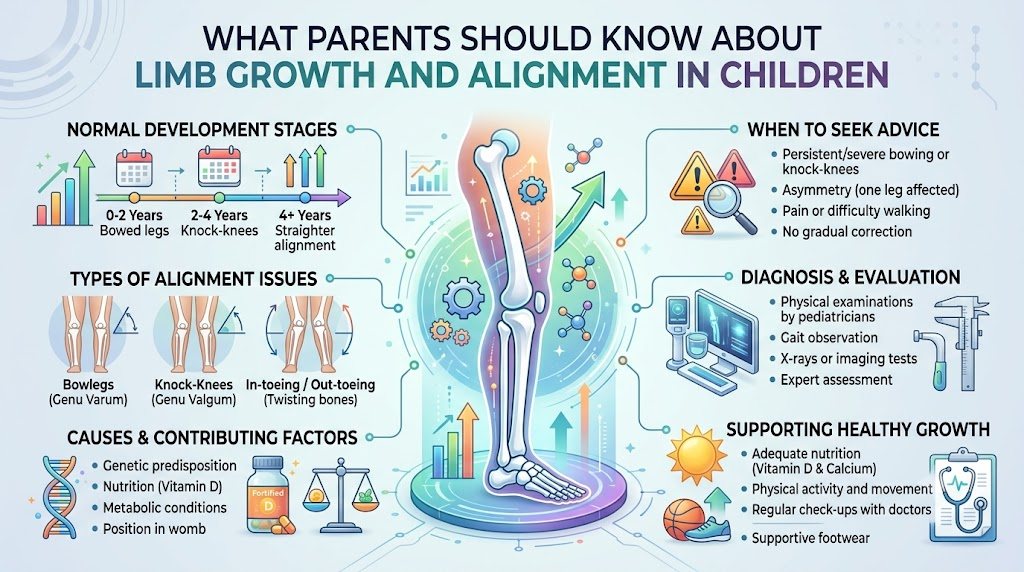
Children’s bones and joints change as they grow. Their legs, arms, feet, and walking patterns can also change. Some alignment differences are part of normal growth. Others may need a medical check.Pediatric limb deformities can affect limb shape, length, position, or movement. They may be present at birth or develop during childhood. A child’s age, growth stage, symptoms, and daily function all matter when doctors assess these changes.Parents may notice bow legs, knock knees, in-toeing, out-toeing, or an uneven walk. These signs do not always mean there is a serious problem. Still, lasting or unusual changes deserve professional attention.BestOrthoHospitals can help families research pediatric orthopedic care and learn about orthopedic hospitals and specialists.
What Are Pediatric Limb Deformities?
Pediatric limb deformities are changes in the normal shape, length, or alignment of a child’s limb. A limb includes the arms, legs, hands, and feet.A limb deformity may affect shape or position. It may also affect movement or daily function. Some differences are present at birth. Others can appear during growth.Common concerns include limb length difference, unusual leg alignment, foot deformities, and changes in walking. Not every unusual shape means a deformity is present.
Why Children’s Limb Development Is Different
Growing bones need special attention. Children have growth plates near the ends of many bones. These areas help bones grow longer.Bones can also slowly change shape during growth. This process is called remodeling. Muscles and joints develop at the same time.Walking patterns can change as children grow. So, a movement that looks unusual at one stage may change later. Doctors consider growth when checking children’s limb alignment.
Common Types of Pediatric Limb Deformities
There are many types of childhood limb deformities. Some affect the legs, while others affect the arms or feet.Common examples include bow legs, knock knees, in-toeing, and out-toeing. Limb length differences can also occur.Some children have angular deformities. This means a bone grows at an unusual angle. Rotational deformities can change how a limb turns.Congenital limb differences are present at birth. Clubfoot is one example of a foot condition that may need pediatric orthopedic care.
Bow Legs
Bow legs make the legs curve outward. The knees may appear farther apart when the child stands.Some bowing can occur during normal early growth. However, marked asymmetry may need evaluation. Parents may also seek advice when the appearance worsens or continues to cause concern.Pain, walking difficulty, or other functional problems can also be reasons for assessment. A doctor can look at the child’s growth and movement before deciding what the finding means.
Knock Knees
Knock knees make the knees angle inward. The knees may come closer together when standing.Knee alignment can change during childhood. Some changes may be part of normal development.A doctor may assess alignment that looks unusual or uneven. Pain and walking problems can also be important signs.Parents should not diagnose knock knees from a photo. A proper examination gives a clearer picture.
In-Toeing and Out-Toeing
In-toeing means the feet or legs turn inward while walking. Out-toeing means they turn outward.These patterns can have different causes. The foot, shin bone, or thigh bone can play a role.Some walking patterns change as children grow. Others may continue and affect movement.A pediatric orthopedic specialist can assess the child’s walking pattern. The goal is to understand the whole limb, not only the foot position.
Limb Length Differences
A limb length difference means one limb is shorter or longer than the other. It can affect an arm or leg.Some differences are present from birth. Others may follow an injury, growth plate problem, infection, or another medical condition.Small differences may cause few or no problems. Larger or changing differences may need specialist evaluation.Doctors may consider limb length, growth, movement, and function together. This helps them understand the child’s overall limb development.
Congenital Limb Differences
Some limb differences are present at birth. They can affect limb shape, length, joints, hands, or feet.The effects can vary from child to child. Some differences may affect walking or daily activities. Others may have little effect on function.Children with congenital limb differences may benefit from pediatric orthopedic care. Their needs can change as they grow.
Clubfoot and Other Foot Deformities
Clubfoot is a structural foot difference that is present at birth. The foot has an unusual position and shape.Other foot deformities can also affect children. These may involve the toes, arch, heel, or overall foot position.Some congenital foot conditions need early pediatric orthopedic assessment. Early evaluation helps doctors understand the child’s foot structure and growth.Parents should avoid choosing treatment based only on appearance. A specialist can provide a proper orthopedic evaluation.
What Causes Pediatric Limb Deformities?
Pediatric limb problems can have many causes. Normal growth variation is one possible reason.Other causes include congenital differences and genetic conditions. Growth plate problems can also affect bone growth.Previous fractures, infections, and neuromuscular conditions may play a role. Metabolic and developmental conditions can also affect skeletal growth.The cause cannot be confirmed from symptoms alone. Doctors may need the child’s history and physical examination.
Signs Parents May Notice
Parents may notice changes during walking or play. These changes can include limping or repeated tripping.Other signs include visible limb curvature, uneven leg length, or an unusual foot position. Some children may have difficulty running.Pain, swelling, reduced movement, or repeated injuries can also be important. One limb may look different from the other.These signs do not automatically mean a deformity is present. A professional assessment can help explain the concern.
When Is Limb Alignment Part of Normal Growth?
Children’s limb alignment can change during development. Early bowing may change as the legs grow.Knee alignment can also change during childhood. Walking patterns may change at the same time.Doctors compare a child’s findings with expected growth patterns. They also consider symptoms and function.So, parents should avoid comparing one child with another. Each child’s growth pattern can be different.
How Doctors Evaluate Pediatric Limb Deformities
An orthopedic evaluation usually starts with questions. Doctors may ask about birth history, development, family history, injuries, and symptoms.Next, they may examine the child’s limbs and joints. They may also watch the child walk or move.Doctors can check limb symmetry and joint movement. They may also consider growth and skeletal development.Imaging may be used when needed. The type of imaging depends on the clinical question.
Role of X-Rays and Other Imaging
Imaging can help doctors understand bone shape and alignment. X-rays are often used for certain bone concerns.Ultrasound may help in selected pediatric cases. MRI can provide information about some soft tissues and bones.CT may be used for selected complex concerns. Doctors choose imaging based on the child’s needs.Parents should not try to interpret scans themselves. Images need to be reviewed in the proper medical setting.
Simple Comparison of Common Limb Concerns
| Limb Concern | Simple Meaning | What Parents May Notice |
|---|---|---|
| Bow Legs | Legs curve outward | Wider space between knees |
| Knock Knees | Knees angle inward | Knees touch while ankles stay apart |
| In-Toeing | Feet turn inward | Toes point toward each other |
| Out-Toeing | Feet turn outward | Feet point away from each other |
| Limb Length Difference | One limb differs in length | Uneven walking or posture |
When Observation May Be Used
Not every limb alignment difference needs immediate treatment. Some changes may improve as a child grows.Doctors may choose observation in selected cases. This can include regular checkups and growth monitoring.They may also watch walking patterns and repeat physical examinations. Imaging may be used when needed.Observation does not mean ignoring the problem. It means watching the child’s development with professional guidance.
Non-Surgical Care
Some children may receive non-surgical care. The approach depends on the condition and the child’s needs.Possible options can include observation, physical therapy, or activity guidance. Braces may also have a role in selected conditions.Treatment of an underlying health problem may sometimes be important. Not every child needs these options.Parents should follow advice from the child’s care team. They should avoid unproven treatments found online.
Surgical Treatment at a High Level
Some significant or progressive deformities may need surgery. Surgery is not needed for every child with a limb difference.Possible procedures may include deformity correction or guided growth. Other procedures can include osteotomy or reconstruction.Limb length procedures may also be considered in selected cases. The choice depends on many factors.Parents should discuss these options with a pediatric orthopedic surgeon. A specialist can explain the reasons, benefits, and limits of each option.
Why Growth Matters in Treatment Decisions
Growth is a major part of pediatric orthopedic care. Children’s bones continue to change as they develop.Growth plates affect bone length and shape. Remaining growth can also affect limb alignment.Doctors may consider growth when planning care. They may also watch how alignment changes over time.Treatment timing can depend on growth stage and the child’s condition. There is no single approach for every child.
Recovery and Follow-Up
Follow-up needs can vary by condition and treatment. Some children may need repeat examinations during growth.Doctors may check movement, alignment, and overall development. Imaging may also be ordered when needed.Rehabilitation can be part of care for some children. Its use depends on the child’s individual situation.Parents should follow the care plan given by the medical team. Fixed recovery timelines do not apply to every child.
How Parents Can Support a Child
Parents can help by keeping medical appointments. They can also share new changes with the care team.Keeping medical records can make follow-up easier. Parents should also ask questions when something is unclear.Emotional support matters too. Children may feel worried about differences in their limbs or movement.Families should avoid unproven home treatments. Professional pediatric orthopedic advice is safer and more reliable.
When to Seek Medical Attention
Parents may consider professional assessment for persistent limb pain. A worsening visible deformity also deserves attention.A new limp or repeated falls may need evaluation. Difficulty walking can also be an important concern.Other signs include reduced joint movement and significant asymmetry. Repeated injuries may also need a medical review.A sudden change after an injury should not be ignored. A healthcare professional can assess the child properly.
Emergency Warning Signs
Some symptoms need urgent medical assessment. These include a severe injury with an obvious deformity.A child who cannot use a limb after a major injury needs urgent care. Severe pain with swelling can also be serious.A limb that becomes cold, pale, blue, or numb needs urgent assessment. Major bleeding is another emergency sign.Severe pain with fever can also require urgent care. Sudden complete loss of movement needs prompt medical attention.
How to Choose Pediatric Orthopedic Care
Families can review several factors when choosing care. Pediatric orthopedic expertise is an important starting point.Parents can ask about specialist qualifications and experience. They can also ask about care for limb deformities.Pediatric imaging and rehabilitation support may be useful. Multidisciplinary care can help when several needs are involved.Child-friendly services can make visits easier. Good communication and follow-up systems also matter.Families can use BestOrthoHospitals.com to research orthopedic hospitals and pediatric orthopedic care options. The goal should be informed research, not choosing a hospital based only on a ranking.
How BestOrthoHospitals.com Can Help
BestOrthoHospitals.com provides information for families researching orthopedic care. Parents can use the platform to learn about hospitals, specialists, and pediatric orthopedic services.The website can support early research before a medical consultation. Families should still discuss a child’s specific concerns with a qualified healthcare professional.Hospital information should be reviewed carefully. Parents can compare services, specialist expertise, and available support before making healthcare decisions.
Practical Example
Hypothetical example: A parent notices that a child’s legs look uneven while walking. There is no clear injury, but the change continues.
Instead of choosing treatment online, the parent speaks with a pediatric orthopedic specialist. The specialist reviews the child’s growth, movement, and medical history.The doctor then decides whether monitoring or further evaluation is appropriate. This example shows why professional assessment matters.
Frequently Asked Questions
1. What are pediatric limb deformities?
Pediatric limb deformities are differences in limb shape, length, alignment, rotation, or movement. They may be present at birth or develop during growth.
2. What causes limb deformities in children?
Causes can include normal growth variation, congenital differences, injuries, growth plate problems, genetic conditions, infections, and other health conditions.
3. Are bow legs normal in young children?
Some bowing can occur during normal development. A doctor should assess marked, uneven, worsening, painful, or function-limiting changes.
4. What are knock knees in children?
Knock knees describe knees that angle inward. Knee alignment can change during childhood growth.
5. What do in-toeing and out-toeing mean?
In-toeing means the feet or legs turn inward while walking. Out-toeing means they turn outward.
6. What is a limb length difference?
It means one arm or leg differs in length from the other. The difference can have several possible causes.
7. When should a child see a pediatric orthopedic specialist?
Persistent pain, worsening changes, limping, repeated falls, walking difficulty, or major asymmetry can be reasons to seek professional assessment.
8. How are pediatric limb deformities evaluated?
Doctors may review medical history, growth, movement, walking patterns, and limb symmetry. Imaging may be used when needed.
9. Do all pediatric limb deformities need surgery?
No. Some children may only need observation or other non-surgical care. Treatment depends on the condition and growth pattern.
10. Can children’s limb alignment change as they grow?
Yes. Limb alignment can change during childhood. Doctors consider growth and development when assessing alignment concerns.
Final Thoughts
Children’s limbs can change a lot during growth. Some alignment differences are part of normal development. Others may need professional evaluation.Age, growth, symptoms, movement, and medical history all matter. Parents should not try to diagnose a limb deformity from appearance alone.Professional pediatric orthopedic care can help families understand concerns clearly. BestOrthoHospitals.com can also support families as they research orthopedic hospitals and care options.The most important step is informed care. When concerns continue, parents should speak with a qualified pediatric orthopedic professional.