Introduction
Athletes use their knees for many sports movements. They run, jump, land, turn, and stop often. These actions place repeated stress on the knee joint. So, good habits can help lower some injury risks. Knee injuries can happen even with good care. Contact, falls, sudden moves, and other events can cause injuries. However, athletes can take simple steps to support knee health. Good training, proper technique, rest, and safe equipment all matter. BestOrthoHospitals helps people learn about orthopedic care and sports injuries. You can visit to explore general information. Still, injury prevention cannot replace advice from a trained health professional.
Why Knee Health Matters for Athletes
The knee supports many daily and sports movements. It helps the body walk, run, jump, and land. It also helps athletes turn, stop, and change direction. Sports can place repeated demands on the knee joint. Fast movements may add more stress during activity. Repeated training can also make the body tired. Good knee health can support safe and steady movement. Athletes should also understand that healthy habits cannot prevent every injury. Some injuries can happen during contact, falls, or sudden movements.
What Are Common Knee Injuries in Athletes?
Athletes can develop different types of knee injuries. A knee sprain affects a ligament around the joint. Ligaments are strong bands that help support the knee. An ACL injury affects an important knee ligament. An ACL tear means this ligament has been partly or fully torn. A meniscus injury affects the soft tissue inside the knee. The meniscus helps cushion and support knee movement. Tendon problems can also cause knee pain. Overuse injuries may happen after repeated activity. Different problems can cause similar symptoms. So, athletes should not try to diagnose an injury by symptoms alone.
Why Do Knee Injuries Happen During Sports?
Knee injuries can happen for many different reasons. A sudden change in direction can place stress on the knee. Awkward landings can also affect knee movement. Falls and contact with another player may cause injuries. Weakness or poor balance can affect body control. Poor movement technique may also increase some risks. Training changes can matter as well. A sudden increase in training may add extra stress. Overtraining can reduce the time available for recovery. Worn equipment and unsafe surfaces may also add risk. Several factors can sometimes work together during sports.
Warm Up Before Sports
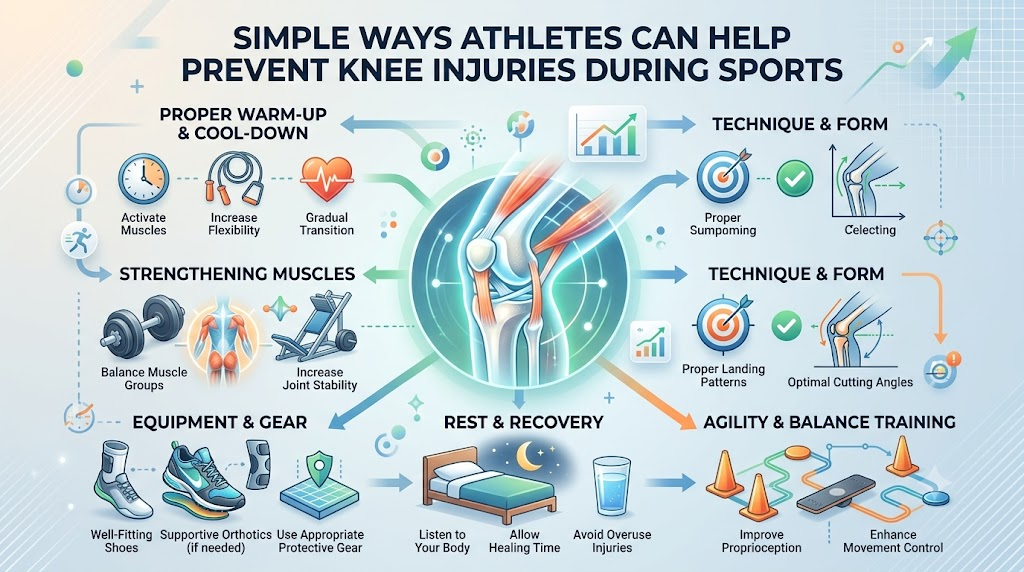
A warm-up helps the body prepare for activity. It allows athletes to begin movement at a lower pace. The body can then move toward harder activity more gradually. A useful warm-up can include movements linked to the sport. Athletes should avoid starting intense activity without preparation. However, warm-ups are only one part of knee injury prevention. They cannot prevent every knee injury during sports. Good warm-up habits should work with safe training and proper recovery.
Build Strength and Body Control
Strong muscles can support better sports movement. Leg strength helps with many running and jumping movements. Hip and core strength can also support body control. Balance training may help athletes stay steady during movement. Good body control matters during running, landing, and turning. Strength training should match the athlete’s age and ability. It should also match the demands of the sport. Young athletes may need different training from adults. A trained coach can help guide safe strength and conditioning. Athletes should not follow a personal exercise plan without proper guidance.
Learn Safe Sports Technique
Good sports technique can support safer movement. Athletes need control when they run, stop, jump, and land. They also need control when they turn or change direction. Poor movement may place extra stress on the knee. Coaches can help athletes learn proper sports technique. They can also help athletes improve movement skills over time. Different sports need different movement patterns. A football player may have different needs from a runner. A gymnast may have different needs from a tennis player. So, technique should match the sport and the athlete.
Increase Training Slowly
The body needs time to adjust to new training demands. Sudden changes can place extra stress on muscles and joints. Training volume means how much activity an athlete does. Training intensity means how hard the activity feels. Practice frequency can also affect the total training load. Competition schedules may add more physical demands. Athletes should avoid making sudden large changes. Coaches can help plan steady training progress. This can give the body more time to adjust. There is no single training rule for every athlete. Age, sport, fitness, and experience can all affect training needs.
Give Your Body Enough Recovery
Recovery is an important part of sports training. The body needs time to rest after hard activity. Rest days can help the body recover from training. Breaks between hard sessions can also be useful. Sleep is another important part of healthy recovery. Athletes may also need recovery time after competitions. Constant high-intensity training can leave the body tired. Tiredness may affect focus, balance, and movement control. Good recovery does not mean an athlete is weak. Instead, it helps the body stay ready for future activity.
Use the Right Sports Equipment
Suitable sports equipment can support safer participation. Proper footwear should fit well and match the sport. Shoes that are worn out may also need replacement. Protective equipment should fit the athlete correctly. Equipment should also stay clean and in good condition. Athletes and coaches should check sports gear regularly. This can help identify obvious problems before activity. However, equipment cannot prevent every sports knee injury. It should be used with good training, proper technique, and recovery.
Pay Attention to Playing Surfaces
The playing area can also affect sports safety. Uneven surfaces may make movement more difficult. Slippery areas may increase the chance of a fall. Damaged sports areas can also create obvious hazards. Athletes should notice clear problems before starting activity. Coaches can also check training spaces when possible. Gym equipment should be kept in safe working condition. Athletes should report obvious problems to a responsible adult or coach. A safer environment can support better athlete safety.
Do Not Ignore Knee Pain
Athletes should pay attention to ongoing knee pain. Pain that continues after activity may need professional attention. Swelling can also be a reason to seek advice. Weakness or reduced movement should not be ignored. Some athletes may feel that their knee gives way. These symptoms can have different causes. Athletes should not try to identify the cause themselves. Continuing intense activity despite ongoing symptoms may increase concern. A qualified health professional can assess the problem properly. Early attention can help athletes understand what to do next.
Know the Difference Between Normal Tiredness and Warning Signs
Muscle tiredness can happen after sports activity. It may improve with normal rest and recovery. Warning signs can be different and may continue. Ongoing knee pain is one concern to watch. Significant swelling can also need professional attention. Difficulty putting weight on the leg is another warning sign. A knee that gives way should not be ignored. Limited knee movement may also need assessment. Severe symptoms after a sudden injury need proper care. Symptoms alone cannot confirm a specific knee injury.
Avoid Returning Too Soon After Injury
Feeling better does not always mean full recovery. Strength may still be lower after a knee injury. Balance may also remain affected during movement. Some athletes may still have limited movement. Returning to sports too soon may increase injury risk. Athletes should follow guidance from qualified professionals after injury. Return-to-sport decisions should consider the athlete and injury. There is no fixed recovery time for everyone. Sports rehabilitation may be part of recovery for some injuries. The main goal should be a safe return to activity.
Simple Knee Injury Prevention Habits
| Prevention Habit | Why It Helps | Simple Example |
|---|---|---|
| Warm-up | Prepares the body for activity | Start with light movement |
| Strength training | Supports movement and control | Follow a suitable training plan |
| Good technique | Supports safer movement | Learn sports skills from a coach |
| Gradual training | Gives the body time to adjust | Increase training demands slowly |
| Recovery | Gives the body time to recover | Rest between hard sessions |
| Proper equipment | Supports safer sports participation | Use well-fitting sports gear |
These habits can support knee injury prevention for athletes. However, no single habit can prevent every injury. Athletes should use several healthy habits together. Coaches can also help athletes follow safe training practices. Good preparation can support both safety and athletic performance.
Prevention Tips for Different Athletes
Different sports place different demands on the knees. Runners often repeat similar leg movements many times. Football players may sprint, stop, turn, and change direction. Basketball players often jump, land, and move quickly. Cricket players may sprint and stop during play. Tennis players often make quick side movements. Gymnasts need balance and strong body control. Cyclists use repeated leg movements for long periods. Young athletes also need training that suits their age. Because sports differ, knee injury prevention should also differ.
The Role of Coaches and Parents
Coaches and parents can support safe sports habits. They can encourage athletes to train with proper care. They can also support rest and recovery after hard activity. Adults should pay attention to ongoing pain or swelling. They should avoid pressuring athletes to play through serious pain. They can also check whether sports equipment fits correctly. Young athletes may not always explain symptoms clearly. Calm questions can help them talk about discomfort. Professional evaluation may be needed when symptoms continue. Athlete safety should always remain more important than winning.
When Should an Athlete See an Orthopedic Specialist?
An athlete should consider professional assessment for ongoing knee pain. Repeated knee injuries may also need proper evaluation. Significant swelling should not be ignored. Difficulty walking can also be a warning sign. Knee instability may need professional assessment. Symptoms that become worse should receive attention. A serious injury during sports may need prompt evaluation. Athletes may also need help when they cannot return safely. An orthopedic specialist can assess the problem and explain suitable next steps. Sports medicine services may also support athletes with injury concerns.
Choosing an Orthopedic Hospital for Knee Problems
Athletes and families can consider several factors. An orthopedic hospital may offer knee care services. Sports medicine services can also be useful for active people. Look for access to trained orthopedic specialists. Diagnostic facilities may support medical assessment when needed. Rehabilitation and physical therapy services may also matter. Emergency care can be important after serious injuries. Follow-up care can support ongoing health needs. Patient education can also help families understand care choices. People should compare services instead of trusting unsupported claims.
How BestOrthoHospitals.com Can Help
BestOrthoHospitals.com can help people explore orthopedic hospitals. It can also provide general information about sports injury care. Visitors can learn about knee health and orthopedic services. The platform can help people research orthopedic specialists. It can also support learning about sports medicine and recovery. Families may use this information before preparing questions for a consultation. BestOrthoHospitals.com does not replace an orthopedic professional. It also does not diagnose knee injuries or promise recovery.
Fictional Athlete Example
Fictional example: A young athlete starts a new sports season. The athlete quickly increases training and notices knee discomfort. The athlete talks with the coach about the training demands. The athlete also allows enough time for recovery. The athlete pays attention to the symptoms instead of ignoring them. If the discomfort continues, the athlete seeks professional advice. This example does not provide a diagnosis or treatment result. It simply shows why athletes should notice ongoing knee symptoms.
Frequently Asked Questions
1. Why are knee injuries common in athletes?
Sports include running, jumping, landing, and turning. These movements can place repeated stress on the knees. Falls and contact can also cause sports knee injuries.
2. How can athletes help prevent knee injuries?
Athletes can build good training habits. Warm-ups, strength, balance, proper technique, recovery, and suitable equipment can help lower some risks.
3. Does warming up help protect the knees?
A warm-up prepares the body for activity. It helps athletes move gradually before harder activity. However, it cannot prevent every injury.
4. Can strength training support knee health?
Strength training can support muscle control and movement. Strong muscles may help support sports activity. Training should match the athlete’s age and ability.
5. Why is proper sports technique important?
Good technique can support controlled movement. This matters during running, jumping, landing, and turning. Coaches can help athletes learn proper sports skills.
6. Can sudden training increases affect knee injury risk?
Sudden training changes can increase stress on the body. Training amount and intensity can both matter. Gradual progress gives the body time to adjust.
7. Should athletes play through knee pain?
Athletes should not ignore ongoing knee pain. Persistent or worsening symptoms may need professional assessment. Serious symptoms should receive timely medical attention.
8. When should an athlete see an orthopedic specialist?
Professional assessment may help with ongoing pain or swelling. It may also help with instability or repeated injuries. Serious sports injuries may need prompt evaluation.
9. How can athletes return to sports safely after injury?
Feeling better does not always mean full recovery. Athletes should follow qualified professional guidance. Return decisions should consider movement, strength, balance, and the injury.
10. Can BestOrthoHospitals.com help athletes find orthopedic care information?
Yes, BestOrthoHospitals.com provides general information about orthopedic hospitals and care. It can help athletes and families prepare questions. It does not replace professional medical advice.
Final Thoughts
Knee injuries cannot always be prevented. Good training habits can still reduce some risks. Warm-ups, strength, balance, technique, recovery, and suitable equipment all matter. Training should also increase slowly. Athletes should not ignore ongoing knee pain or other warning signs. Professional guidance can help after a serious or ongoing injury. BestOrthoHospitals.com can help people learn about orthopedic hospitals, sports medicine, and knee care information.