Introduction
Knowing the symptoms of bone infection can help people seek care sooner. A bone infection is also called osteomyelitis. It can cause pain, swelling, warmth, redness, fever, or other changes. These signs can have many causes, so they should not be used for self-diagnosis.Persistent bone pain deserves attention, especially after an injury or surgery. A wound that drains fluid can also be a warning sign. Early medical assessment may help doctors find the cause and choose suitable care. BestOrthoHospitals.com can help readers explore general information about orthopedic care. Visit Bestorthohospitals for more health information.Bone infections can affect children and adults. Some people may have clear symptoms, while others may have fewer signs. The location and type of infection can also change how symptoms appear. Prompt medical advice is important when infection seems possible.
What Is a Bone Infection?
A bone infection happens when harmful germs enter and infect bone tissue. Bacteria cause many bone infections, but other germs can sometimes be responsible. The infection may start in the blood or spread from nearby tissue. It may also enter through an open wound.Some infections develop after certain bone or joint operations. An infection can also occur after a serious injury that breaks the skin. Germs may enter damaged tissue and reach deeper areas. However, not every injury or operation leads to an infection.
Bone pain alone does not prove an infection. Many problems can cause pain around bones and joints. These include injuries, arthritis, muscle problems, and other conditions. A healthcare professional must assess the symptoms and decide whether testing is needed.
Common Symptoms of Bone Infection
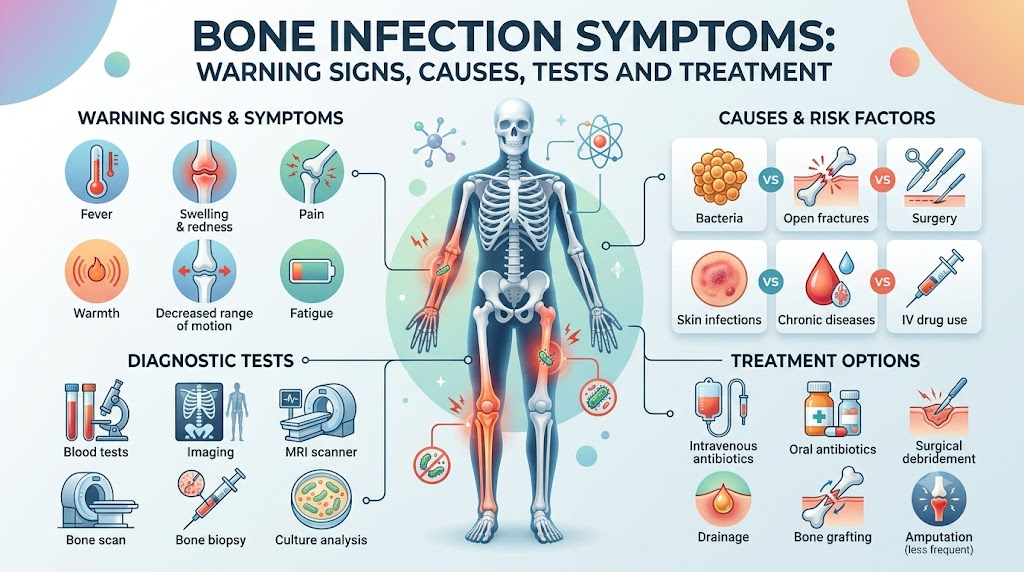
Bone infection symptoms can vary from person to person. Pain in or near the affected bone is common. The area may also become swollen, warm, or red. Some people may feel tenderness when the area is touched.Fever and chills can occur with some infections. A person may also feel tired or generally unwell. A wound near the affected area may produce fluid or pus. These signs can be more concerning when they appear together.Some people may have only a few symptoms. Others may have symptoms that develop slowly. The affected bone and the person’s health can change how the infection appears. Anyone with concerning symptoms should seek medical advice rather than trying to confirm the cause at home.
Early Warning Signs You Should Not Ignore
New or worsening bone pain can be an early warning sign. Swelling, warmth, or redness near the painful area can add concern. Fever may also occur when the body responds to infection. These changes deserve attention when they continue or become worse.
Symptoms may develop after an injury or operation. A person may first notice pain that does not improve as expected. Later, swelling or drainage may appear near the affected area. Waiting for every possible symptom can delay medical assessment.
Redness can also look different on different skin tones. This means other signs may deserve close attention. Warmth, swelling, tenderness, fever, and wound drainage can all provide useful information. One symptom cannot confirm osteomyelitis, but several changes together should not be ignored.
Bone Infection Symptoms in Children
Children can develop bone infections, sometimes after germs travel through the blood. A child may complain of pain in an arm or leg. They may also have swelling, warmth, or fever. Some children may stop using the painful limb normally.A child may limp or refuse to walk when a leg hurts. A child with arm pain may avoid using that arm. Younger children may not explain their pain clearly. They may instead become unusually upset, tired, or irritable.Parents and caregivers should not try to diagnose a bone infection at home. Pain with fever or swelling needs medical assessment. Prompt care is especially important when a child cannot use a limb normally. A healthcare professional can decide which examination or tests are needed.
Bone Infection Symptoms in Adults
Adults may notice pain in many areas of the body. The feet, hips, back, arms, and legs can all be affected. Swelling, warmth, redness, fever, or chills may also occur. Some people may feel tired or generally unwell.A draining wound near painful bone can be an important warning sign. This may happen after an injury or certain surgery. People with diabetes may also need special attention to foot wounds. A small wound can become a more serious problem in some cases.Spinal bone infections may cause ongoing back pain. Fever does not always occur with every bone infection. Many other conditions can also cause similar pain. A healthcare professional must assess the symptoms before deciding what may be causing them.
What Causes Bone Infections?
Germs can reach bone tissue in several ways. They may travel through the bloodstream from another part of the body. They may also spread from nearby infected skin or soft tissue. Another route is through an open wound or serious fracture.Some bone infections develop after certain operations. This does not mean surgery always causes infection. Surgical teams use many safety steps to reduce infection risks. However, infections can still occur after some procedures.Bone infection after an injury can happen when germs enter through damaged skin. Deep wounds may allow germs to reach tissues below the skin. Infection can then spread toward bone. This is one reason deep or serious wounds need proper medical assessment.
Who Has a Higher Risk of Bone Infection?
Certain health conditions can increase the risk of bone infection. Diabetes is one important example. Poor blood flow can also make some infections harder to manage. A weakened immune system may increase infection risk as well.Open wounds and serious injuries can also increase risk. Recent bone surgery or joint surgery may be another risk factor. Some long-term health problems can affect the body’s ability to fight infection. However, having a risk factor does not mean infection will definitely occur.People with diabetes should pay attention to foot wounds. Redness, swelling, warmth, drainage, or worsening pain can need medical attention. People with higher risks should not ignore unusual changes. Early professional assessment can help determine what is happening.
When Bone Pain Needs Medical Attention
Bone pain needs prompt assessment when it appears with fever or chills. Swelling, warmth, redness, or wound drainage can also raise concern. Pain after surgery or a serious injury deserves attention when it becomes worse. These symptoms do not prove infection, but they should not be ignored.Severe or rapidly worsening symptoms need urgent medical assessment. A person who appears seriously unwell may need emergency care. Confusion, fainting, severe weakness, or signs of a spreading infection are important warning signs. Do not wait for these symptoms to improve on their own.People with diabetes or weakened immune systems may need extra care. A wound on the foot or another area can sometimes become serious. Contact a healthcare professional when symptoms change or worsen. Getting advice early is safer than trying to treat a possible bone infection at home.
How Doctors Check for a Bone Infection
A healthcare professional will usually ask about symptoms and health history. They may ask about recent injuries, wounds, operations, or other infections. They may also examine the painful area for swelling, warmth, tenderness, or drainage. These details help guide the next steps.Blood tests may help look for signs of infection or inflammation. Doctors may also use imaging to examine the affected bone. An X-ray can provide useful bone information. An MRI scan can show more detailed changes in bone and nearby tissues.In some cases, a sample of tissue or fluid may be needed. Testing a sample can help identify the germ causing an infection. The type of testing depends on the person’s symptoms and condition. No single symptom or test always answers every question.
Why Early Diagnosis Matters
An untreated bone infection can damage bone tissue. It may also affect nearby tissues in some cases. Some infections can become harder to treat when care is delayed. This does not mean every infection causes permanent damage.Early assessment gives healthcare professionals a chance to investigate the problem. They can decide which tests may be useful. They can also choose treatment based on the likely cause and test results. This approach helps avoid guessing from symptoms alone.People should seek care when warning signs continue or worsen. This is especially important after surgery, a serious injury, or a deep wound. Early medical advice does not guarantee a quick recovery. It simply allows the problem to be assessed sooner.
How Bone Infections Are Treated
Bone infection treatment depends on the germ, location, severity, and person’s health. Healthcare professionals may use antibiotics or other medicines when appropriate. The treatment choice depends on the suspected or confirmed infection. People should never use leftover antibiotics for a possible bone infection.Some people may need hospital care during treatment. Others may receive part of their care outside the hospital with medical supervision. Treatment can involve follow-up checks and tests. The care plan should come from the treating healthcare team.Surgery may be needed in selected cases. A procedure may help drain an abscess or remove damaged or infected tissue. Surgery is not needed for every person with a bone infection. Doctors decide based on the individual situation and test findings.
What Recovery and Follow-Up May Involve
Recovery can differ greatly between people. It may depend on the infection, affected bone, overall health, and treatment needed. Some infections need longer follow-up than others. There is no single recovery time that applies to everyone.Follow-up visits can help the healthcare team review progress. Doctors may use symptoms, examinations, blood tests, or imaging when needed. Patients should follow their prescribed treatment carefully. They should also report new or worsening symptoms.Feeling better does not always mean an infection has fully cleared. Do not stop prescribed treatment without medical advice. If problems return, contact the healthcare team. Follow-up care helps doctors decide whether further assessment is needed.
How to Reduce Some Infection Risks
Some basic steps may lower the chance of serious infection. Seek medical care for deep or serious wounds. Follow wound-care instructions given by a healthcare professional. Keep recommended follow-up appointments after injuries or procedures.
People with diabetes should pay attention to foot wounds. Changes such as swelling, redness, warmth, or drainage deserve attention. Good management of long-term health conditions can also support overall health. Personal care plans should come from a healthcare professional.Good hygiene can help protect wounds, but it cannot prevent every bone infection. Avoid treating deep wounds with unproven home remedies. Do not ignore worsening pain or swelling. When infection is possible, professional assessment is the safer choice.
Choosing an Orthopedic Hospital for Suspected Bone Infection
People seeking care may consider whether a hospital has orthopedic specialists. Access to suitable imaging and laboratory tests can also matter. Some patients may need specialists who understand bone and joint infections. Infectious disease support may be useful in selected cases.Surgical services may also matter when a procedure becomes necessary. Clear explanations can help patients understand their testing and care options. Follow-up arrangements are another useful point to ask about. Patients can confirm available services directly with the hospital.Do not choose care based only on rankings or online claims. Hospital services can change, and individual needs differ. Ask about the services available for your situation. A healthcare professional can also guide you toward suitable care.
How BestOrthoHospitals Can Help Readers Explore Care
Learning about orthopedic care can help people prepare for healthcare decisions. Readers may want to understand common services before speaking with a medical team. They can also prepare questions about testing, specialists, and follow-up care.
BestOrthoHospitals.com can serve as an information resource for exploring orthopedic health topics and hospital care. General website information cannot diagnose a bone infection. It also cannot replace a physical examination or medical testing.
Patients should confirm hospital services directly when planning care. They should also discuss symptoms with a qualified healthcare professional. Online information is most useful when it helps people ask better questions. It should not replace personal medical assessment.
A Fictional Patient Example
Fictional example: Neha develops increasing pain and swelling near a recent leg injury. The area feels warmer than the surrounding skin. She also notices that the swelling is becoming more noticeable. Instead of assuming the cause, she contacts a healthcare professional.The healthcare professional asks about the injury and examines the affected area. They may arrange blood tests or imaging to investigate the symptoms. Further testing may be needed if infection remains a concern. The cause cannot be confirmed from symptoms alone.Neha follows the medical advice she receives and attends follow-up care. This example is fictional and does not describe a real patient. It does not promise any treatment result. It simply shows why worsening symptoms deserve professional assessment.
Frequently Asked Questions
1. What are the common symptoms of a bone infection?
Common symptoms include bone pain, swelling, warmth, and redness. Fever or chills may also occur. Some people feel tired or generally unwell. A draining wound near the painful area can also be concerning.
2. What is osteomyelitis?
Osteomyelitis is the medical name for a bone infection. Harmful germs infect bone tissue and cause inflammation. Bacteria cause many cases. Other germs can sometimes cause infection as well.
3. Can a bone infection occur after surgery?
Yes, a bone infection can sometimes develop after certain operations. This does not mean every surgery causes infection. Increasing pain, swelling, warmth, fever, or wound drainage after surgery should be assessed by a healthcare professional.
4. Can children develop bone infections?
Yes, children can develop bone infections. They may have limb pain, swelling, fever, or trouble moving an arm or leg. Some children may limp or refuse to use the affected limb. Prompt medical assessment is important.
5. Who has a higher risk of bone infection?
People with diabetes, poor blood flow, or weakened immune systems may have higher risk. Open wounds, serious injuries, and some surgeries can also increase risk. Having a risk factor does not mean an infection will occur.
6. Can a bone infection occur without a fever?
Yes, a bone infection can occur without an obvious fever. Symptoms can differ based on the infection and the person’s health. Persistent pain, swelling, warmth, or wound drainage can still need medical assessment.
7. How do doctors diagnose a bone infection?
Doctors may review symptoms, medical history, and recent injuries or procedures. They may perform a physical examination and order blood tests. Imaging such as X-rays or MRI scans may also help. Some cases need tissue or fluid testing.
8. Can a bone infection damage the bone?
Yes, an untreated bone infection can damage bone tissue. The amount of damage can vary between cases. Early assessment can help doctors investigate the problem and choose suitable care.
9. How are bone infections treated?
Treatment depends on the cause and the person’s condition. Healthcare professionals may use antibiotics or other medicines. Some people may need hospital care or surgery. Treatment decisions should come from the treating medical team.
10. When should someone seek medical help for possible bone infection?
Seek medical advice for persistent or worsening bone pain with swelling, warmth, redness, or fever. Wound drainage after an injury or surgery also needs attention. Severe symptoms, confusion, fainting, or serious weakness require urgent medical care.
Final Thoughts
Recognizing the symptoms of bone infection can help people seek timely care. Pain, swelling, warmth, redness, fever, and wound drainage can all deserve attention. These symptoms can also come from other conditions. A healthcare professional should assess the cause instead of relying on symptoms alone.Prompt care is especially important after serious injuries or certain surgeries. People with diabetes or other risk factors should also take concerning changes seriously. Do not use leftover antibiotics or try to treat a suspected bone infection at home. Follow professional advice and attend recommended follow-up visits.BestOrthoHospitals.com can help readers explore general orthopedic health and hospital care information. Use online information to prepare questions, not to replace medical assessment. If bone pain becomes severe, rapidly worsens, or occurs with serious symptoms, seek urgent care. Timely professional attention can help ensure that the right problem is assessed and managed.