Introduction
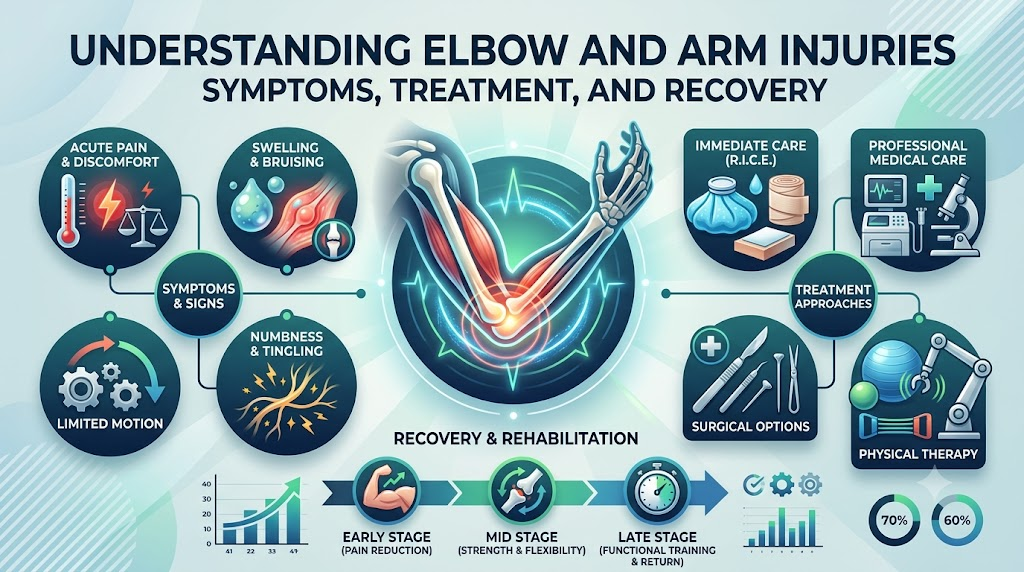
Elbow and arm injuries can affect bones, joints, muscles, tendons, ligaments, nerves, and blood vessels. They may happen after a fall, during sports, at work, or because of repeated movements. Some injuries are mild and improve with proper care. Others, such as broken bones, elbow dislocations, or injuries to nerves and blood vessels, need urgent medical attention.
Understanding elbow and arm injuries helps people recognize warning signs and seek the right care. Early assessment can help identify the damage and reduce the risk of lasting problems. For information about orthopedic care and hospital options, BestOrthoHospitals can help readers explore relevant resources.
What Are Elbow and Arm Injuries?
The arm contains several parts that work together to help us lift, carry, reach, and move. An injury can affect one or more of these parts.
- Humerus: The bone in the upper arm, between the shoulder and elbow.
- Radius and ulna: The two bones in the forearm, between the elbow and wrist.
- Elbow joint: The joint where the upper arm and forearm bones meet. It helps the arm bend and straighten.
- Muscles and tendons: Muscles help create movement, while tendons connect muscles to bones.
- Ligaments: Strong bands of tissue that help keep joints stable.
- Nerves and blood vessels: Nerves carry signals that allow movement and feeling. Blood vessels carry blood to the arm and hand.
An injury may cause pain, swelling, weakness, or trouble moving the arm. The location and severity of the damage affect the treatment needed and the time required to recover. Symptoms alone cannot confirm the exact injury.
Common Types of Elbow and Arm Injuries
Fractures
A fracture is a broken bone. It may affect the upper arm, forearm, or an area near the elbow. Fractures can happen after a fall, a strong impact, or a road accident. Common signs include pain, swelling, bruising, and difficulty moving the arm. Some fractures need a cast or splint, while others may need surgery.
Elbow Dislocation
An elbow dislocation happens when the bones in the joint move out of their normal position. It often follows a fall or a strong impact. The injury may cause severe pain, swelling, and an unusual elbow shape. Nearby nerves and blood vessels can also be affected, so prompt medical care is important.
Sprains
A sprain is an injury to a ligament. Ligaments support joints and help control movement. A sprain may cause pain, swelling, and difficulty using the affected area. Mild sprains may improve with suitable care, but more serious ligament damage may need specialist treatment.
Muscle and Tendon Strains
A strain affects a muscle or tendon. It may happen after lifting something heavy, making a sudden movement, or repeating the same action many times. Symptoms can include pain, tenderness, swelling, and weakness. A severe strain may involve a tear that needs medical assessment.
Tendon Injuries
Tendons connect muscles to bones and help the body move. A tendon may become irritated, damaged, or torn after an injury or repeated strain. Some tendon injuries cause pain during lifting or gripping. Serious tears may require specialist care and, in some cases, surgery.
Tennis Elbow
Tennis elbow causes pain around the outer part of the elbow. It often develops from repeated wrist and arm movements, even in people who do not play tennis. Gripping, lifting, or turning objects may make the pain worse. Treatment may include activity changes, guided exercises, and other care recommended by a clinician.
Bursitis
Bursitis is inflammation of a small, fluid-filled sac that reduces friction near a joint. At the elbow, it may cause swelling and tenderness over the tip of the joint. Redness, warmth, or fever can point to an infection and need prompt medical assessment.
Nerve Injuries
Nerves help the arm and hand move and feel touch. Pressure or damage to a nerve may cause tingling, numbness, pain, or weakness. Some nerve problems improve when the cause is treated, but new or worsening symptoms need medical attention.
Overuse Injuries
Overuse injuries develop when repeated activity places too much stress on the same tissues. They can affect people who play sports, use tools, type for long periods, or perform repeated lifting. Symptoms may begin slowly and worsen with activity. Early assessment can help find the cause.
These injuries can have similar signs. A healthcare professional may need to examine the arm and order tests before choosing treatment.
Common Causes and Risk Factors
Elbow and arm injuries can happen during everyday activities or serious accidents. Common causes include:
- Falling onto the hand or elbow.
- Sports collisions, throws, or sudden twists.
- Road traffic and workplace accidents.
- Lifting or pulling heavy objects.
- Repeating the same movement at work or during hobbies.
- Using poor technique during sports or lifting.
- Having reduced bone strength or a condition that affects bones and joints.
Children may experience injuries during play or sports. Adults may develop injuries at work or during physical activity. Older people may have a higher risk of fractures after falls, especially when their bones are weak. Not every injury can be prevented, even when people take care.
Symptoms of Elbow and Arm Injuries
Symptoms depend on the part of the arm that is injured. Common signs include:
- Pain or tenderness.
- Swelling and bruising.
- Stiffness or reduced movement.
- Trouble bending or straightening the elbow.
- Weakness when lifting or gripping.
- Pain when turning the forearm.
- Tingling or numbness in the hand or fingers.
- A change in the shape of the arm or elbow.
- Open wounds or visible bone in a severe injury.
A broken bone does not always cause an obvious bend or change in shape. Some people can still move an injured arm even when a fracture is present. Being able to move the arm does not prove that the injury is minor.
Common Elbow and Arm Injuries and Their Signs
| Injury Type | Possible Signs | Why Assessment May Be Needed |
|---|---|---|
| Fracture | Pain, swelling, bruising, or trouble moving | Imaging may be needed to confirm a broken bone |
| Elbow dislocation | Severe pain, unusual shape, or limited movement | Prompt care can help protect nearby tissues |
| Sprain | Pain and swelling around a joint | The level of ligament damage may need checking |
| Muscle or tendon strain | Pain, tenderness, or weakness | A major tear may need specific treatment |
| Tennis elbow | Outer elbow pain, often during gripping | Ongoing pain may need clinical assessment |
| Nerve injury | Tingling, numbness, or weakness | Nerve damage or pressure must be checked |
| Bursitis | Swelling and tenderness near the elbow | Redness, warmth, or fever may suggest infection |
These signs are examples, not a way to diagnose an injury at home. Different conditions can cause similar symptoms, so medical assessment may be needed.
When Is an Elbow or Arm Injury an Emergency?
Seek urgent medical care if an arm injury causes any of the following:
- The arm or elbow looks deformed or sits at an unusual angle.
- There is severe pain or the person cannot move the arm normally.
- A wound exposes bone.
- There is heavy bleeding.
- New numbness, weakness, or loss of feeling develops.
- The hand or fingers become cold, pale, or blue.
- Swelling increases quickly or pain becomes severe.
- The joint is hot, red, and swollen, especially with fever.
Do not try to push a dislocated joint back into place or straighten a visibly deformed arm. Avoid forcing movement. Keep the injured arm as still as possible while arranging urgent care.
Sudden arm pain with chest pressure, shortness of breath, sweating, or faintness may be a sign of a heart attack rather than an orthopedic injury. Call emergency services immediately if these symptoms occur.
How Are Elbow and Arm Injuries Diagnosed?
A healthcare professional will usually ask how the injury happened, where the pain is, and whether movement, feeling, or strength has changed.
The examination may include checking swelling, bruising, tenderness, joint movement, and muscle strength. The clinician may also check feeling in the hand and fingers and assess blood flow to make sure that nearby nerves and blood vessels are working properly.
Tests may include:
- X-rays: These pictures help check for broken bones and problems with joint alignment.
- CT scans: These provide more detail about some complex fractures.
- MRI scans: These may help assess selected injuries to tendons, ligaments, and other soft tissues.
- Ultrasound: This can help examine certain tendon and soft tissue problems.
Not every patient needs every test. The clinician chooses tests based on the injury, examination findings, and suspected damage.
Treatment Options for Elbow and Arm Injuries
Treatment depends on the type and severity of the injury, the person’s age, and overall health. The aim is to protect the injured area, reduce symptoms, and restore safe movement and function.
Rest and Activity Changes
Some minor injuries improve when the person reduces activities that cause pain. Rest does not mean every arm injury should remain still for a long time. The right level of activity depends on the injury and the clinician’s advice.
Splints, Slings, and Casts
A splint, sling, or cast may support and protect certain injuries. These devices can help keep the arm in a suitable position while tissues heal. A healthcare professional should decide which support is needed and how long it should be used.
Pain Relief
A clinician may recommend or prescribe pain relief based on the person’s health, other medicines, and type of injury. Patients should follow professional advice and should not use medication to force movement through severe pain.
Physical Therapy
Physical therapy may help improve movement, strength, and everyday function after some injuries. A therapist can guide recovery at the right stage. Starting exercises too soon or using the wrong movements may worsen certain injuries, so timing matters.
Specialist Treatment and Surgery
Some tendon, ligament, or nerve injuries need specialist treatment. Surgery may be needed for certain fractures, severe dislocations, major tendon tears, or other serious damage. Many injuries heal without surgery, but the correct choice depends on the findings of the medical assessment.
Patients should follow their treating clinician’s instructions and attend recommended follow-up visits.
Diagnosis and Treatment Approaches
| Approach | Main Purpose | Important Consideration |
|---|---|---|
| Physical examination | Check pain, movement, strength, and blood flow | Helps guide further testing |
| X-ray | Check bones and joint alignment | Often used when a fracture is suspected |
| CT scan | Show more detail in selected bone injuries | May help assess complex fractures |
| MRI or ultrasound | Assess selected soft tissue injuries | The best test depends on the suspected damage |
| Splint, sling, or cast | Support and protect selected injuries | A clinician should decide the type and duration |
| Physical therapy | Help restore movement and function | Timing depends on the injury and treatment |
| Surgery | Repair or stabilize selected serious injuries | Discuss the risks and benefits with a specialist |
Treatment should be based on the confirmed or suspected injury, not a general online checklist.
Recovery and Rehabilitation
Elbow injury recovery varies widely. A mild strain may improve sooner than a complex fracture, dislocation, or major tendon injury. There is no single recovery time that applies to everyone.
Several factors can affect recovery:
- The type and severity of the injury.
- Whether surgery was needed.
- The person’s age and general health.
- Whether nerves, blood vessels, or joint surfaces were affected.
- Attendance at follow-up visits.
- Following the rehabilitation plan provided by the treating team.
Stiffness and weakness may develop when movement has been limited. A clinician or physical therapist may recommend suitable exercises when it is safe to begin them. Do not force movement through severe pain.
Returning to work, driving, sports, or heavy lifting should depend on medical advice and restored function. Seek further assessment if symptoms worsen, new numbness appears, or progress does not follow the plan provided by the treating team.
How to Choose an Orthopedic Hospital
Choosing the right hospital can help patients receive suitable assessment and care. The best option depends on the injury and the services the patient needs.
Consider these points when comparing hospitals:
- Orthopedic expertise: Check whether qualified orthopedic specialists treat the type of injury involved.
- Diagnostic services: Find out whether suitable imaging and other tests are available.
- Emergency care: Serious injuries may need prompt checks of blood flow and nerve function.
- Surgical services: Ask whether the hospital can provide surgery if it is needed.
- Rehabilitation: Access to physical therapy can support recovery.
- Clear communication: The care team should explain the diagnosis, treatment choices, risks, and expected next steps.
- Follow-up care: Check how follow-up visits and rehabilitation are arranged.
- Transparent costs: Ask about expected fees, tests, treatment, and other charges.
A hospital’s suitability depends on the patient’s needs. No single hospital is best for every injury. BestOrthoHospitals.com may help readers explore orthopedic care options, but patients should confirm services and credentials directly with the hospital.
Preventing Elbow and Arm Injuries
Some injuries can be avoided or made less likely through simple safety steps. However, prevention cannot remove every risk.
- Use suitable protective equipment during sports.
- Learn safe techniques for sports and physical activities.
- Keep walkways clear to reduce the risk of falls.
- Use suitable tools and equipment for work and household tasks.
- Avoid sudden increases in repeated or heavy activity.
- Take suitable breaks during tasks that use the same arm movements.
- Seek advice if pain or weakness keeps returning.
People with weak bones or health conditions that affect movement may benefit from discussing fall prevention and bone health with a healthcare professional.
Fictional Example: Why Early Assessment Matters
This example is fictional and does not describe a real patient.
An adult falls onto an outstretched hand and develops elbow pain and swelling. The person can still move the fingers but finds it painful to bend the elbow. Instead of assuming it is a minor sprain, the person seeks medical assessment.
The clinician checks the arm and may recommend an X-ray to look for a fracture. The findings help guide the next steps. This example shows why pain and swelling after a fall should not always be treated as a minor problem at home. It does not guarantee a particular diagnosis or outcome.
Frequently Asked Questions
1. What are the most common elbow and arm injuries?
Common elbow and arm injuries include fractures, dislocations, sprains, muscle strains, tendon injuries, tennis elbow, bursitis, and nerve injuries. Some develop after a sudden accident, while others result from repeated movements. Since these conditions can cause similar symptoms, a healthcare professional may need to assess the injury.
2. What are the signs of a broken arm or elbow?
A broken arm or elbow may cause pain, swelling, bruising, tenderness, or difficulty moving the affected area. Some fractures cause a visible change in shape, but others do not. Being able to move the arm does not rule out a fracture. Medical assessment and imaging may be needed.
3. Can an elbow injury heal without surgery?
Yes, many elbow injuries can heal without surgery. Treatment may include activity changes, a splint or sling, pain relief, and rehabilitation when suitable. However, some fractures, severe dislocations, and major tendon injuries may need surgery. A clinician can recommend treatment based on the injury and its severity.
4. How do doctors diagnose elbow and arm injuries?
Doctors ask how the injury happened and examine pain, swelling, movement, strength, sensation, and blood flow. They may order an X-ray to check for a fracture. CT scans, MRI scans, or ultrasound may help assess selected injuries. The tests used depend on the examination and suspected damage.
5. When should I seek emergency care for an arm injury?
Seek emergency care for severe pain, visible deformity, an open wound with exposed bone, heavy bleeding, new numbness or weakness, or a cold, pale, or blue hand. Rapid swelling also needs urgent assessment. Arm pain with chest pressure or breathing trouble may signal a heart attack and requires emergency help.
6. What is the difference between a sprain and a strain?
A sprain is an injury to a ligament, which supports a joint. A strain affects a muscle or tendon. Both can cause pain, swelling, and difficulty moving the arm. Their symptoms may overlap, so a medical examination may be needed to determine the injury and its severity.
7. How long does recovery from an elbow injury take?
Recovery time depends on the injury, its severity, the person’s health, and the treatment needed. A mild injury may improve sooner than a fracture, dislocation, or major tendon tear. Follow-up care helps track progress. Return to sports, driving, work, or heavy lifting should follow medical advice.
8. Why might I need physical therapy after an arm injury?
Physical therapy may help restore movement, strength, and everyday function after some arm injuries. It can also help address stiffness that develops when movement has been limited. The timing and type of therapy depend on the injury and treatment. Follow the plan given by your clinician or therapist.
9. How can I choose an orthopedic hospital for an elbow injury?
Look for a hospital with qualified orthopedic specialists, suitable imaging, emergency assessment, and access to surgery when needed. Rehabilitation, clear communication, follow-up care, and transparent costs also matter. Confirm that the hospital treats the specific injury and check its services directly before making a decision.
10. Can elbow and arm injuries be prevented?
Some injuries can be made less likely by using sports protection, learning safe movement techniques, keeping walkways clear, and avoiding sudden increases in repeated activity. However, accidents can still happen. Seek medical advice if pain or weakness keeps returning, as early assessment may help identify the cause.
Conclusion
Understanding elbow and arm injuries helps people recognize common symptoms, identify emergency warning signs, and seek suitable care. Fractures, dislocations, sprains, strains, tendon problems, and nerve injuries may cause similar symptoms, so an examination may be needed to find the cause.
Severe pain, visible deformity, open wounds, numbness, or changes in hand color require urgent attention. For ongoing pain or a suspected serious injury, consult a qualified healthcare professional. Proper diagnosis, suitable treatment, and a guided rehabilitation plan can help support recovery and the safe return to daily activities. BestOrthoHospitals.com can also help readers explore orthopedic care options and prepare questions for their healthcare team.