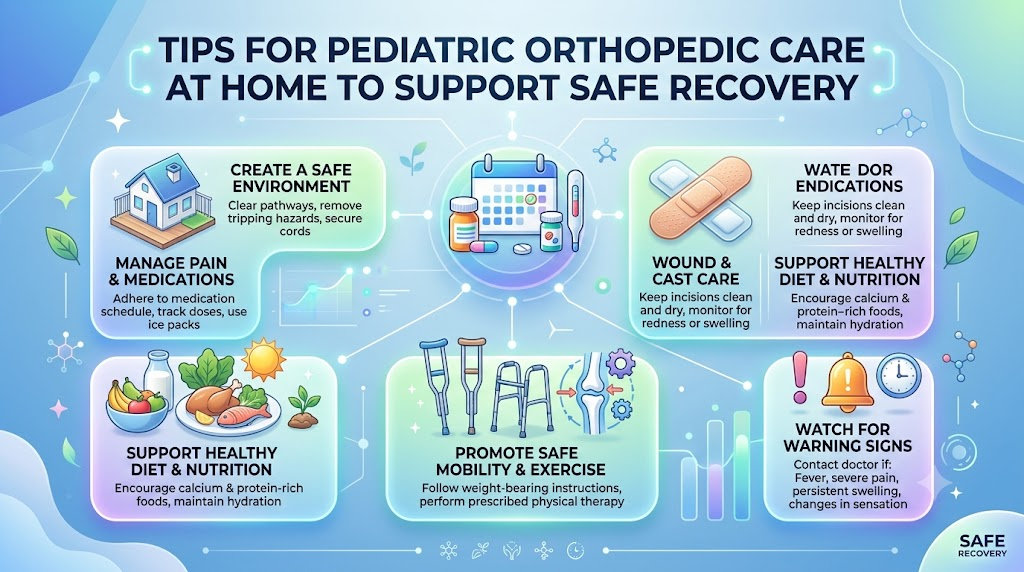
Children need strong bones, healthy joints, and safe movement as they grow. An injury or surgery may make daily tasks harder for a while. Good pediatric orthopedic care at home can help children feel safe and supported.
Parents and caregivers play an important role during recovery. They can follow care instructions, make the home safer, and watch for warning signs. Each child’s needs depend on age, injury, health, and treatment. Advice from a child’s medical team should always come first.
Families can learn more about orthopedic care through Bestorthohospitals at. This article shares simple steps for home care, recovery, and healthy children’s bone health.
What Is Pediatric Orthopedic Care?
Pediatric orthopedics focuses on children’s bones, joints, muscles, and movement. It helps children with injuries and other problems that affect how they move.
Children’s bodies differ from adult bodies. Their bones are still growing and have special needs. This means their care may differ from adult treatment.
A child orthopedic specialist may assess problems such as:
- Broken bones and sprains.
- Sports injuries and joint pain.
- Swelling or trouble walking.
- Some bone or joint conditions present at birth.
- Posture concerns that affect movement.
- Recovery after orthopedic surgery.
Not every ache needs specialist care. However, ongoing pain, swelling, limping, or changes in movement need medical advice. A healthcare professional can check the cause and suggest suitable care.
Common Orthopedic Problems in Children
Children often run, jump, climb, and play. These activities help them grow, but injuries can happen.
A fall may cause a broken bone or sprain. Sports can lead to joint pain, muscle strains, or other injuries. Some children also have conditions that affect bone growth or movement.
Other children need surgery to treat a bone or joint problem. They may need support at home while they heal. Some may also need physical therapy to improve movement.
Parents should not guess the cause of a child’s pain. Seek medical advice if pain lasts, swelling grows, or walking becomes difficult. Sudden or severe symptoms may need urgent care.
Why Home Care Matters
Home care can help children rest, move safely, and feel less worried. It also helps parents follow the treatment plan between medical visits.
A calm space can make recovery easier. Parents can keep needed items nearby and help with daily tasks. They can also support safe movement and provide comfort.
Home care does not replace medical treatment. Parents should never try to set a broken bone or adjust a cast. Serious injuries need care from trained medical staff.
Follow the Child’s Care Plan
Every child needs care that fits their condition. The orthopedic team may give instructions for rest, movement, wound care, or support devices.
Follow these instructions closely. Ask questions if any step is unclear. Do not copy another child’s recovery plan.
Parents should ask the care team:
- Which activities can my child do safely?
- Does my child need to avoid putting weight on the injured limb?
- How should I care for a cast, splint, or wound?
- When should I arrange a follow-up visit?
- Which symptoms need urgent medical help?
Restrictions may change as healing improves. Only the child’s healthcare team can confirm when activities are safe again.
Safe Home Care After an Orthopedic Injury
After a healthcare professional checks the injury, parents can support recovery at home. Keep the child comfortable and follow all care instructions.
These simple steps may help:
- Give the child a safe place to rest.
- Raise the injured limb if the care team advises it.
- Use ice only as advised, with skin protection.
- Keep casts, splints, and other supports in place.
- Avoid running, jumping, and rough play until cleared.
- Keep water, food, and needed items within reach.
- Help the child move around safely.
Do not force a painful limb to move. Never try to straighten a bone or treat a serious injury yourself.
Seek urgent care for severe pain, an obvious deformity, or a suspected serious fracture. Loss of feeling or movement also needs urgent assessment.
Cast and Splint Care at Home
A cast or splint helps protect an injured area while it heals. Good cast care for children can help prevent problems during recovery.
Follow these basic steps:
- Keep the cast dry unless the care team says it is waterproof.
- Check for cracks, soft spots, or slipping.
- Keep dirt and small objects away from the cast.
- Never put pens, sticks, or other objects inside it.
- Do not cut, loosen, or remove the cast yourself.
- Follow the team’s advice for bathing and movement.
- Check exposed fingers or toes for normal color and warmth.
Some itching may happen under a cast. Ask the care team how to ease it safely. Never use sharp objects to scratch the skin.
Contact the orthopedic team if the cast becomes wet, damaged, too tight, or too loose. Seek urgent help if fingers or toes become pale, blue, cold, or very swollen.
Supporting Recovery After Orthopedic Surgery
Children may need extra help after orthopedic surgery. Their recovery depends on the procedure, health, and healing progress.
Follow the surgeon’s instructions for rest and movement. Keep the surgical area clean as directed. Follow the care team’s advice about bathing and dressings.
Do not remove dressings or apply creams unless the team approves. Watch for increasing redness, swelling, fluid, fever, or worsening pain. Contact the care team promptly if these signs appear.
Keep planned follow-up visits. The team can check healing and adjust the care plan when needed. Never assume that a child is ready for sports because they feel better.
Helping Children Move Safely at Home
An injury can make normal movement harder. A few home changes can lower the risk of falls.
Try these simple safety steps:
- Remove loose rugs and clutter from walkways.
- Keep floors dry and well lit.
- Use handrails where available.
- Keep daily items within easy reach.
- Make the child’s sleeping area safe and easy to access.
- Ask the care team how to manage stairs.
- Help with crutches or a walker as taught.
Children should use mobility aids only as instructed. Do not let them climb, run, or play sports until cleared. Ask the care team how much weight the child can safely place on the injured limb.
Food, Rest, and Healthy Bone Growth
Balanced meals support children’s growth and bone health. They also provide energy for daily activities and recovery.
Offer a range of healthy foods, such as:
- Calcium-rich foods: Milk, yogurt, cheese, and suitable fortified foods.
- Vitamin D sources: Some foods contain vitamin D, and sunlight helps the body make it.
- Protein foods: Beans, lentils, eggs, fish, and other suitable choices.
- Fruit and vegetables: These provide vitamins, minerals, and fiber.
- Water: Regular fluids help meet the body’s needs.
Children’s nutrition needs change with age and health. Ask a healthcare professional before giving supplements. Some children may need special advice because of health conditions or medicines.
Sleep also supports normal growth and healing. Follow a regular sleep routine that suits the child’s age. Food and rest support recovery, but they cannot replace proper treatment for a fracture.
Helping Children Cope With Pain and Worry
An injury can make a child feel scared or upset. Surgery and limited movement may also cause boredom or worry.
Listen to your child’s concerns. Explain the care plan in simple words. Let the child ask questions and share their feelings.
Offer quiet activities that suit their movement limits. Reading, drawing, puzzles, and suitable games can help pass the time. Keep activities calm and safe.
Follow the care team’s instructions for pain relief. Do not start, stop, or change medicines without professional advice. If pain becomes severe or keeps getting worse, seek medical review.
Daily Pediatric Orthopedic Care Checklist
| Care Area | What Parents Can Do | Important Reminder |
|---|---|---|
| Rest | Provide a calm place to recover | Follow activity limits |
| Cast or splint | Check for damage and care for it as directed | Do not insert objects inside |
| Movement | Help the child move safely | Follow weight-bearing instructions |
| Wound care | Follow the team’s cleaning advice | Watch for infection signs |
| Follow-up | Attend planned appointments | Report new or worsening symptoms |
Warning Signs That Need Medical Help
Parents should watch for changes during recovery. Some problems need quick medical attention.
Contact the orthopedic team promptly for:
- Severe or increasing pain.
- New numbness or tingling.
- Trouble moving exposed fingers or toes.
- Fever or signs of a wound infection.
- Fluid or a bad smell coming from a cast.
- A cast that becomes cracked, soft, wet, or very tight.
- Sudden loss of movement or ability to use the injured limb.
Fingers or toes that become pale, blue, cold, or very swollen may signal poor blood flow. Seek emergency medical care for these signs.
Major injuries, obvious deformities, or rapidly worsening symptoms also need urgent assessment. If the child has trouble breathing or is hard to wake, call emergency services at once.
Warning Signs and the Next Step
| Warning Sign | What Parents Should Do | Level of Concern |
|---|---|---|
| Mild discomfort that improves with rest | Follow the care plan and keep watching | Monitor as advised |
| Pain that keeps getting worse | Contact the orthopedic team promptly | Urgent medical advice |
| New numbness or tingling | Seek prompt medical assessment | Urgent |
| Pale, blue, cold, or very swollen fingers or toes | Seek emergency medical care | Emergency |
| Fever or fluid from a surgical wound | Contact the care team promptly | Urgent |
| Severe injury or major deformity | Seek emergency care | Emergency |
This table gives general guidance, not a diagnosis. If symptoms are severe or you are unsure, seek medical help.
How to Prepare for Follow-Up Visits
Follow-up visits help the care team check healing and movement. They can also show whether the child needs changes to their care plan.
Write down questions before each visit. Note any new pain, swelling, or changes in movement. Bring details about problems with the cast, splint, wound, or mobility aid.
Ask the care team:
- Which activities are safe now?
- How should we care for the cast, splint, or wound?
- When can my child return to school or sports?
- Which symptoms need urgent attention?
- When is the next review?
- Does my child need physical therapy?
Do not return a child to restricted activities without medical clearance. The healthcare team can guide the next steps based on healing.
Frequently Asked Questions
1. What is pediatric orthopedic care?
Pediatric orthopedic care helps children with bone, joint, muscle, and movement problems. It includes injury care, treatment, and recovery support suited to growing bodies.
2. How can parents support bone healing at home?
Follow the care plan, provide safe rest, and offer balanced meals. Keep follow-up visits and report new or worsening symptoms.
3. How should parents care for a child’s cast?
Keep the cast dry unless told otherwise. Do not insert objects or remove it yourself. Contact the care team if it becomes damaged or too tight.
4. Can a child play while recovering from a fracture?
It depends on the injury and healing progress. Follow the care team’s activity limits. Do not allow sports until the team gives clearance.
5. How can parents make the home safer during recovery?
Remove clutter, dry wet floors, and keep walkways clear. Keep daily items nearby and follow advice about stairs and mobility aids.
6. What foods support healthy bones in children?
Calcium-rich foods, suitable vitamin D sources, protein, fruits, and vegetables support growth. Ask a healthcare professional before giving supplements.
7. When should parents call an orthopedic doctor?
Call for worsening pain, new swelling, movement problems, or cast concerns. Seek emergency care for poor blood flow, major injuries, or severe symptoms.
8. How can parents help a child after orthopedic surgery?
Follow instructions for rest, wound care, and safe movement. Keep follow-up visits and report fever, worsening pain, or signs of infection.
9. When can a child return to sports after an injury?
Return time depends on the injury and healing. The child’s healthcare team should confirm when sports are safe.
10. How can parents prepare for an orthopedic follow-up visit?
Write down questions and note changes in pain or movement. Ask about activity limits, wound care, school, sports, and future visits.
Conclusion
Pediatric orthopedic care at home helps children recover in a safe, caring space. Follow the child’s care plan, keep the home safe, and watch for warning signs. Good food, rest, and emotional support can also help during recovery.
Every child has different needs. Contact a qualified pediatric orthopedic specialist when you have concerns about pain, movement, or healing. This article offers general education and does not replace advice from a qualified healthcare professional.