Introduction
The human spine is not completely straight. It has natural curves that help the body move. These curves also help with balance and posture. Sometimes, these curves become unusual or too extreme. Doctors may call this a spinal deformity. Common types include scoliosis, kyphosis, and lordosis. BestOrthoHospitals can help you explore orthopedic hospitals and spine specialists. This guide explains spinal deformities in simple terms.
What Are Spinal Deformities?
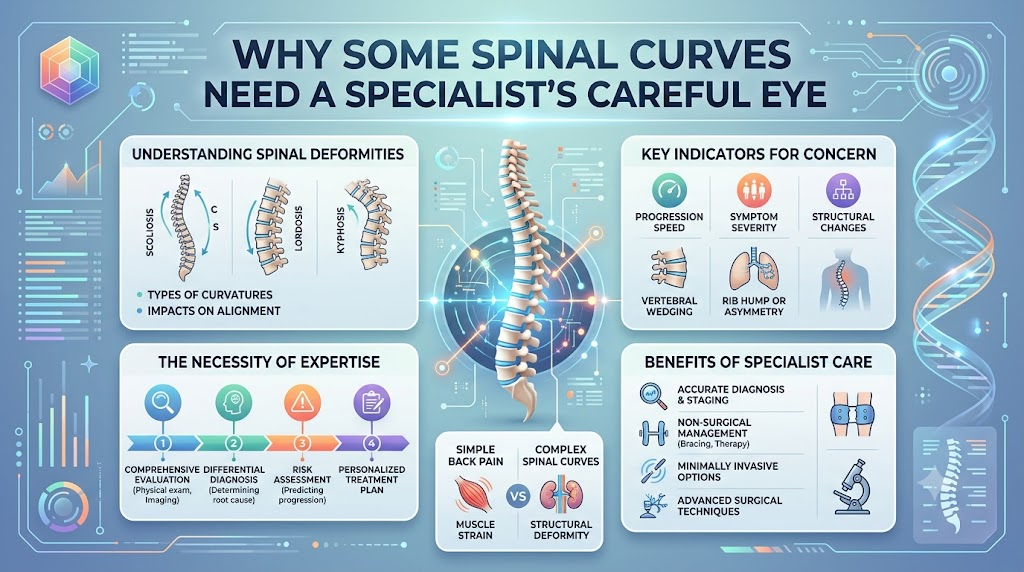
A spinal deformity means the spine curves in an unusual way. This is different from the spine’s normal, healthy curves. Deformities can affect spinal shape and overall balance. They can also affect movement and posture. Some spinal deformities are very mild. Others may need regular medical monitoring over time. Not every curve is dangerous or serious.
Common Types of Spinal Deformities
There are a few main types worth knowing about.
Scoliosis
Scoliosis involves an unusual side-to-side curve in the spine. The spine may also twist or rotate slightly. This can affect how the back and shoulders look.
Kyphosis
Kyphosis involves increased forward rounding of the upper back. Some forward curve is actually normal in the spine. The term deformity refers to a pattern that becomes abnormal or problematic.
Lordosis
Lordosis is an inward curve, often in the lower back. Abnormal lordosis may be too large or too small. Both extremes can affect posture and comfort.
What Causes Spinal Deformities?
Causes can differ depending on the specific type. Some develop during periods of growth in childhood. Genetics can also play a role in certain cases. Some people are born with spinal differences already present. Poor spinal structure may contribute in some situations. Injuries can sometimes lead to spinal changes too. Bone changes and aging are common factors in adults. Muscle or nerve conditions may also be involved. Degenerative changes over time are another possible cause. Some cases have no single, clear cause at all.
Common Signs of Spinal Deformities
A few signs are worth paying attention to. Uneven shoulders can be one visible sign. Uneven hips may also be noticeable. An unusual back shape is another common sign. A rounded upper back can be a sign of kyphosis. An excessive lower-back curve may point to lordosis. General posture changes are also worth noting. Back discomfort sometimes accompanies these changes. Movement problems or reduced endurance can occur too. Signs can vary a lot between individuals.
Spinal Deformities in Children and Adults
Spinal deformities can look different depending on age. In children and teenagers, growth plays a large role. Spinal curves can change as the body continues developing. In adults, the picture often looks different. Degenerative changes and previous injuries become more relevant. Changes in overall spinal balance can also develop over time. Assessment often needs to consider the person’s specific age group.
How Are Spinal Deformities Diagnosed?
Diagnosis usually starts with a medical history review. A physical examination often follows this step. Posture assessment is a common part of the exam. Movement checks help doctors understand flexibility and function. A neurological examination may also be included. Standing X-rays are frequently used to view spinal alignment. MRI scans may be needed in certain cases. Other imaging may be used when appropriate. The specific tests depend on the suspected problem.
When Should You See a Spine Specialist?
A few situations may call for specialist input. Visible changes in spinal shape are one example. Persistent back discomfort is another reason to seek care. Increasing posture problems are worth mentioning too. Movement limits or reduced flexibility matter as well. Numbness or weakness should not be ignored. Balance problems are another important sign. Symptoms that affect daily life deserve attention too. A known spinal curvature may also need ongoing follow-up. Sudden or severe neurological symptoms need prompt medical attention.
Non-Surgical Treatment for Spinal Deformities
Treatment always depends on the type and severity involved. Observation alone may be suitable for some mild cases. Physical therapy can support strength and flexibility. Posture support may help in certain situations. Activity changes are sometimes recommended too. Pain management approaches may be part of care. Bracing may be used in selected cases. Regular follow-up helps track any changes over time. Non-surgical care can be a good fit for many people.
Surgical Treatment for Spinal Deformities
Some severe or progressive deformities may need surgery. Spinal fusion is one possible surgical approach. Deformity correction procedures are another option in certain cases. Osteotomy may be used in selected, specific situations. Other spine reconstruction procedures also exist. The decision depends on the deformity, symptoms, age, and health. Imaging findings also play an important role in this decision. Surgery is not needed for every person with a spinal deformity.
What Makes a Spine Hospital Suitable for Deformity Care?
A few features are worth comparing carefully. Orthopedic spine specialists are an important starting point. Neurosurgical support may matter for certain complex cases. Spine imaging capabilities are essential for accurate diagnosis. Deformity evaluation services add real value too. Rehabilitation services support recovery and function. Pediatric spine care matters for younger patients. Adult spine care is equally important for older patients. Surgical facilities and anesthesia support matter when surgery is needed. Follow-up care and emergency support round out the picture.
Questions to Ask a Spine Specialist
Ask what type of spinal deformity is present. Ask what may have caused it. Find out how severe the condition currently is. Ask what treatment choices are available. Learn how the condition will be monitored over time. Ask whether physical therapy could help. Find out if bracing is a suitable option. Ask whether surgery is being considered and why. Discuss expected recovery if surgery is recommended. Ask what follow-up care will look like afterward.
Comparing Spinal Deformity Care Options
| Care Option | General Role |
|---|---|
| Observation | Tracking mild or stable cases over time |
| Physical therapy | Supporting strength, flexibility, and function |
| Bracing | Supporting the spine in selected cases |
| Specialist monitoring | Watching for changes at regular intervals |
| Surgery | Addressing severe or progressive deformities |
A Simple Example of Spinal Deformity Evaluation
Here is a general example, not a real patient story. A person notices a change in their posture. They decide to speak with a doctor about it. The doctor examines their spine carefully. Imaging may be requested for a clearer picture. A specialist then reviews the findings closely. The care team discusses possible options together. Follow-up is planned if it seems needed.
How BestOrthoHospitals.com Can Help
BestOrthoHospitals.com is an orthopedic care discovery platform. Users can explore orthopedic hospitals and doctors here. Spine specialists and treatment areas are also included. You can search by country or by city. Hospital profiles and doctor profiles are available to browse. Appointment availability information is included as well. The platform describes itself as a global orthopedic directory. This can support people researching spinal deformity care. BestOrthoHospitals.com does not diagnose patients or perform surgery itself.
Frequently Asked Questions About Spinal Deformities
1. What are spinal deformities?
Spinal deformities are unusual curves in the spine. They can affect shape, balance, and movement.
2. What are the common types of spinal deformities?
Common types include scoliosis, kyphosis, and lordosis. Each affects the spine in a different way.
3. What is scoliosis?
Scoliosis is an unusual side-to-side curve in the spine. The spine may also rotate slightly.
4. What is kyphosis?
Kyphosis is increased forward rounding of the upper back. Some forward curve is normal, but excess curve is not.
5. What is lordosis?
Lordosis is an inward spinal curve, often in the lower back. It can become too large or too small.
6. What causes spinal deformities?
Causes vary and may include genetics, growth, or injury. Aging and degenerative changes are common factors too.
7. How are spinal deformities diagnosed?
Diagnosis often includes a physical exam and imaging tests. X-rays and sometimes MRI scans are commonly used.
8. Can spinal deformities be treated without surgery?
Yes, many cases are managed with observation, therapy, or bracing. Surgery is only needed in certain situations.
9. When should someone see a spine specialist?
See a specialist for visible changes, persistent pain, or movement issues. Numbness or weakness also deserve prompt attention.
10. Can BestOrthoHospitals.com help people find spine care?
Yes, BestOrthoHospitals.com helps people explore orthopedic hospitals and spine specialists. This supports informed research and decision-making.
Final Thoughts
Spinal deformities can have many different causes and patterns. Scoliosis, kyphosis, and lordosis each affect the spine differently. Proper evaluation by a qualified specialist matters a great deal. Treatment always depends on the individual person and their condition. BestOrthoHospitals.com can support your research into spine hospitals and specialists.