Introduction
Ankle and foot injuries are common. They can happen during sports or daily tasks. Falls, trips, and accidents can also cause them. Some injuries happen from repeated stress over time.An injury may affect a bone, joint, muscle, tendon, or ligament. The foot and ankle support the body during movement. So, even a small injury can affect walking and balance.Knowing common warning signs can help people seek proper care. BestOrthoHospitals.com helps people explore orthopedic care and information.
Understanding the Ankle and Foot
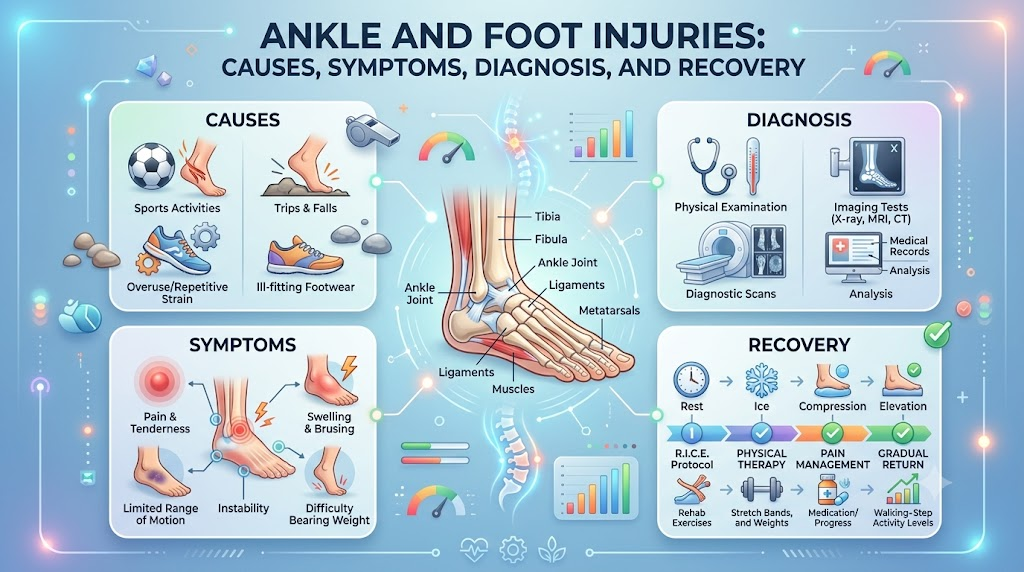
The ankle and foot have many parts. These parts work together every day. Bones provide support and shape. Joints allow movement between bones.Ligaments connect bones to other bones. They help keep joints stable. Tendons connect muscles to bones. They help muscles create movement.
Muscles help move the foot and ankle. Soft tissues also protect and support these areas. All these parts work together for walking, standing, running, and balance.
What Are Ankle and Foot Injuries?
An injury means damage to body tissue. The damage may affect one part or several parts. A bone can break. A ligament can stretch or tear.A tendon can also become injured. Muscles may develop strains. Joints and other soft tissues may also become painful or swollen.Different injuries can cause similar symptoms. For this reason, symptoms alone cannot confirm an injury. A healthcare professional can assess the problem.
Common Ankle Injuries
Ankle sprains are among common ankle injuries. A sprain affects a ligament. It often happens after a sudden twist or awkward landing.Ankle fractures involve broken bones. Tendon injuries can affect movement and strength. Ligament injuries can also affect ankle stability.
Soft-tissue injuries may cause pain and swelling. Stress injuries can develop from repeated pressure. The cause and severity can vary from person to person.
Common Foot Injuries
Common foot injuries include fractures and sprains. Stress fractures can develop after repeated stress. Tendon injuries can also affect the foot.Bruises may happen after direct impact. Soft-tissue injuries can cause pain and swelling. Overuse injuries may develop after repeated activity.Different parts of the foot can be affected. The toes, heel, arch, and other areas may have different injury patterns. Proper assessment can help identify the affected area.
Ankle Sprains Explained
An ankle sprain affects a ligament. Ligaments help keep the ankle stable. A sudden twist can stretch or damage these tissues.
An ankle sprain may happen on uneven ground. Sports can also cause ankle sprains. Awkward landings and sudden turns are common causes.Possible symptoms include pain and swelling. Bruising may also occur. Some people may have trouble walking.
These signs do not prove a sprain. Other ankle problems can cause similar symptoms. A doctor can assess the ankle when needed.
Foot and Ankle Fractures
A fracture means a break in a bone. It can happen after a fall or direct impact. Twisting injuries may also cause fractures.
Sports injuries can cause ankle or foot fractures. Repeated stress can also lead to stress fractures. Some fractures may have clear signs.Other fractures can be harder to notice. Pain, swelling, and tenderness may occur. Difficulty walking can also happen.
Fracture symptoms can vary. A medical assessment may be needed after a significant injury. Imaging may help doctors understand the injury.
Tendon and Ligament Injuries
Tendons connect muscles to bones. Ligaments connect bones to other bones. Both tissues help the body move and stay stable.
A tendon injury can affect movement. A ligament injury can affect joint stability. The Achilles tendon is one important tendon near the ankle.Tendon and ligament injuries may happen during sports. They may also happen during sudden movements. Care depends on the type and severity of injury.
Soft-Tissue Injuries
Soft-tissue injuries can affect muscles, tendons, ligaments, and nearby tissues. They may happen after impact or sudden movement. Repeated activity can also play a role.Pain and swelling are common signs. Bruising may also appear. Movement may become harder or uncomfortable.Several conditions can cause these same symptoms. So, it is important not to guess the injury type. Professional assessment can help when symptoms are serious or persistent.
Common Causes of Ankle and Foot Injuries
Many activities can lead to ankle and foot injuries. Sports are a common cause. Running, jumping, and sudden turns can place stress on these areas.Falls and uneven surfaces can also cause injuries. Accidents may cause direct impact. Sudden twisting can affect ligaments and other tissues.Repeated stress can lead to overuse injuries. Poor movement patterns may also increase strain. Injury risk can differ based on activity, health, and other factors.
Symptoms to Watch For
Ankle and foot injuries can cause several symptoms. Pain is one common sign. Swelling and bruising may also occur.
Other symptoms include tenderness and stiffness. Some people may have reduced movement. Weakness or ankle instability can also occur.Difficulty walking may be another warning sign. Numbness or tingling may also need attention. Symptoms alone cannot confirm the injury type.
When Ankle or Foot Pain Needs Medical Care
Some symptoms need prompt medical attention. Severe pain should not be ignored. Major swelling or a visible deformity also needs assessment.Difficulty bearing weight may need medical review. Numbness or tingling can be another warning sign. A cold or unusually pale foot needs urgent attention.Open wounds after an injury also need care. Symptoms that keep getting worse should not be ignored. Serious injury signs may require urgent medical care.
How Doctors Check Ankle and Foot Injuries
An orthopedic doctor may first ask how the injury happened. The doctor may ask about pain and movement. A physical examination can then follow.The doctor may check movement and strength. They may also check circulation and nerve function. These checks can provide useful information.Imaging may be needed in some cases. The exact assessment depends on the injury. A foot and ankle specialist can help assess complex problems.
Imaging for Foot and Ankle Injuries
Different imaging tests show different details. X-rays can show many bone problems. They are often used when a fracture is suspected.Ultrasound can show some soft tissues. It can help assess certain tendon problems. CT scans can provide detailed bone images.MRI can show many soft tissues and other structures. Doctors choose imaging based on the clinical situation. Not every ankle or foot injury needs imaging.
Treatment Options for Ankle and Foot Injuries
Treatment depends on the injury and its severity. Some injuries may need changes in activity. Support devices may also be used.
Braces or splints can support some injuries. Physical therapy may help during recovery. Pain management may be part of care.
Some serious injuries may need immobilization. Selected injuries may need surgery. A healthcare professional can explain the suitable options after assessment.
Recovery From Ankle and Foot Injuries
Recovery can vary widely. The injury type is one important factor. Injury severity can also affect recovery.
Age and general health may matter. Treatment and rehabilitation can also affect progress. Activity level may influence the return to normal movement.There is no single recovery time for every injury. Follow-up care may help track progress. People should follow advice from their healthcare team.
Physical Therapy and Rehabilitation
Physical therapy can support recovery for some injuries. Rehabilitation may focus on movement and strength. Balance and flexibility may also be important.Therapy may help improve walking ability. It can also support a gradual return to daily activities. The exact plan depends on the injury.Exercises should follow professional advice. A therapist can adjust care as progress changes. This helps keep rehabilitation suitable for the person’s condition.
Returning to Sports and Daily Activities
Returning to activity should usually be gradual. A person may need medical and rehabilitation guidance. This is especially important after a major injury.Athletes may need functional checks before demanding sports. These checks may include movement and strength. Balance may also be reviewed.Pain improvement alone may not show full recovery. The body may need more time to regain strength and control. Follow-up care can help guide activity changes.
Preventing Future Ankle and Foot Injuries
Some simple habits may help reduce injury risk. Proper footwear can provide useful support. Safe surfaces can also help during activity.Warm-up routines may prepare the body for movement. Strength and balance work may support joint control. Activity increases should be gradual.People should pay attention to new pain. Previous injuries may also need proper rehabilitation. Follow professional advice when returning to demanding activities.
Children and Ankle or Foot Injuries
Children have growing bones and developing joints. Some injuries can involve areas linked to bone growth. These injuries may need careful assessment.A child may also describe pain differently. Swelling or trouble walking can be important signs. Parents or caregivers should seek medical advice after significant injuries.Pediatric assessment may be useful when symptoms are serious. A healthcare professional can decide what checks are needed. Treatment should be based on the child’s condition.
Older Adults and Ankle or Foot Injuries
Falls can increase injury risk in older adults. A significant fall may cause more than a simple bruise. Foot and ankle pain after a fall should be assessed when needed.Bone health and other health conditions may affect care. Balance problems may also increase fall risk. A healthcare professional can review the full situation.
How to Choose an Orthopedic Hospital
People may compare several features when choosing a hospital. Qualified orthopedic specialists are one important factor. Foot and ankle expertise may also matter.Imaging facilities can support injury diagnosis. Emergency care may be useful after serious injuries. Rehabilitation services can support recovery.Patients may also review surgical facilities and infection prevention. Clear communication and follow-up support are useful. BestOrthoHospitals.com can help people research orthopedic hospitals and care options without replacing medical advice.
Simple Comparison of Injury Types
| Injury Type | Main Tissue | Common Examples |
|---|---|---|
| Sprain | Ligament | Ankle ligament injury |
| Strain | Muscle or tendon | Muscle or tendon strain |
| Fracture | Bone | Ankle or foot fracture |
| Tendon Injury | Tendon | Achilles tendon injury |
Common Myths About Ankle and Foot Injuries
Myth: Every ankle injury is a sprain.
Not every ankle injury is a sprain. Fractures, tendon injuries, and other problems can look similar.
Myth: You can always walk with a fracture.
Some people may still walk after certain fractures. Walking ability does not rule out a fracture.
Myth: Swelling always means a fracture.
Swelling can happen with many injuries. It does not prove that a bone is broken.
Myth: Pain always shows injury severity.
Pain levels can vary between people. Severe injuries do not always cause the same pain.
Myth: Old injuries never need follow-up.
Some old injuries can cause lasting symptoms. Persistent pain or instability may need assessment.
Myth: Sports can restart when pain improves.
Pain improvement is only one part of recovery. Strength, movement, and function may also matter.
How BestOrthoHospitals.com Can Help
Choosing orthopedic care can feel confusing. BestOrthoHospitals.com provides a research and discovery platform. People can explore orthopedic hospitals, doctors, treatments, injuries, and rehabilitation services.
The platform covers many areas of orthopedic care. These include bones, joints, muscles, tendons, ligaments, feet, and ankles. It can also help people research hospitals for ankle and foot injuries.The platform is not a replacement for an orthopedic doctor. Medical decisions should come from qualified healthcare professionals. Its role is to help people learn and compare care options.
Practical Example
A person twists an ankle during a daily activity. The ankle becomes swollen and painful. Instead of guessing the injury, the person seeks an orthopedic assessment.The doctor checks the ankle and reviews how the injury happened. The doctor may decide whether imaging could help. This example shows why proper assessment matters.
Clear Answers About Ankle and Foot Injuries
Understanding ankle and foot injuries starts with basic facts. Sprains affect ligaments. Fractures affect bones. Tendon injuries affect tissues that connect muscles to bones.Similar symptoms can come from different injuries. This is why diagnosis should not rely on symptoms alone. Clear medical assessment can help identify the problem.For search and health information, simple answers are useful. They help readers understand terms such as ankle sprain, foot fracture, tendon injury, and soft-tissue injury. They also help people know when professional care may be needed.
BestOrthoHospitals.com supports this learning process. It gives people a place to explore orthopedic hospitals and care information. Readers can use this information to prepare for informed discussions with healthcare professionals.
Frequently Asked Questions
1. What are the most common ankle and foot injuries?
Common injuries include sprains, fractures, strains, tendon injuries, and soft-tissue injuries. Stress injuries can also affect the foot and ankle.
2. What causes ankle sprains?
Ankle sprains often happen after twisting or awkward landing. Uneven ground and sports movements can also cause them.
3. How can a foot or ankle fracture happen?
Fractures can happen after falls, impacts, sports injuries, or twisting events. Repeated stress can also cause some fractures.
4. What are common symptoms of an ankle injury?
Common symptoms include pain, swelling, bruising, stiffness, and tenderness. Some people may also have trouble walking.
5. When should someone see an orthopedic doctor?
Medical care may be needed for severe pain, major swelling, deformity, or trouble bearing weight. Numbness and worsening symptoms also need attention.
6. How are ankle and foot injuries diagnosed?
Doctors may review the injury history and perform an examination. They may also use imaging when needed.
7. Do all ankle and foot injuries need imaging?
No. Imaging depends on the injury and examination. A doctor can decide when imaging may be useful.
8. How long does recovery from an ankle injury take?
Recovery varies by injury and severity. Health, treatment, rehabilitation, and activity level can also affect recovery.
9. Can physical therapy help after an ankle or foot injury?
Physical therapy may support movement, strength, balance, and walking. The right plan depends on the injury and professional advice.
10. How can future ankle and foot injuries be prevented?
Proper footwear, safe movement, warm-ups, and gradual activity may help. Following rehabilitation advice can also support safer activity.
Final Thoughts
Ankle and foot injuries can affect many tissues. These include bones, joints, ligaments, tendons, muscles, and soft tissues.
Similar symptoms can come from different injuries. So, pain or swelling alone cannot confirm the cause. Proper assessment can help identify the problem.Severe or persistent symptoms should receive professional attention. A qualified healthcare professional can assess the injury and discuss suitable care options.BestOrthoHospitals.com can help people explore orthopedic hospitals, doctors, treatments, and rehabilitation information. It can support research before speaking with an orthopedic care team.