Introduction
The human musculoskeletal system is a magnificent feat of biological engineering. Composed of 206 bones and more than 300 joints, this interconnected framework provides our bodies with structural stability, protects vital internal organs, and allows us to experience a fluid, dynamic range of physical motion. When our skeletal matrix is dense and our joints are well-lubricated, we can navigate everyday life with comfort, strength, and complete independence. However, structural wear and tear, sedentary habits, poor nutrition, and the natural timeline of aging can slowly compromise this structural foundation, leading to chronic discomfort, localized inflammation, and a gradual reduction in physical capability. Prioritizing consistent, daily tips for healthy bone and joint care is one of the most effective, rewarding actions you can take to preserve your lifelong vitality.
Finding your way through complex medical diagnoses and identifying top-tier therapeutic centers requires access to reliable, clear, and evidence-based information. Advanced educational platforms like BestOrthoHospitals serve as a vital tool during this research and planning phase. The platform helps patients explore orthopedic hospitals, compare treatment options, discover orthopedic specialists, review bone and joint care services, and make informed musculoskeletal healthcare decisions. Gaining a deep, clear perspective on how your daily physical inputs, metabolic choices, and systemic habits interact enables you to build a proactive routine that ensures sustainable, life-long freedom of movement.
Why Bone and Joint Health Matters
Every physical action we take—from typing a message on a smartphone to lifting a heavy object or walking through a park—relies entirely on the strength and integrity of our musculoskeletal system. If this system begins to degrade, our overall quality of life can experience a steady decline.
Structural Framework and Internal Protection
Bones serve as a vital living matrix that stores essential minerals like calcium and phosphorus, houses bone marrow for blood cell production, and provides an anchor point for our skeletal muscles. Joints function as the flexible mechanical bridges connecting these bones, absorbing impacts and translating muscular contractions into efficient physical movement.
The Impact of Joint Mobility and Flexibility
Healthy joints, backed by flexible ligaments and a smooth cartilage lining, protect our bodies from friction during physical activity. When joint mobility is preserved, our gait remains balanced, reducing the mechanical strain placed on surrounding structures like the lower back, hips, and knees. This kinetic alignment protects us from early wear and tear.
Aging and Musculoskeletal Preservation
As we progress through adulthood, our bodies undergo continuous metabolic shifts. Peak bone mass is typically achieved during our late twenties, after which bone resorption (breakdown) can slowly begin to outpace new bone formation. Without proactive intervention, this gradual decline can lead to significant structural fragility, increasing the likelihood of sudden injuries, chronic pain conditions, and a loss of personal independence in our later years.
Understanding Bones and Joints
To build highly effective habits for bone strength improvement and joint pain prevention, it helps to look closely at the underlying anatomy that supports our physical frame.
 [Bone Matrix] ──> Dense Living Mineral Storage (Provides Rigid Support)
       │
 [Cartilage] ──> Smooth Ocular Cushion (Absorbs Impacts & Minimizes Friction)
       │
 [Synovial Fluid] ──> Natural Joint Lubricant (Nourishes Cells & Eases Motion)
- The Bone Structure: Bones are dynamic, vascular tissues composed of a flexible collagen framework reinforced by hard crystals of calcium phosphate. They undergo a continuous, lifetime renewal process driven by two key cell types: osteoblasts (which build new bone) and osteoclasts (which break down old bone).
- The Joint Interface: A joint is the physical intersection where two or more bones meet. In a typical movable (synovial) joint, the ends of the bones are covered by a layer of articular cartilage—a slippery, rubbery tissue that minimizes friction and acts as a built-in shock absorber.
- The Synovial Membrane and Fluid: Surrounding the joint space is a specialized capsule lined with a synovial membrane. This membrane manufactures a thick fluid that lubricates the joint workspace, delivers essential nutrients to the avascular cartilage cells, and clears away cellular waste products during regular physical movement.
Common Bone and Joint Problems
Musculoskeletal disorders can stem from chronic autoimmune inflammation, metabolic changes, physical trauma, or repetitive mechanical strain over time.
- Osteoporosis: A progressive metabolic condition characterized by a significant loss of bone mineral density and architectural deterioration of bone tissue. This structural thinning makes bones incredibly fragile and susceptible to sudden fractures from minor falls or everyday movements.
- Osteoarthritis (Degenerative Joint Disease): A chronic wear-and-tear condition where the protective articular cartilage lining within a joint slowly breaks down. As the cartilage degrades, bones can begin to rub directly against one another, causing localized pain, bone spurs (osteophytes), visible swelling, and a loss of joint flexibility.
- Rheumatoid Arthritis: A systemic autoimmune disorder where the body’s immune system mistakenly attacks the healthy synovial membranes lining the joints, triggering chronic inflammation, pain, structural deformities, and potential joint destruction.
- Chronic Joint Stiffness: A marked reduction in a joint’s normal range of motion, often caused by lack of movement, fibrotic thickening of the joint capsule, or fluid imbalances after an unmanaged injury.
- Bone Fractures: Structural breaks in a bone caused by high-impact physical trauma, repetitive stress, or underlying structural weakness from bone-thinning conditions.
- Sports Injuries: Acute soft-tissue issues, including ligament sprains, muscle strains, or tendon tears (such as ACL or meniscus injuries), which can destabilize a joint if left unaddressed.
Table 2: Common Bone and Joint Conditions
| Condition | Primary Clinical Symptoms | Principal Risk Factors |
| Osteoporosis | Silent progression; loss of physical height over time; stooped posture; fractures from minor impacts. | Advancing age; female gender (post-menopause); genetic history; low calcium/Vitamin D intake. |
| Osteoarthritis | Deep, aching pain that worsens after physical activity; stiffness in the morning; localized joint crackling. | Mechanical joint injuries; obesity; repetitive occupational stress; genetic factors. |
| Rheumatoid Arthritis | Symmetrical joint pain (affecting both hands or wrists); prolonged morning stiffness; systemic fatigue. | Genetic markers; environmental triggers; cigarette smoking; immune imbalances. |
| Tendonitis / Bursitis | Localized, sharp pain during movement; point tenderness; mild warmth or swelling around the joint interface. | Repetitive movement patterns; sudden increases in exercise intensity; poor physical ergonomics. |
Top Tips for Healthy Bone and Joint Care
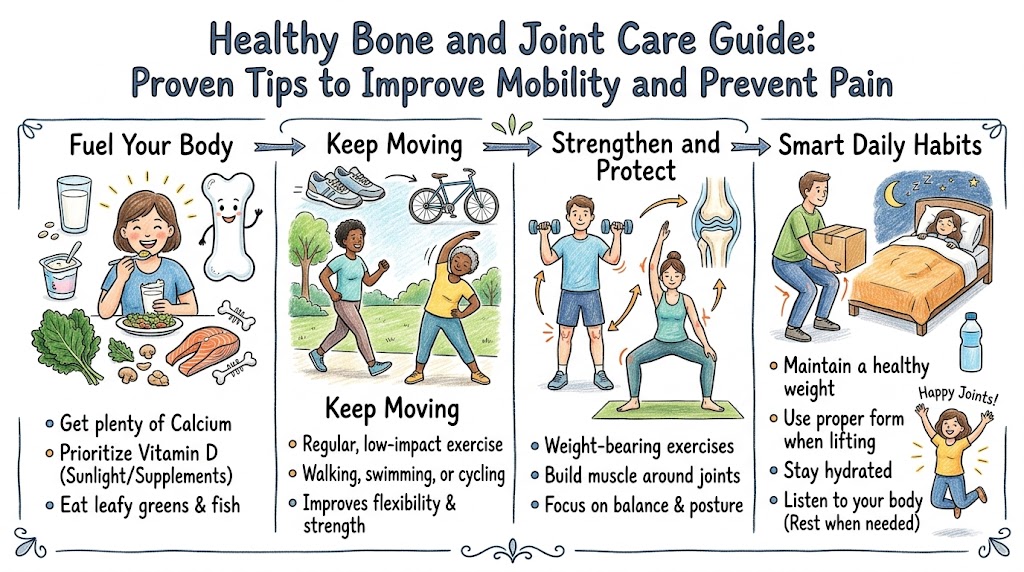
Preserving a resilient, pain-free musculoskeletal framework does not require complicated treatments. Long-term structural success is built on integrating practical, scientifically sound orthopedic wellness habits into your daily life.
1. Maintain a Consistent Weight Profile
Carrying excess body weight places a continuous, increased mechanical load on your weight-bearing joints, particularly your hips, knees, and lower back. For every single pound of extra body weight you carry, your knees experience an additional 4 pounds of pressure with every step you take. Over time, this chronic strain accelerates the breakdown of articular cartilage, significantly increasing the risk of early osteoarthritis. Maintaining a healthy weight reduces this mechanical friction and helps lower systemic inflammatory markers linked to joint pain.
2. Practice Dynamic Ergonomics and Mindful Posture
Slouching over a computer desk or looking down at a smartphone for extended periods places uneven mechanical stress on your spinal column, hips, and neck. This chronic misalignment can strain supporting ligaments and force surrounding muscles to work much harder to keep your frame stable. Focus on keeping your ears aligned over your shoulders, your feet flat on the floor, and your lower back properly supported. If you work a desk job, integrate regular movement breaks to prevent joint stiffness.
3. Incorporate Gentle Stretching and Flexibility Routines
Healthy cartilage relies on regular, full-range movement to stay nourished. Because cartilage does not have a direct blood supply, it depends on a mechanical process called imbibition—where joint movement acts like a pump, squeezing waste products out of the cartilage matrix and drawing fresh, nutrient-rich synovial fluid in. Dedicated joint mobility exercises, such as controlled shoulder circles, gentle hip rotations, and targeted hamstring stretches, help preserve elasticity in surrounding tendons and keep your joints moving smoothly.
[Joint Movement] ──> Squeezes Out Waste ──> Draws In Fresh Fluid ──> Nourishes Cartilage Cells
4. Build Strength to Support Your Frame
Your bones and joints do not work alone; they rely heavily on a supportive network of skeletal muscles to absorb impacts and control your movements. Engaging in regular strength training helps build strong muscles that take pressure off your joints, reducing the stress placed on delicate cartilage layers. Additionally, the physical pull of a contracting muscle against a bone sends a direct signal to bone-building cells, stimulating them to lay down fresh minerals and boost bone density.
5. Prioritize Strategic Injury Prevention
Musculoskeletal injuries, even minor ones like a sprained ankle, can permanently alter your natural movement patterns and increase the likelihood of developing osteoarthritis in that joint later in life. Protect your frame by wearing supportive, well-cushioned footwear that matches your foot shape, using proper form when lifting heavy objects, and avoiding sudden, unconditioned increases in exercise intensity.
Best Foods for Bone and Joint Health
What you choose to put on your plate provides the essential raw materials your body needs to rebuild your bone matrix, manufacture synovial fluid, and repair soft tissues. Eating a balanced diet rich in micronutrients supports healthy bone and joint health at every stage of life.
Table 1: Best Nutrients for Bone and Joint Health
| Essential Nutrient | Key Musculoskeletal Benefits | Primary Dietary Food Sources |
| Elemental Calcium | Serves as the primary structural building block for maintaining dense, hard bone matrices. | Milk, fortified dairy, plain Greek yogurt, sardines, tofu, collard greens, almonds. |
| Vitamin D3 | Essential for helping your intestines absorb calcium efficiently from the food you eat. | Fatty fish (salmon, mackerel), cod liver oil, egg yolks, fortified milk, safe sun exposure. |
| Omega-3 Fatty Acids | Works as a natural anti-inflammatory compound, helping to soothe joint pain and stiffness. | Wild-caught salmon, walnuts, chia seeds, flaxseeds, high-quality fish oil supplements. |
| Magnesium | Aids in converting Vitamin D into its active form and supports overall bone crystal density. | Pumpkin seeds, spinach, dark leafy greens, almonds, black beans, whole grains. |
| High-Quality Protein | Provides essential amino acids needed to maintain muscle volume and repair joint cartilage layers. | Lean chicken breast, turkey, eggs, lentils, chickpeas, organic grass-fed beef. |
Importance of Exercise for Bone Strength and Joint Mobility
When it comes to your musculoskeletal health, the old saying “use it or lose it” is a scientific reality. Your bones and joints respond directly to the physical loads and movements they experience each day.
The Power of Weight-Bearing Exercise
Weight-bearing physical activities are exercises where your body fights against gravity while standing upright. Activities like brisk walking, jogging, climbing stairs, hiking, or dancing place gentle mechanical stress on your lower body bones. This stress triggers a positive response, encouraging bone cells to absorb more calcium and strengthen their internal structures, serving as a powerful defense for osteoporosis prevention.
The Impact of Resistance Training
Resistance exercises, such as using free weights, resistance bands, or bodyweight movements like squats and lunges, pull directly on your bone attachment points. This mechanical stimulation helps build dense bone structures while strengthening the supporting muscle groups around your knees, hips, and shoulders, providing stable protection against joint wear.
Lifestyle Habits That Harm Musculoskeletal Health
Just as positive habits strengthen your frame, certain everyday choices can slowly drain vital minerals from your bones and accelerate the breakdown of your joints.
Chronic Tobacco and Nicotine Use
Nicotine is a potent blood vessel constrictor that reduces circulation to your bone tissues and joint capsules, starving them of essential oxygen and nutrients. Furthermore, smoking interferes with your body’s ability to absorb calcium from your diet and disrupts natural estrogen levels, which are critical for maintaining healthy bone density in both men and women.
Excessive Alcohol and Caffeine Intake
Consuming large amounts of alcohol can disrupt your parathyroid hormone levels, leading to a drop in calcium reserves and throwing off your body’s bone-building processes. Similarly, drinking excessive amounts of caffeine or sugary sodas containing phosphoric acid can cause your body to lose small amounts of calcium through elimination, gradually impacting your bone strength over time.
How Aging Affects Bones and Joints
As the years progress, our musculoskeletal tissues naturally undergo subtle structural modifications that require adjusted care strategies.
The Breakdown of Articular Cartilage
Over decades of continuous use, your joint cartilage can naturally lose a portion of its water content and elasticity, making it thinner and more vulnerable to physical stress. At the same time, your body may produce less synovial fluid, leading to a feeling of morning joint stiffness.
Changes in Bone Mineral Density
For women, the transition through menopause triggers a significant drop in estrogen levels—a hormone that plays a key role in keeping bone breakdown in check. This hormonal shift can cause a rapid decline in bone density during the initial post-menopausal years, making proactive bone density screenings (DEXA scans) an important step for arthritis prevention and overall bone health tracking.
Signs of Poor Bone and Joint Health
Musculoskeletal issues often develop slowly beneath the surface, showing early signs through subtle changes in your comfort or movement. Recognizing these indicators early allows you to make targeted adjustments before issues progress:
- Persistent Morning Joint Stiffness: Feeling stiff or limited in your movements for longer than 30 minutes after waking up, which can point to early joint inflammation.
- Localized Joint Clicking or Crepitus: Hearing or feeling a grinding, crunching, or popping sensation inside your knees, hips, or shoulders during normal physical activity.
- A Gradual Loss of Physical Height: Noticing that your clothes fit differently or measuring shorter over time, which can indicate subtle compression shifts in the spine.
- Unexplained Joint Swelling or Warmth: Finding that a specific joint looks puffy, feels warm to the touch, or remains tender after minor everyday use.
- Recurrent, Dull Bone Aches: Experiencing a deep, persistent ache in your shins, thighs, or forearms that does not improve with rest or muscle massage.
When to See an Orthopedic Specialist
While temporary muscle soreness from a workout usually improves on its own within a few days, certain warning signs require a thorough evaluation by a qualified specialist. Knowing when to seek professional care helps ensure you receive accurate tracking and a safe management plan.
Table 4: Warning Signs of Bone and Joint Problems
| Warning Symptom | Potential Orthopedic Concern | Recommended Clinical Action |
| Inability to Bear Weight on a Joint | Deep structural fracture; severe ligament tear; acute structural instability. | Seek immediate orthopedic or emergency medical care. |
| Joint Pain Lasting More Than 2 Weeks | Early osteoarthritis; chronic joint inflammation; overuse tendon injury. | Schedule a comprehensive consultation with an orthopedic specialist. |
| Visible Joint Deformity or Misalignment | Acute joint dislocation; advanced rheumatoid arthritis damage. | Seek urgent medical evaluation for diagnostic imaging. |
| Numbness or Tingling in Extremities | Spinal nerve compression; advanced radiculopathy issues. | Consult an orthopedic spine specialist promptly. |
Preventing Bone and Joint Injuries
Protecting your frame from unexpected injuries is essential for avoiding long-term joint complications and maintaining a balanced movement pattern.
Step Up Your Home Safety
Many serious bone fractures happen during everyday falls around the house. Minimize your risks by removing tripping hazards like loose area rugs, ensuring your hallways and stairwells are well-lit, and installing non-slip mats or handrails in your bathroom and shower spaces.
Always Warm Up Before Exercise
Never push your body into intensive workouts or heavy lifting with cold, stiff muscles. Spend 5 to 10 minutes performing low-intensity movements—like light walking, arm circles, or bodyweight lunges—to gradually boost circulation, warm up your muscles, and prepare your joints for physical activity.
Musculoskeletal Advice Across the Lifespan
Our bones and joints face different structural demands as we grow, requiring adjusted lifestyle focus areas at different stages of life.
Pediatric Orthodontics & Growth (Children)
A child’s skeletal frame is growing rapidly, making childhood the ideal window to build a strong foundation for lifelong health. Encourage children to participate in plenty of active outdoor play, limit sedentary screen time, and ensure they get adequate calcium from fortified foods to maximize their peak bone mass.
Adult Focus Areas
During our busy working years, desk-bound jobs, long commutes, and stressful routines often present the biggest challenges to our posture and movement. Adults should focus on setting up an ergonomic workstation, fitting in regular strength-training sessions each week, and limiting processed, high-sodium foods that can interfere with calcium retention.
Senior Structural Preservation (Seniors)
For older adults, the primary goals are to preserve joint flexibility, maintain bone density, and prevent balance-related falls. Seniors should focus on regular, low-impact movements like swimming, water aerobics, or brisk walking, alongside targeted balance exercises like Tai Chi, to stay stable, agile, and independent.
Table 3: Healthy Habits vs. Harmful Habits for Bone Health
| Healthy Orthopedic Habit | Structural Systemic Benefit | Harmful Physical Habit |
| Enjoying weight-bearing exercise 3x a week | Stimulates bone cells to lay down fresh minerals and build density. | Maintaining a sedentary, desk-bound lifestyle |
| Maintaining an ergonomic sitting posture | Distributes mechanical forces evenly across the spinal column. | Slouching forward over screens for hours |
| Meeting daily Calcium and Vitamin D goals | Provides the raw materials needed to preserve your skeletal frame. | Relying on high-sodium, ultra-processed meals |
| Wearing well-cushioned, supportive shoes | Absorbs structural impacts and stabilizes your walking stride. | Wearing worn-out footwear with zero arch support |
Common Myths vs. Facts About Bone and Joint Care
- Myth: Cracking or popping your finger knuckles will automatically cause you to develop arthritis in your hands later in life.
- Fact: The sound you hear when cracking your knuckles is caused by tiny bubbles of nitrogen gas bursting safely inside the synovial fluid. While habitual cracking can occasionally cause minor temporary grip weakness, clinical studies show it does not cause osteoarthritis.
- Myth: If you are already diagnosed with joint pain, the best thing you can do is rest completely and avoid exercise.
- Fact: Prolonged rest can cause your supporting muscles to weaken and your joints to become even stiffer. Engaging in gentle, low-impact movements like swimming or cycling is one of the best ways to keep your joints lubricated, manage pain, and preserve flexibility.
- Myth: Taking large amounts of calcium supplements is all your body needs to guarantee strong bones.
- Fact: Calcium cannot build bone alone. Your body requires a balance of other key nutrients, particularly Vitamin D3 (to absorb the calcium in the gut) and Vitamin K2 (to guide that calcium directly into your bones rather than letting it collect in your arteries).
- Myth: Bone is a static, rigid structure that never changes once you finish growing during adolescence.
- Fact: Bone is a dynamic, living tissue that breaks down and completely rebuilds itself throughout your entire life. Your body remodels roughly $10\%$ of your total skeletal mass every single year, responding directly to your daily diet and physical activity levels.
Latest Advances in Orthopedic Care
The field of musculoskeletal medicine continues to advance, introducing innovative tools that provide deeper insights into our internal health and expand treatment choices.
Robotic-Assisted Joint Replacement Surgery
When advanced osteoarthritis requires a total knee or hip replacement, top hospitals now utilize computerized robotic-assisted arms. Using a detailed 3D model of the patient’s unique anatomy captured before the operation, these robotic arms allow the surgeon to position the new joint implant with exceptional accuracy, helping to minimize soft-tissue trauma, shorten recovery times, and extend the functional lifespan of the implant.
High-Resolution Intraoperative Diagnostic Scans
Cardiovascular surgeries often utilize intraoperative tracking, and modern orthopedic operating suites have adopted similar innovations. Using real-time, low-radiation 3D imaging navigation systems, surgeons can instantly verify the exact alignment of a repaired bone fracture or instrument placement while still in the operating room, ensuring excellent structural accuracy.
Future of Bone and Joint Treatment Technologies
Looking ahead, orthopedic science is moving toward biological, regenerative interventions designed to repair tissues naturally and optimize long-term joint health.
3D Bio-Printed Cartilage Implants
Scientists are developing advanced bio-printing techniques that use a patient’s own harvested stem cells to construct custom cartilage patches in a lab. These living implants can be shaped to match the exact dimensions of a localized joint defect, gradually integrating with the surrounding tissue to repair damage naturally without needing a full joint replacement.
Expert Recommendations
Clinical guidance from leading international orthopedic and bone research societies highlights the value of proactive, balanced care:
Clinical Consensus: “Preserving lifelong musculoskeletal mobility relies on a balanced combination of targeted weight-bearing exercise, optimal mineral nutrition, and protective lifestyle habits. Rather than waiting for chronic pain to limit your movements, begin building your core and supporting muscles early in life. When persistent joint pain or mobility limitations appear, avoid self-diagnosing or trying trendy, unverified supplement routines. Patients achieve the safest, most reliable outcomes by consulting board-certified orthopedic specialists who can use advanced tools to build an evidence-based care path tailored to your unique lifestyle.”
Common Mistakes People Make That Affect Bone Health
Even well-intentioned individuals can sometimes fall into habits that inadvertently strain their musculoskeletal framework. Being aware of these common pitfalls makes it easier to keep your bones and joints running smoothly:
- Relying Solely on High-Impact Cardio Workouts: Running or high-impact aerobics are great for your cardiovascular health, but failing to balance them with targeted strength training can leave your joints vulnerable to uneven impacts and repetitive stress injuries.
- Ignoring Persistent, Localized Joint Discomfort: Pushing through joint pain with a “no pain, no gain” mindset can turn minor soft-tissue strains or early cartilage wear into chronic, complex injuries. Always listen to your body and give your joints adequate rest to heal.
- Consuming High-Sodium Processed Foods Regularly: Diets that are exceptionally high in sodium can cause your body to lose small amounts of calcium through elimination, gradually drawing minerals away from your bone reserves if your daily intake is low.
- Taking Calcium Supplements on an Empty Stomach: Certain forms of calcium, like calcium carbonate, require plenty of stomach acid to dissolve properly. Taking them without food can reduce their absorption, meaning your body receives lower benefits than expected.
Daily Bone and Joint Health Checklist
Building a reliable, healthy routine is easier when you break your habits down into simple, daily steps. Use this practical lifestyle checklist to support your frame from morning to night:
Morning Routine
- Perform a Gentle 5-Minute Stretch: Wake up your joints right after leaving bed with slow, controlled movements like shoulder rolls and gentle torso twists to stimulate fresh synovial fluid circulation.
- Eat a Nutrient-Dense Breakfast: Include high-quality calcium and protein sources, like a bowl of Greek yogurt topped with almonds or a fortified milk smoothie, to provide your bones with essential raw materials.
- Check Your Posture Early: Set your alignment for the day by adjusting your car seat or office chair to provide optimal support for your lower back and spine.
Afternoon Settings
- Take Regular Movement Breaks: Set a simple timer on your phone or watch to remind you to stand up, stretch your legs, and walk around for 2 minutes every hour to prevent joint stiffness.
- Incorporate a Brief Walk: Spend 15 minutes of your lunch break walking briskly outdoors on a flat surface to enjoy low-impact weight-bearing exercise and clear your mind.
- Stay Hydrated Continuously: Keep a clean water bottle at your desk to sip water regularly throughout the day, supporting optimal hydration for your joint tissues and spinal discs.
Evening Management
- Complete a Core or Strength Routine: Spend 20 minutes engaging in targeted resistance band exercises or bodyweight squats to strengthen the supporting muscles around your hips and knees.
- Enjoy a Balanced, Mineral-Rich Dinner: Build your evening meal around lean proteins, dark leafy greens, and omega-3 rich foods, like baked salmon served with a side of steamed spinach.
- Wind Down for Restful Sleep: Power down digital screens an hour before bed and practice a relaxing wind-down routine to ensure you get 7 to 9 hours of deep sleep for proper bone remodeling and tissue repair.
Key Takeaways
- An Interconnected Framework: Your bones and joints operate as a continuous mechanical system that drives your physical movement, stores essential minerals, and protects your long-term vitality.
- The Power of Weight-Bearing Movement: Building strong bones and keeping joints moving smoothly relies on regular physical activity, combining weight-bearing walks with targeted strength training.
- Provide Essential Raw Materials: Fuel your skeletal frame by consistently meeting your daily goals for Calcium, Vitamin D3, Magnesium, and high-quality protein through a balanced diet.
- Protect Your Frame From Stress: Maintain a healthy weight and practice good posture to reduce mechanical friction across your knees and hips, helping to prevent early joint wear.
- Seek Specialized Care Early: While daily habits form a strong foundation for health, experiencing persistent joint swelling, deformities, or pain that lasts longer than two weeks warrants a professional medical evaluation.
Frequently Asked Questions
1. What are the best everyday tips for healthy bone and joint care?
The most reliable everyday habits include participating in regular weight-bearing and strength exercises, maintaining a stable and healthy weight, drinking plenty of water, practicing proper posture, and eating a diet rich in calcium and Vitamin D3.
2. What is the difference between osteoarthritis and osteoporosis?
Osteoarthritis is a localized, wear-and-tear condition where the protective cartilage lining inside a joint slowly breaks down, causing pain and stiffness. Osteoporosis is a systemic metabolic disease where bones lose their overall mineral density and become thin and fragile, increasing the risk of sudden fractures.
3. Why does cold or rainy weather sometimes make joint pain feel worse?
Changes in barometric pressure can cause the tissues and tendons surrounding a joint to expand or contract slightly. In a joint that is already sensitive or inflamed from arthritis, these pressure shifts can irritate nearby nerves, leading to a temporary increase in stiffness and discomfort.
4. Can you build up your bone density through diet and exercise after age 40?
While peak bone mass is achieved in your twenties, committing to regular strength training, weight-bearing exercise, and optimal mineral nutrition after age 40 can help minimize bone loss, preserve existing bone density, and strengthen surrounding muscles to protect your frame.
5. Why is Vitamin D3 just as important as calcium for building strong bones?
Calcium cannot build strong bone structures alone. Your body requires a sufficient supply of Vitamin D3 to absorb calcium efficiently from the food you eat through your intestines. Without Vitamin D3, much of the calcium you consume passes through your system without being used.
6. What are the best low-impact exercises for individuals dealing with joint pain?
Excellent, joint-friendly activities include swimming, water aerobics, stationary cycling, walking on flat surfaces, and targeted elliptical training. These exercises provide cardiovascular benefits and strengthen muscles without placing high-impact stress on your knees or hips.
7. How does carrying extra body weight impact your knee joints?
Your knees experience a significant mechanical load during daily movement. For every single pound of extra body weight you carry, your knees absorb roughly 4 pounds of pressure with every step you take, which can accelerate cartilage breakdown over time.
8. What is crepitus, and should I be worried if my knees click when I stand up?
Crepitus refers to the crunching, popping, or clicking sounds produced by a joint during movement. If the sound is painless and does not cause swelling, it is usually just gas bubbles bursting safely inside the joint fluid. If the clicking is accompanied by localized pain, catch-points, or swelling, it could point to cartilage wear and should be evaluated by a specialist.
9. Can a high-sodium diet gradually weaken your skeletal structure?
Yes. Diets that are consistently high in sodium can cause your kidneys to eliminate small amounts of calcium through urination. If your daily calcium intake is low, your body will draw minerals from your bones to compensate, affecting bone strength over time.
10. Why do women face a higher risk of developing osteoporosis than men?
Women naturally have smaller, thinner bone structures than men. Additionally, the transition through menopause triggers a sharp drop in estrogen levels—a hormone that plays a key role in keeping bone breakdown in check—which can accelerate bone loss during those years.
11. What is the link between regular posture choices and chronic lower back pain?
Slouching forward or hunching over screens throws off your spine’s natural alignment, placing uneven mechanical strain on your discs, ligaments, and lower back muscles. Maintaining an ergonomic, upright posture distributes your body weight evenly, reducing muscle fatigue and protecting your joints.
12. How soon should I start a physical therapy routine after a minor joint injury?
For minor injuries like a mild ankle sprain, a brief period of rest using the RICE protocol (Rest, Ice, Compression, Elevation) is helpful during the first 48 hours. Once acute swelling begins to go down, starting gentle range-of-motion movements and physical therapy early can help prevent permanent joint stiffness.
13. What is a DEXA scan, and who should schedule one?
A DEXA scan is a quick, painless, low-radiation X-ray screening used to measure your bone mineral density. It is highly recommended for women aged 65 and older, men aged 70 and older, or anyone with specific risk factors like early menopause or a family history of bone fractures.
14. How does cigarette smoking interfere with bone healing after an injury?
Nicotine restricts small blood vessels, reducing blood flow, oxygen, and essential nutrients to your bone tissues and joint spaces. This delay slows down cell production and interferes with bone remodeling, increasing the risk of delayed healing or non-union after a fracture.
15. How can I easily compare the quality and technology options of different orthopedic hospitals?
You can confirm a facility’s credentials, available technologies, and specialist volumes by reviewing verified clinical outcome registries or comparing bone and joint programs through trusted networks like BestOrthoHospitals.com, which helps patients discover orthopedic hospitals, compare musculoskeletal treatment options, explore orthopedic specialists, review joint replacement and bone care services, and access information about advanced orthopedic healthcare solutions.
Conclusion
Adopting practical tips for healthy bone and joint care is one of the most effective, rewarding investments you can make for your overall mobility and health. Your musculoskeletal framework is a dynamic, living system that responds directly to your daily physical inputs, your nutritional choices, and how you protect your frame from physical stress. By making simple, consistent adjustments—such as enjoying weight-bearing walks, fueling your body with vital minerals like calcium and Vitamin D3, maintaining a healthy weight, and practicing proper posture—you can preserve your joint mobility, build bone strength, and prevent injury.While daily home care forms a strong foundation for health, true musculoskeletal wellness also relies on expert medical support when complex structural issues emerge. Rather than self-diagnosing or pushing through chronic pain with a “no pain, no gain” mindset, prioritize evidence-based diagnostics and professional tracking. Utilizing specialized, patient-focused networks like BestOrthoHospitals.com connects you with trusted facilities and board-certified specialists who can help you optimize your care. By taking a proactive approach to your orthopedic wellness and partnering with qualified medical professionals, you can navigate your health journey safely and look forward to a comfortable, active, and independent future.