Introduction
Our joints are the silent workhorses of our body, allowing us to move, work, play, and navigate the world with ease. Yet, many of us only think about our joint health when something goes wrong—when a sharp pain in the knee or stiffness in the shoulder suddenly limits our daily activities. The truth is that orthopedic issues, ranging from minor strains to chronic damage, are increasingly common in our modern, sedentary, yet often overstressed lives.Taking proactive steps to safeguard your musculoskeletal system is one of the best investments you can make for your future quality of life. Whether you are a dedicated athlete pushing your physical limits or someone who spends most of the day at a desk, learning how to move safely and strengthen your foundation is key. For those seeking professional guidance and reliable information on maintaining long-term bone and joint health, BestOrthoHospitals serves as a trusted partner. By embracing healthy movement habits today, you can protect your mobility and keep your joints resilient for years to come.
Understanding Joint Injuries
A joint injury occurs when the structures that allow your bones to move—ligaments, tendons, cartilage, and muscles—are damaged. These injuries can be broadly categorized as either acute or overuse injuries. Acute injuries often result from sudden trauma, such as a fall or a collision during sports, while overuse injuries develop gradually from repetitive stress.
Commonly affected areas include the knees, shoulders, hips, and ankles. Because these areas bear the weight of our bodies or facilitate complex ranges of motion, they are particularly vulnerable. Understanding that joint damage often accumulates over time is crucial; by recognizing the signs of strain early, you can often prevent a minor issue from becoming a debilitating condition.
Common Causes of Joint Injuries
- Poor Posture: Slouching or rounded shoulders place uneven stress on your joints, leading to wear and tear.
- Sudden Trauma: Falls, slips, or accidents can instantly damage ligaments or cause fractures.
- Overtraining: Repeatedly pushing muscles and joints without adequate rest periods leads to inflammation and overuse damage.
- Weak Muscles: Muscles act as shock absorbers for your joints. If they are weak, your joints bear the full brunt of impact.
- Improper Exercise Techniques: Lifting weights with incorrect form or skipping warm-ups significantly raises the risk of injury.
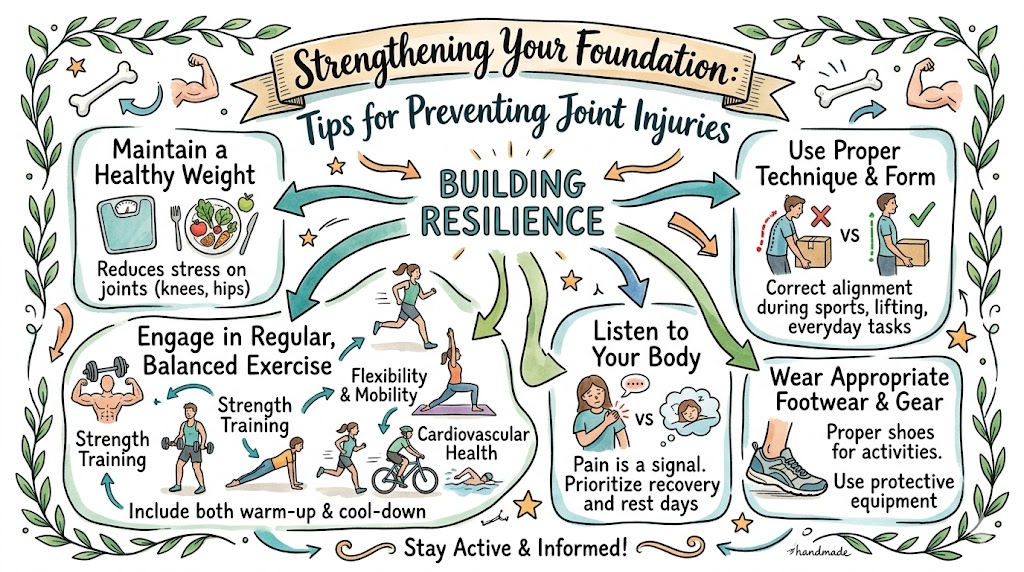
- Obesity: Excess body weight increases stress on weight-bearing joints, especially knees and hips, which may accelerate joint damage over time.
- Improper Footwear: Shoes that lack support or cushioning fail to absorb the impact of walking and running.
Why Orthopedic Prevention Matters
Prevention is the cornerstone of a healthy, active life. By focusing on orthopedic care before an injury occurs, you gain several long-term benefits:
- Mobility: Staying flexible and strong allows you to remain independent as you age.
- Reduced Risk of Surgery: Many surgical interventions are the result of years of cumulative, preventable damage.
- Peak Performance: For athletes, injury prevention is essential for consistent training and career longevity.
- Chronic Pain Avoidance: Preventing an injury is far easier than managing the long-term pain and inflammation that follows a serious joint tear or cartilage issue.
Importance of Warm-Ups and Stretching
Never underestimate the power of preparation. Warming up before physical activity helps muscles become more flexible and reduces the risk of strains and sports-related injuries.
- Dynamic Warm-ups: Moves like leg swings, arm circles, or walking lunges increase blood flow to the muscles and “lubricate” the joints.
- Static Stretching: Best performed after your workout, when your muscles are warm, to improve long-term flexibility and range of motion.
- Consistency: Treating your warm-up as a non-negotiable part of your exercise routine is the most effective way to protect your ligaments and tendons from sudden tears.
Strength Training for Joint Protection
Building muscle is the most effective way to “armor” your joints. Building muscle strength helps stabilize joints and reduces stress on knees, hips, shoulders, and ankles during physical activity.
- Core Strength: A strong core supports your spine, which in turn reduces the pressure placed on your hips and legs.
- Leg and Hip Training: Exercises like squats and lunges (when done with proper form) strengthen the muscles that stabilize the knee and hip joints.
- Stability Work: Using balance boards or single-leg exercises teaches your body to stabilize joints under pressure, which is critical for preventing falls and twists.
Best Exercises for Healthy Joints
- Walking: A low-impact, sustainable way to keep your joints lubricated and your bones dense.
- Swimming: Provides a full-body workout with zero impact, making it ideal for those with existing joint concerns.
- Cycling: Excellent for cardiovascular health without the repetitive pounding on the knees that running can cause.
- Yoga: Combines strength with deep flexibility, helping to lengthen muscles and open up tight joints.
- Pilates: Focused on core stability and controlled, fluid movements that build strength without straining the joints.
Proper Posture and Movement Techniques
How you move in your daily life matters just as much as how you move in the gym. Poor posture and incorrect body mechanics can gradually increase pressure on joints and contribute to chronic orthopedic problems.
- Sitting: Keep your feet flat on the floor, your knees at a 90-degree angle, and your screen at eye level to avoid neck and back strain.
- Lifting: Always lift with your legs, not your back, keeping the weight close to your body.
- Running/Walking Form: Aim for short, quick strides and avoid “overstriding” (landing with your foot far in front of your body), which increases shock to the knees.
Role of Nutrition in Joint Health
Your joints require specific fuel to stay resilient:
- Calcium and Vitamin D: Essential for maintaining the bone density that supports your joints.
- Protein: Provides the building blocks your body needs to repair muscle tissue after a workout.
- Anti-inflammatory Foods: Berries, fatty fish, nuts, and leafy greens can help manage the inflammation that often leads to joint stiffness.
- Hydration: Water keeps your cartilage hydrated; well-hydrated cartilage acts as a better shock absorber for your joints.
Technology in Modern Orthopedic Care
Technology now plays a vital role in keeping us injury-free:
- Digital Imaging: Allows specialists to see the state of your joints with extreme detail.
- Motion Tracking: Used in physical therapy to correct your form and prevent injuries before they happen.
- Wearable Devices: Track your activity levels and warn you if you are overdoing it, helping to balance activity and rest.
- Robotic Surgery: While used for repair, the same robotic precision is now being applied to help surgeons understand joint mechanics better than ever.
Benefits of Choosing the Right Orthopedic Hospital
When you engage with a top-tier orthopedic center, you benefit from:
- Comprehensive Diagnostics: Early detection of potential structural weaknesses.
- Personalized Rehab: Not all bodies move the same; get a prevention plan based on your unique anatomy.
- Specialized Expertise: Whether you are an athlete or a senior, work with experts who understand your specific risk factors.
- Modern Resources: Access to the latest in diagnostic and recovery technology.
Risks and Realistic Expectations
It is important to remember:
- No “Bulletproof” Method: Even with the best habits, accidents can happen.
- Consistency Wins: Prevention is not a one-time event; it is a lifestyle that must be maintained.
- Listen to Your Body: If you feel pain, stop. Ignoring your body’s signals is the fastest route to a serious injury.
- Professional Help: Always consult a professional before starting a new, high-intensity exercise regimen.
Common Mistakes People Make
- Ignoring Pain: “Working through the pain” is often a recipe for a permanent injury.
- Overtraining: Doing too much, too soon, is the primary cause of overuse injuries.
- Improper Gear: Worn-out shoes are a leading cause of foot, ankle, and knee issues.
- Lack of Recovery: Your joints and muscles repair themselves during rest, not during the workout itself.
Best Practices for Long-Term Joint Health
- Stay Active: The body is designed to move; inactivity leads to stiff, weak joints.
- Weight Management: Keeping your weight in a healthy range takes significant pressure off your joints.
- Regular Checkups: Don’t wait for pain to see a professional; schedule orthopedic checkups if you are active or starting a new fitness plan.
- Listen to your body: If you feel persistent soreness, give yourself the time to recover.
Real-World Orthopedic Use Cases
- Athlete Prevention: A soccer player uses a personalized strength plan to balance their muscle groups, successfully preventing the recurring knee issues they faced previously.
- Posture Correction: A desk worker corrects their workstation ergonomics, resulting in the total resolution of chronic shoulder and neck stiffness.
- Fall Prevention: An elderly patient joins a balance and strength class, significantly increasing their stability and reducing their fear of falling at home.
Future of Orthopedic Injury Prevention
The future is incredibly bright with the integration of AI. We are nearing a time where wearable sensors will analyze your running or lifting form in real-time and provide immediate, gentle feedback to prevent a strain before it occurs. Furthermore, advances in regenerative medicine are looking at ways to strengthen ligaments and cartilage from the inside out, offering a future where we can keep our joints “younger” for much longer.
FAQs
- What causes joint injuries? They are caused by trauma, overuse, poor form, or repetitive stress over time.
- Can exercise prevent joint pain? Yes, regular, low-impact exercise keeps joints lubricated and strengthens supporting muscles.
- Are knee injuries common in sports? Very common, but they are often preventable with proper leg strengthening and warm-up routines.
- How important is stretching? Essential for maintaining a full range of motion and preventing muscle-related joint tightness.
- What foods support joint health? Foods rich in Omega-3s, Vitamin D, Calcium, and lean proteins are best.
- When should I see an orthopedic specialist? If you have persistent pain, swelling, or a “giving way” feeling in your joints.
- Is it normal for joints to crack? Occasionally, yes, but if it is accompanied by pain, it should be checked.
- How do I know if I’m overtraining? If you feel constant fatigue, have trouble sleeping, or notice persistent soreness that doesn’t go away in 48 hours.
- Should I use ice or heat? Ice is generally for acute injuries and swelling; heat is for chronic stiffness or muscle tension.
- Is weight training safe for joints? Yes, if done with good form and appropriate weight, it is one of the best ways to protect joints.
- Do I need special shoes? If you are active, yes—proper arch support is vital for joint health.
- Can stress cause joint pain? It can cause muscle tension, which then pulls on joints and causes pain.
- Are supplements helpful? Some may be, but always discuss them with a doctor to ensure they are high-quality and necessary.
- How do I prevent arthritis? By maintaining a healthy weight, avoiding major injuries, and staying active.
- How do I choose a hospital? Look for a facility that emphasizes physical therapy and sports medicine alongside surgery.
Final Thoughts
Your joints are the foundation of your independence. Protecting them is not about stopping your favorite activities; it is about learning how to perform them in a way that your body can sustain for a lifetime. By focusing on muscle strength, proper form, and listening to your body’s signals, you can enjoy an active and pain-free life well into your later years. Remember, it is never too early—or too late—to start taking care of your joints.