Introduction
Pediatric scoliosis means a sideways curve of the spine in a child. The spine normally has gentle curves when viewed from the side.With scoliosis, the spine also curves sideways. The curve may be mild, moderate, or more noticeable.Parents may notice uneven shoulders or changes in posture. However, some children show no clear signs.Scoliosis can appear during childhood or teenage growth. Early evaluation helps doctors understand the curve and watch for changes.BestOrthoHospitals can help families research orthopedic and spine care options. A qualified pediatric specialist should assess any concerning changes.
What Is Pediatric Scoliosis?
The spine is made of small bones called vertebrae. It supports the body and protects important nerves.A healthy spine has natural curves. These curves help the body stay balanced and move well.Scoliosis creates an unusual sideways curve. The spine may also twist slightly as it curves.Some curves remain small and need only regular checks. Other curves may become more noticeable during growth.Pediatric scoliosis does not always cause pain. Many children continue normal daily activities.Doctors consider several factors during care. These include the child’s age, growth, curve size, and curve location.
Common Signs of Scoliosis in Children
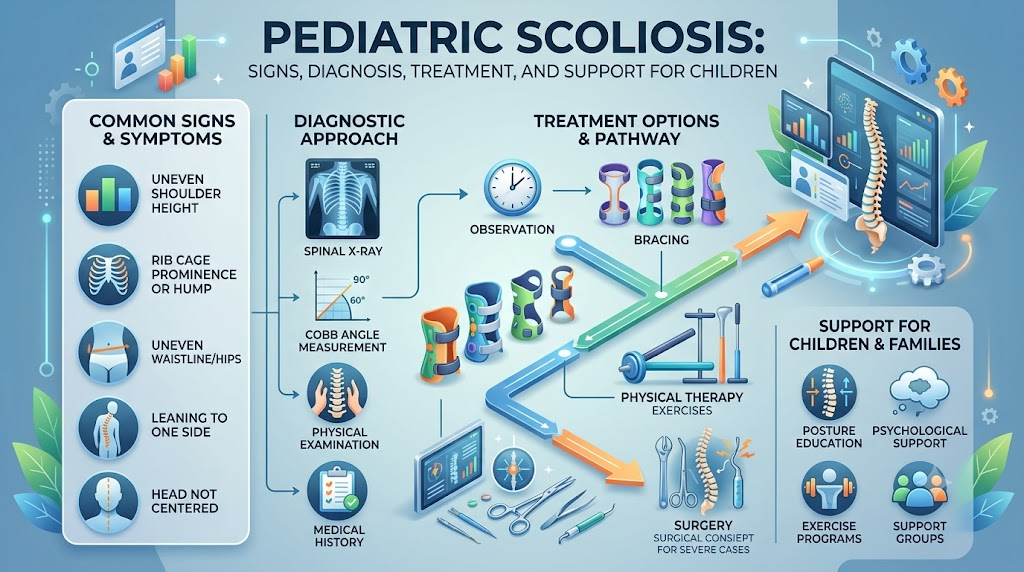
Parents may notice changes while a child stands or moves. These changes can sometimes suggest a spinal curve.
Common signs include:
- Uneven shoulders
- One shoulder blade sticking out more
- An uneven waist
- One hip appearing higher
- Clothes fitting unevenly
- Leaning to one side
- Changes in posture
- A visible spinal curve
Scoliosis is often painless. A doctor may find it during a routine check or screening.
An uneven shoulder does not always mean scoliosis. Many normal body differences can look similar.
Parents should not try to diagnose scoliosis at home. A trained healthcare professional can check the child’s spine.
What Causes Pediatric Scoliosis?
- Scoliosis can have several causes. In some children, doctors cannot find one clear cause.
- This type is called idiopathic scoliosis. It is common during the teenage growth years.
- Congenital scoliosis develops because of spine changes before birth. Some vertebrae may not form normally.
- Neuromuscular scoliosis can occur with conditions affecting muscles or nerves. These conditions can affect how the spine grows.
- Family history may also play a role. Children with certain family patterns may have a higher chance of scoliosis.
- Some spine development conditions can also cause a curve. Poor posture or carrying a school bag does not explain most scoliosis cases.
- Parents should not blame themselves or their child. The cause is often outside anyone’s control.
How Is Pediatric Scoliosis Diagnosed?
Doctors start by asking about the child’s health and growth. They may also ask about family history and symptoms.Next, the doctor checks posture and the spine. A forward-bend examination may help show uneven areas.The doctor may order spine X-rays. X-rays help confirm scoliosis and measure the spinal curve.Doctors measure curves in degrees. This measurement helps them understand the curve’s size.Additional imaging may be needed in some cases. The doctor decides this based on the child’s condition.Growth also matters when planning care. A growing child may have a different care plan than a child near full growth.
The doctor may watch the curve over time. This helps show whether the curve stays stable or changes.
Understanding Scoliosis Curve Severity
Doctors use the curve size to understand scoliosis. However, curve size is not the only factor.
Age, growth, curve location, and symptoms also matter. Doctors may also consider the chance of further curve growth.
A small curve may need regular observation. A larger or changing curve may need closer treatment planning.
| Care Approach | General Purpose | What Families May Expect |
|---|---|---|
| Observation | Watch a smaller or stable curve | Regular checks and imaging when needed |
| Bracing | Help limit curve growth in selected children | Brace use and regular follow-up |
| Surgery | Treat selected severe or progressing curves | Specialist assessment and detailed planning |
Treatment Options for Pediatric Scoliosis
Treatment depends on the child’s specific condition. Doctors consider growth, curve size, location, and progression risk.Some mild curves only need observation. Regular visits help doctors watch for changes during growth.A brace may help reduce curve progression in some growing children. Bracing does not simply cure scoliosis.Physical therapy may also be used in selected cases. It can support movement, strength, and daily function.Surgery may be considered for selected severe or progressive curves. This decision requires careful specialist evaluation.No single treatment fits every child. Parents should discuss the available choices with the child’s healthcare team.
Scoliosis Bracing
A scoliosis brace supports the child’s spine during growth. Doctors may suggest bracing for certain growing children.The goal is often to reduce the chance of further curve progression. A brace does not remove scoliosis instantly.The doctor chooses the brace type and wearing schedule. The plan depends on the child’s needs and growth.Children may need time to adjust to wearing a brace. Parents can help by offering calm and positive support.Skin comfort also matters. Follow the care team’s advice about checking the skin and adjusting the brace.Regular follow-up visits help check the brace fit. Adjustments may be needed as the child grows.
Children should not feel ashamed about wearing a brace. Family support can help protect confidence during treatment.
When Is Scoliosis Surgery Considered?
- Surgery is usually considered for selected severe or progressing curves. It is not needed for every child with scoliosis.
- One common procedure is spinal fusion. It joins selected spine bones so the curve cannot keep progressing in the same way.
- The surgeon uses special tools to support the spine during healing. The exact surgical plan depends on the child’s condition.
- Doctors consider growth, curve pattern, and progression when discussing surgery. They also consider the child’s overall health.
- Parents should ask about the reason for surgery. They should also ask about recovery, school, activity, and follow-up care.
- Surgery decisions require specialist assessment. Families should have enough time to understand the planned treatment.
Preparing a Child for Scoliosis Treatment
- Parents can help by preparing questions before specialist visits. Write down concerns about pain, growth, school, sports, and treatment.
- Bring available medical records and imaging reports. These can help the specialist understand the child’s history.
- Ask the doctor to explain imaging results in simple words. Children may also benefit from age-appropriate explanations.
- Discuss brace use at school when needed. Teachers may help the child feel comfortable and supported.
- Ask about sports and physical activity. Activity advice depends on the child’s condition and treatment.
- Keep follow-up appointments on schedule. Regular checks help the care team monitor changes during growth.
- Most importantly, listen to the child’s feelings. Calm family support can make treatment easier to manage.
Life With Pediatric Scoliosis
Many children with scoliosis continue school and social activities. Their daily routines can vary based on their condition.Sports and exercise may remain part of life for many children. However, activity limits depend on treatment and medical advice.School support can also help. Parents can discuss practical needs with teachers when treatment affects school activities.Body confidence may become a concern during the teenage years. A brace or visible curve can sometimes affect how a child feels.Families can provide reassurance without ignoring these feelings. Encourage children to ask questions and share worries.Regular medical follow-up remains important during growth. The care plan may change as the child’s body develops.
Choosing a Pediatric Spine and Orthopedic Hospital
Families can compare hospitals using practical questions. Start by checking experience with pediatric orthopedic and spine care.
Useful factors include:
- Pediatric orthopedic specialists
- Spine specialist availability
- Diagnostic imaging
- Scoliosis bracing support
- Pediatric anesthesia when needed
- Physical therapy services
- Surgical facilities
- Follow-up care
- Family communication
- Emergency support
Ask how the hospital supports children during treatment. Also ask how families can contact the care team after visits.
Good communication matters throughout scoliosis care. Families should understand the diagnosis, treatment choices, and follow-up plan.
BestOrthoHospitals.com can help families research orthopedic and spine care options. Families should choose care based on their child’s specific needs.
Frequently Asked Questions About Pediatric Scoliosis
1. What is pediatric scoliosis?
Pediatric scoliosis is a sideways curve of the spine in a child. The curve may be mild or more noticeable.
2. What are the signs of scoliosis in children?
Signs may include uneven shoulders, hips, or waist. One shoulder blade may also stick out more.
3. What causes scoliosis in children?
Causes vary by type. Some children have idiopathic scoliosis, where doctors cannot find one clear cause.
4. How is pediatric scoliosis diagnosed?
Doctors use a health history and physical examination. X-rays can confirm the curve and measure its size.
5. Can mild scoliosis get worse as a child grows?
Some curves can change during growth. Doctors may monitor the curve to watch for changes.
6. When is a scoliosis brace recommended?
A brace may help selected growing children. The doctor decides based on the child’s curve and growth.
7. Can children with scoliosis play sports?
Many children can stay active. Activity advice depends on the child’s condition and treatment.
8. When might scoliosis surgery be considered?
Surgery may be considered for selected severe or progressing curves. A specialist must assess the child’s spine first.
9. How long does scoliosis treatment take?
Treatment length varies by child and treatment type. Monitoring may continue during the child’s growth years.
10. When should parents see a pediatric orthopedic specialist?
Parents should seek evaluation when they notice a lasting spinal curve or uneven posture. A specialist can check the child’s spine.
Final Thoughts
Pediatric scoliosis can look different from child to child. Some curves need only monitoring, while others may need bracing or surgery.Growth plays an important role in scoliosis care. Regular checks can help doctors understand how the curve changes.Parents should avoid trying to diagnose scoliosis themselves. A qualified pediatric orthopedic or spine specialist can provide proper evaluation.Support also matters during treatment. BestOrthoHospitals.com can help families research pediatric orthopedic care and spine services.