Introduction
Shoulder pain can make simple activities such as dressing, reaching for something, lifting, or sleeping uncomfortable. Because the shoulder is a complex joint with many moving parts, pain can have several different causes, including overuse, muscle strain, tendon problems, arthritis, or an injury. Understanding what may be causing the discomfort can help you choose sensible next steps instead of trying treatments at random. Simple changes in activity and daily habits may help with some mild problems, while persistent or severe symptoms may need professional assessment. For general orthopaedic information, BestOrthoHospitals can also help readers learn more about common musculoskeletal conditions and care options.
What Is Shoulder Pain?
The shoulder is a complex joint that allows the arm to move in many directions. Muscles, tendons, ligaments, bones, joints, and nerves all work together to provide movement and stability.
Pain may come from any of these structures. Common problems include muscle strain, tendon irritation, rotator cuff conditions, arthritis, injuries, or repeated movements that place stress on the shoulder.
Finding the underlying cause matters because the right approach depends on the problem, how severe it is, your general health, and your daily activities.
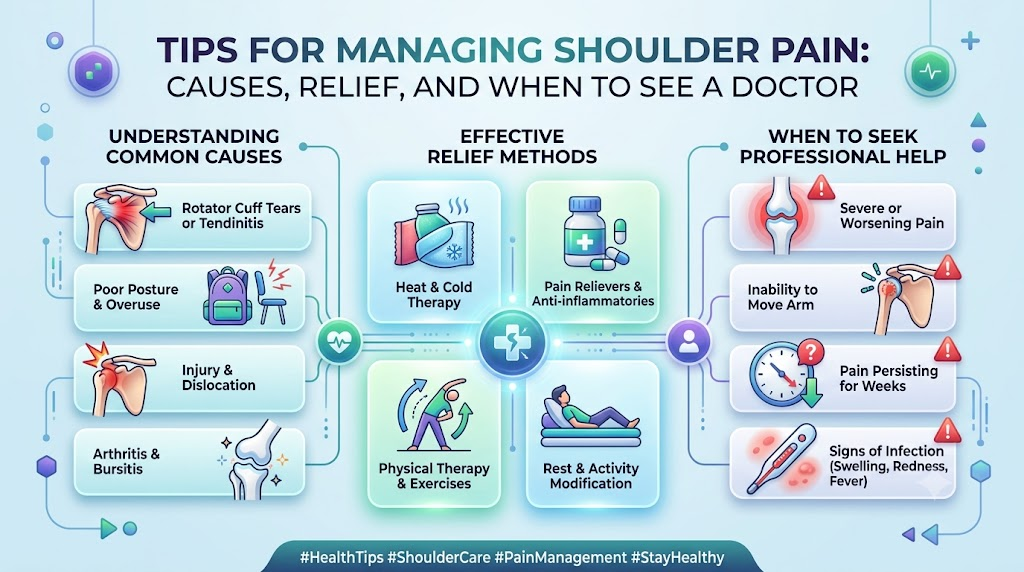
Common Causes of Shoulder Pain
There are many possible causes of shoulder pain.
Overuse and repetitive overhead movements can irritate muscles and tendons. This can happen during sports, physical work, household activities, or other tasks that repeatedly use the shoulder.
Rotator Cuff Problems
The rotator cuff is a group of muscles and tendons that helps keep the shoulder stable and allows the arm to move. Rotator cuff problems can develop gradually through wear and tear or happen after an injury.
Other possible causes include tendinitis, bursitis, arthritis, muscle strain, sports injuries, falls, and shoulder dislocation. Because several conditions can produce similar symptoms, pain alone does not confirm a particular diagnosis.
Common Symptoms Associated With Shoulder Pain
Shoulder problems may cause:
- Pain when moving the arm
- Stiffness or reduced range of motion
- Weakness
- Difficulty reaching overhead
- Pain during particular activities
- Discomfort while sleeping
- Pain when lifting or carrying objects
Symptoms can vary depending on the underlying condition. Sudden severe pain, major weakness, deformity, or significant loss of movement deserves prompt medical attention.
Practical Tips for Managing Shoulder Pain at Home
For mild shoulder discomfort without signs of a serious injury, sensible activity changes may sometimes help.
Modify Activities That Make Pain Worse
Temporarily reduce activities that clearly increase your pain. Repeated overhead movements or heavy lifting may need to be limited while the shoulder settles.
This does not mean keeping the shoulder completely still for long periods. Gentle, comfortable movement may be useful when movement is safe, while activities that cause significant pain should be avoided.
Consider Cold or Heat
Cold or heat may provide temporary comfort for some types of shoulder pain. The more suitable option can depend on the cause and stage of the problem.
If you are unsure which approach is appropriate, ask a healthcare professional rather than repeatedly applying heat or cold to a painful area.
Gentle Exercises and Stretching
Appropriate movement and strengthening can support shoulder function and help restore comfortable movement in some conditions. However, the right exercises depend on the underlying problem.
A structured exercise program may be especially useful when recommended by a doctor or physical therapist. After an injury or surgery, professional guidance can help ensure that exercises match the stage of recovery.
Do not try to push through significant pain. Stop an exercise if symptoms become substantially worse and seek professional advice if the problem continues.
Posture, Daily Activities, and Shoulder Protection
Good everyday habits may reduce unnecessary strain on the shoulder, although they cannot prevent every shoulder condition.
Try to avoid staying in awkward positions for long periods. Use sensible lifting techniques, take breaks during repetitive work, and avoid suddenly increasing the amount of overhead activity you do.
If your work involves repeated reaching, lifting, or computer use, small changes to your workstation and routine may make daily activities more comfortable.
Pain-Relief Medicines
Over-the-counter pain medicines may be suitable for some people, but they are not appropriate for everyone.
The choice can depend on age, allergies, pregnancy status, kidney or liver problems, stomach conditions, blood-thinning medicines, and other medications. If you are unsure what is safe for you, speak with a doctor or pharmacist before taking a pain medicine.
Avoid using pain relief simply to continue activities that are making the shoulder significantly worse.
When Should Shoulder Pain Be Evaluated?
Some shoulder problems improve with reasonable self-care, while others need professional assessment.
Consider seeing a doctor or orthopaedic specialist if pain persists, repeatedly returns, becomes worse, or interferes with sleep or normal activities. Increasing weakness or significant loss of movement also deserves evaluation.
Shoulder pain after a fall, accident, or other injury may need prompt assessment, especially if there is swelling, deformity, severe pain, or a suspected dislocation.
Watch for Emergency Symptoms
Shoulder or upper-body pain together with chest pressure, shortness of breath, sweating, nausea, or pain spreading to the jaw or arm may sometimes indicate a medical emergency rather than an ordinary shoulder problem.
Do not assume these symptoms are caused by muscles or joints. Seek urgent medical attention when these symptoms occur.
How Do Doctors Diagnose Shoulder Pain?
Diagnosis usually begins with a medical history and physical examination. A doctor may check shoulder movement, strength, tenderness, and how the joint responds to different movements.
Depending on the suspected cause, imaging may be recommended. X-rays can help assess bones and certain joint problems, while ultrasound or MRI may provide information about tendons and other soft tissues.
Testing is not always the same for every person. The choice depends on the symptoms, examination findings, injury history, and suspected condition.
Treatment When Shoulder Pain Does Not Improve
If shoulder pain continues, treatment may include physical therapy, activity modification, medicines, or injections in selected situations.
Surgery is not automatically required for shoulder pain. For some rotator cuff conditions, non-surgical treatment may be considered first, while surgery may be discussed in selected cases based on the type of problem, weakness, symptoms, activity needs, and response to other treatment.
The diagnosis should guide the treatment plan rather than the severity of pain alone.
Simple Daily Habits for Healthier Shoulders
A few practical habits can support comfortable shoulder function:
- Use sensible posture during work and daily activities.
- Use appropriate technique when lifting.
- Take regular breaks from repetitive tasks.
- Increase overhead activity gradually.
- Keep the shoulder moving comfortably when movement is appropriate.
- Follow a strengthening program when recommended.
- Pay attention to pain, weakness, and changes in movement.
These habits support shoulder health but cannot guarantee that pain or injury will be prevented.
What Not to Do When Managing Shoulder Pain
Avoid repeatedly performing movements that clearly make the pain worse. Continuing a painful activity may make it harder to understand whether the shoulder is improving.
Do not start aggressive stretching or strengthening without considering what may be causing the problem. Avoid ignoring significant weakness, deformity, or loss of movement, and do not rely on pain medicines without considering whether they are safe for your health situation.
Shoulder Pain Situations at a Glance
| Shoulder Pain Situation | Practical Step | When to Seek Medical Advice |
|---|---|---|
| Mild pain after overuse | Reduce the activity and keep comfortable movement | If pain persists or keeps returning |
| Pain during overhead activity | Temporarily reduce painful movements | If weakness or limited movement develops |
| Pain after a fall or accident | Protect the shoulder and avoid aggravating activity | Promptly, especially with severe pain or deformity |
| Ongoing nighttime pain | Modify activities and seek guidance | If pain regularly disrupts sleep |
| Sudden severe shoulder or upper-body pain | Do not assume it is a simple shoulder problem | Seek urgent medical attention, especially with chest or breathing symptoms |
Frequently Asked Questions
1. What are the common causes of shoulder pain?
Common causes include overuse, muscle strain, rotator cuff problems, tendinitis, bursitis, arthritis, sports injuries, falls, and dislocation. Similar symptoms can occur with different conditions, so the cause cannot always be identified from symptoms alone.
2. Can rest help shoulder pain?
Reducing activities that clearly worsen pain may help some shoulder problems. However, complete inactivity is not appropriate for every condition, so comfortable movement may still be useful when it is safe.
3. Is stretching useful for shoulder pain?
Gentle stretching may help some people, depending on the underlying problem. Exercises should match the condition, and significant pain during exercise is a reason to stop and seek professional guidance.
4. Can exercise make shoulder pain worse?
Yes. Exercises that are too aggressive or unsuitable for the underlying condition can aggravate symptoms. A doctor or physical therapist can help determine which movements are appropriate.
5. When should I use heat or cold for shoulder pain?
Either may provide temporary comfort for some conditions, but the better choice depends on the situation. If you are unsure, ask a healthcare professional for advice.
6. When does shoulder pain require an orthopaedic consultation?
Consider an orthopaedic evaluation when pain persists, returns frequently, causes weakness or reduced movement, follows an injury, or interferes with sleep and daily activities. Sudden severe pain after an injury may need prompt assessment.
7. Can shoulder pain be caused by a rotator cuff problem?
Yes. Rotator cuff conditions are a common cause of shoulder pain and may develop from wear and tear or after an injury. A medical examination may be needed to determine whether the rotator cuff is involved.
8. When might imaging be needed?
Imaging may be considered when the history and physical examination suggest a condition that needs further assessment. Depending on the suspected problem, a doctor may recommend an X-ray, ultrasound, or MRI.
9. Is surgery always required for shoulder pain?
No. Many shoulder conditions can be managed with non-surgical approaches. Surgery may be considered for selected problems when the diagnosis, symptoms, weakness, activity needs, or response to other treatments support it.
10. How long can shoulder pain take to improve?
The recovery time varies widely because shoulder pain has many possible causes. Mild problems may improve with activity changes, while injuries or ongoing conditions may require longer treatment and professional care.
Conclusion
Managing shoulder pain starts with understanding that different conditions require different approaches. For mild discomfort, reducing aggravating activities, maintaining appropriate movement, and using sensible daily habits may help. Avoid pushing through significant pain or starting aggressive exercises without understanding the cause. Persistent, worsening, or injury-related pain should be evaluated by a healthcare professional. With an appropriate diagnosis, treatment can be tailored to the person’s condition, activity level, and recovery needs.