Introduction
Knee pain is one of the most common physical complaints, affecting people of all ages—from young athletes to older adults. Because the knee joint supports the majority of your body weight and facilitates almost every movement, even minor discomfort can significantly hinder your daily mobility and overall quality of life.While severe injuries require professional intervention, many cases of knee discomfort respond remarkably well to consistent self-care and lifestyle changes. Understanding how to manage knee pain naturally is the first step toward reclaiming your independence and returning to the activities you enjoy. By adopting proactive habits and strengthening the muscles that support your joints, you can reduce pain and prevent further damage. For expert guidance and professional orthopedic support when home care isn’t enough, you can find valuable resources at BestOrthoHospitals.In this guide, we will explore the underlying causes of knee discomfort and provide a roadmap for managing it using evidence-based natural strategies, exercises, and wellness tips.
Understanding Knee Pain
What Is Knee Pain?
Knee pain refers to any discomfort, stiffness, or soreness located in or around the knee joint. It can be a dull ache that lingers for weeks or a sharp, sudden pain that occurs during specific movements.
How the Knee Joint Works
The knee is a complex hinge joint supported by bones, cartilage, ligaments, and tendons. These structures work in harmony to allow your leg to bend, straighten, and rotate. When any part of this system is stressed or damaged, pain is the body’s way of signaling that something is wrong.
Why Knee Pain Develops
Pain often arises from the wear and tear of cartilage, muscle imbalances, acute injuries, or inflammation. Whether it’s an active lifestyle or the natural aging process, the knee is subject to daily pressure that can lead to irritation if not properly supported.
Impact of Knee Pain on Daily Activities
Chronic knee discomfort can turn simple tasks like climbing stairs, getting out of a chair, or walking the dog into major challenges. By addressing pain early, you can maintain your mobility and prevent the sedentary lifestyle that often leads to worsening joint health.
Common Causes of Knee Pain
- Osteoarthritis: The gradual breakdown of joint cartilage over time.
- Sports Injuries: Including sprains, strains, or ligament tears.
- Tendon Problems: Inflammation like patellar tendonitis.
- Overuse Injuries: Caused by repetitive movements in activities like running or cycling.
- Obesity: Excess weight places significant, constant pressure on knee joints.
- Age-Related Changes: Natural decreases in synovial fluid and cartilage thickness.
- Poor Posture: Incorrect alignment of the hips and feet that shifts stress onto the knees.
Natural Ways to Manage Knee Pain
| Natural Method | How It Helps | Best For | Important Tips |
| Rest and Activity Modification | Prevents further stress | Acute pain or flare-ups | Avoid total inactivity |
| Ice Therapy | Reduces swelling | Inflammation after injury | Use a cloth barrier |
| Heat Therapy | Relaxes stiff muscles | Chronic arthritis stiffness | Don’t apply to new injuries |
| Compression Support | Adds joint stability | Minor sprains or swelling | Ensure it isn’t too tight |
| Elevation | Decreases blood pooling | Severe swelling | Raise above heart level |
| Weight Management | Reduces joint load | Long-term pain relief | Focus on nutrient density |
| Strengthening Exercises | Stabilizes the joint | Weak supporting muscles | Focus on form, not speed |
| Stretching and Mobility Work | Improves range of motion | Stiff joints | Hold stretches, don’t bounce |
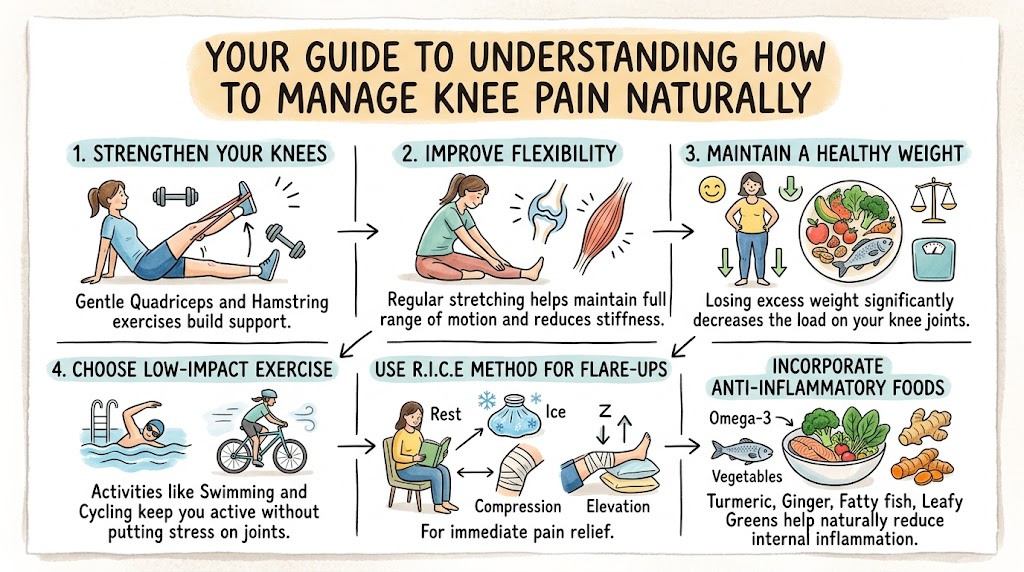
Combining these natural approaches is usually more effective than relying on a single method. For example, using heat therapy before exercise can help loosen stiff muscles, while applying ice after activity helps keep inflammation under control. Rest, ice, compression, and elevation—often referred to as the RICE method—are foundational self-care measures for many types of temporary knee discomfort.
However, consistency is the true secret to success. Strengthening your quadriceps, hamstrings, and calves provides a “natural brace” for your knee, absorbing the shock that would otherwise fall on your joint. When you couple this physical strengthening with mindful activity modification, you create a sustainable environment for your knee to heal and remain pain-free in the long term.
How to Manage Knee Pain Naturally
Rest Without Becoming Inactive
While it is important to rest the knee during a flare-up, complete bed rest can actually weaken your muscles and make stiffness worse. Focus on “active rest”—avoiding high-impact activities while continuing gentle movement.
Using Ice Therapy Correctly
Ice is a potent tool for reducing inflammation. Apply an ice pack for 15 to 20 minutes several times a day during the first 48 hours of pain or following a strenuous activity. Always wrap the ice in a thin towel to protect your skin.
Benefits of Heat Therapy
For chronic pain or stiffness, particularly in the morning, heat is often better than ice. Warmth increases blood flow, which helps relax tight muscles and soothe aching joints. A warm bath or a heating pad can be very effective.
Maintaining Healthy Body Weight
Every pound you lose reduces the pressure on your knees by several pounds during activities like walking. Losing even a modest amount of weight can significantly reduce pain and slow the progression of conditions like osteoarthritis.
Best Exercises for Natural Knee Pain Relief
Strengthening the muscles around the knee is critical because these muscles act as shock absorbers.
- Quadriceps Strengthening: Straight leg raises are excellent for building the front thigh muscles without stressing the joint.
- Hamstring Strengthening: Gentle heel slides help build the back of the thigh, providing essential balance.
- Step-Ups: Using a low step to slowly build functional strength for daily life.
- Low-Impact Aerobics: Swimming, walking on flat surfaces, or stationary cycling help keep the joint lubricated and mobile.
Focus on slow, controlled movements. Strengthening muscles around the knee will improve overall stability, which in turn reduces stress on the joint itself.
Lifestyle Changes That Support Knee Health
Your daily habits dictate how your joints age. Choosing supportive footwear with good cushioning can change the way force is distributed through your legs. Improving your posture—especially while sitting—prevents you from slouching, which often throws your knees out of alignment.
Furthermore, avoid prolonged sitting. If you work at a desk, stand up and take a quick walk every hour. Movement keeps the synovial fluid in your joints circulating, which nourishes the cartilage and keeps it healthy.
Natural Nutrition Strategies for Joint Health
What you eat can directly impact inflammation levels in your body. Include anti-inflammatory foods such as fatty fish, walnuts, turmeric, and berries. High-quality protein is necessary for maintaining the muscle mass that protects your joints.
Staying well-hydrated is also important. Joint cartilage is mostly made of water, and maintaining proper hydration helps keep the cushioning within your joints supple and functional.
When to Seek Medical Attention
While home care is effective for many, it is not a substitute for professional evaluation in certain cases. Seek prompt medical evaluation if your knee pain follows a major injury, causes an inability to bear weight, results in significant swelling, shows visible deformity, or persists despite your best efforts at self-care. Early diagnosis of a tear or severe injury is much easier to treat than one that has been ignored for weeks.
Common Mistakes People Make
People often ignore early, “niggle-level” pain until it becomes a full-blown injury. Another common mistake is returning to high-impact sports too quickly after a minor flare-up, which can lead to a cycle of re-injury.
Many also rely exclusively on over-the-counter pain relievers to mask the pain while continuing to engage in the very activities that are damaging the joint. Remember: pain is a signal to adjust your behavior, not just something to be silenced.
Long-Term Prevention Strategies
Building strong, supporting muscles is your best defense against future pain. Make exercise a regular part of your life, focusing on low-impact choices like cycling or swimming.
Preventing repetitive strain is also essential. If your job involves a lot of kneeling or squatting, use knee pads. If you are an athlete, ensure you are using proper equipment and technique. Finally, prioritize routine orthopedic checkups to catch minor joint changes before they become major issues.
Latest Trends in Non-Surgical Knee Care
The field of orthopedics is moving toward highly personalized care. Modern physical therapy now uses digital tools to track your progress with precision. Wearable sensors can monitor your gait and exercise form, providing real-time feedback to ensure you aren’t putting unnecessary stress on your knees. These tools are making conservative, non-surgical management more effective than ever before.
Frequently Asked Questions (FAQ)
- How do I know if my knee pain is serious?If you hear a popping sound, experience sudden swelling, cannot put weight on the leg, or have a visible deformity, see a doctor immediately. Persistent dull pain that affects daily life also requires an evaluation.
- Is walking good or bad for knee pain?Generally, walking is excellent for knee health as it keeps joints lubricated. However, if walking causes sharp, acute pain, you should modify your distance and choose flat surfaces until the inflammation subsides.
- Can weight loss really stop knee pain?Yes. Excess weight adds immense pressure to the knees. Losing weight reduces this mechanical load, which often leads to significant, long-term pain relief, especially in those with osteoarthritis.
- Should I use a knee brace?Braces can provide temporary stability, but don’t rely on them as a permanent solution. Over-reliance can cause the surrounding muscles to weaken. Use them during activity if recommended by a therapist.
- Why does my knee hurt more in the morning?This is usually due to stiffness that accumulates while you are inactive during sleep. Moving gently in bed before getting up can help “wake up” the joint.
- Are there foods that trigger knee pain?Yes, highly processed foods, excess sugar, and refined carbohydrates can increase systemic inflammation, which may make your joints feel worse.
- How long should I ice my knee?15 to 20 minutes is the optimal time. Any longer, and you risk skin damage or causing the body to react by increasing blood flow to the area.
- Can I strengthen my knees at home?Yes, exercises like straight leg raises, hamstring curls, and wall squats are perfect for home environments and require little to no equipment.
- What is the best exercise for knee arthritis?Low-impact activities like swimming or cycling are best because they strengthen the muscles without the heavy pounding associated with running.
- Do I need supplements for my knees?Some people find relief with glucosamine or turmeric, but always consult your doctor first. A balanced diet is always the best foundation for joint health.
- How can I improve my posture to help my knees?Ensure you stand with your weight balanced evenly on both feet and avoid locking your knees while standing. Good posture at your desk also helps hip alignment, which benefits the knees.
- Should I avoid stairs if I have knee pain?Stairs can be hard on knees. If they cause pain, use the handrail, take them slowly, and try to lead with your “strong” leg when going up.
- Will knee pain eventually go away on its own?Minor strains might, but conditions like arthritis or chronic tendonitis won’t. If you don’t address the root cause, the cycle of pain is likely to continue.
- How often should I stretch?Gentle stretching can be done daily. Focus on the hamstrings and calves, as tight muscles in these areas pull on the knee joint and increase pressure.
- What is the “Gold Standard” for natural knee management?It’s a combination of weight management, consistent strengthening exercises, and activity modification. This “three-pillar” approach is the most effective way to manage and prevent pain.
Final Conclusion
Managing knee pain naturally is a journey of consistency and mindful movement. While it may be tempting to seek a “quick fix,” the most sustainable path to healthy joints involves strengthening the muscles that support them, maintaining a healthy weight, and making smart lifestyle adjustments. By prioritizing your joint health today, you are preventing the limitations that often accompany age and neglect.Remember, your body is designed for motion. When you experience knee pain, it is not a sign that you should stop moving; rather, it is a signal that you need to move differently and smarter. By focusing on low-impact exercise, proper nutrition, and listening to your body’s signals, you can reduce inflammation and improve your joint stability.