Introduction
Experiencing a broken bone can disrupt daily life, bringing physical discomfort and a temporary shift in routines. Whether resulting from a sports mishap, a fall, or an accident, navigating the healing journey requires patience, care, and proper guidance. Most fractures heal successfully with appropriate treatment, immobilization, nutrition, rehabilitation, and follow-up. Healing time varies depending on the type of fracture, age, overall health, and how closely patients follow medical advice (OrthoInfo).This comprehensive educational guide explores the stages of bone healing, practical recovery tips, the vital role of physical therapy, and how to select a quality healthcare facility. For reliable educational resources, hospital comparisons, and patient guidance, readers can explore BESTORTHOHOSPITALS.
Understanding Bone Fractures
A bone fracture is a complete or partial break in the continuity of a bone. While bones possess a remarkable natural capacity to regenerate, the severity and nature of the break dictate the required medical management.Common causes of fractures include high-impact trauma, repetitive stress injuries, and conditions that weaken bone density, such as osteoporosis. Fractures are classified into various types—such as hairline, transverse, compound, or comminuted—depending on how the bone breaks and whether surrounding tissues are affected. Proper treatment, whether through casting, bracing, or surgical fixation, ensures that the fractured segments align correctly so the body can knit the bone back together seamlessly.
Stages of Bone Healing
The human body initiates a sophisticated, multi-phase biological repair process the moment a bone breaks.
Inflammatory Stage
Immediately following a fracture, blood vessels bleed into the injury site, forming a protective blood clot (hematoma) that triggers inflammation and recruits specialized repair cells.
Soft Callus Formation
Over the course of several days to weeks, the blood clot is replaced by a soft callus composed of fibrocartilage, bridging the broken bone ends together loosely.
Hard Callus Formation
Osteoblast cells deposit minerals into the soft callus, transforming it into a hard, bony bridge that provides greater structural stability.
Bone Remodeling
Over many months, specialized cells reshape and remodel the new bone tissue, restoring it to its original shape, strength, and structural integrity.
Bone Fracture Recovery Comparison Table
| Recovery Step | Purpose | Patient Benefit |
| Immobilization | Keep the bone aligned | Supports proper healing |
| Pain Management | Improve comfort | Easier daily activities |
| Physical Therapy | Restore movement | Better strength and flexibility |
| Healthy Nutrition | Support bone repair | Faster healing support |
| Follow-Up Visits | Monitor healing | Detect complications early |
| Gradual Return to Activity | Prevent reinjury | Safer long-term recovery |
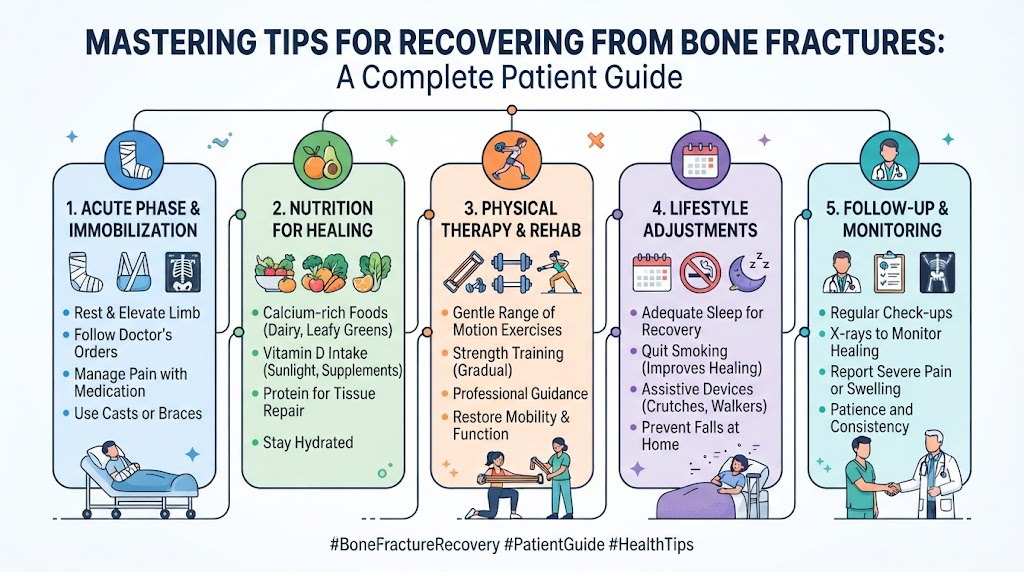
Essential Tips for Recovering from Bone Fractures
Adhering to practical daily habits accelerates recovery and minimizes the risk of complications.
- Follow Your Orthopedic Specialist’s Instructions: Strictly adhere to all guidance regarding weight-bearing limits, device wear, and activity restrictions.
- Keep the Cast or Brace in Good Condition: Keep dressings dry and clean, and never insert objects beneath a cast to scratch itching skin.
- Take Medications as Directed: Use prescribed pain relievers or anti-inflammatory drugs according to schedule to manage discomfort safely.
- Eat a Calcium- and Protein-Rich Diet: Fuel your body with nutrient-dense foods that supply the raw building blocks for bone regeneration.
- Get Enough Vitamin D: Ensure adequate intake of vitamin D to optimize calcium absorption in the gut.
- Stay Hydrated: Drink plenty of water throughout the day to support cellular function and tissue repair.
- Avoid Smoking and Excess Alcohol: Smoking can slow bone healing, while good nutrition and rehabilitation help support recovery (OrthoInfo).
- Get Adequate Sleep: Allow your body sufficient rest during the night, as deep sleep triggers growth hormone release and tissue recovery.
- Attend Follow-Up Appointments: Keep all scheduled clinical visits so your doctor can track healing via imaging.
- Begin Rehabilitation When Recommended: Transition smoothly into guided physical therapy as soon as cleared by your orthopedic specialist.
Importance of Physical Therapy
Once structural healing reaches a safe milestone, physical therapy becomes a cornerstone of complete recovery.
- Restoring Joint Mobility: Gentle stretching and guided exercises combat the stiffness that develops during periods of immobilization.
- Improving Muscle Strength: Targeted resistance training rebuilds muscle mass that naturally wastes away during disuse.
- Enhancing Balance: Proprioceptive exercises help retrain the nervous system, reducing the risk of future falls.
- Preventing Stiffness: Specialized movement routines keep connective tissues flexible and elastic.
- Returning to Daily Activities Safely: Functional training bridges the gap between clinical healing and independent, confident living.
Nutrition for Bone Healing
A balanced diet rich in specific micronutrients and macronutrients provides the essential fuel for skeletal repair.
- Calcium: Found in dairy products, leafy greens, and fortified foods, it forms the hard mineral matrix of bone tissue.
- Vitamin D: Enhances calcium utilization and supports overall bone mineralization.
- Protein: Provides amino acids required to build the collagen framework upon which bone minerals deposit.
- Vitamin C: Acts as a vital cofactor in collagen synthesis and tissue antioxidant defense.
- Zinc: Supports cellular proliferation and enzymatic reactions essential for bone repair.
- Magnesium: Works alongside calcium to regulate bone density and structural strength.
- Healthy Balanced Meals: Combining these elements into daily meals ensures comprehensive metabolic support.
Choosing the Right Orthopedic Hospital
Selecting an appropriate healthcare facility ensures access to high standards of clinical safety, surgical expertise, and rehabilitation support.
- Experienced Orthopedic Surgeons: Board-certified specialists skilled in managing complex fractures and joint reconstruction.
- Advanced Imaging Services: On-site X-ray, CT, and MRI modalities providing precise diagnostic clarity.
- Fracture Care Specialists: Dedicated multidisciplinary teams focused exclusively on musculoskeletal trauma.
- Rehabilitation Services: Comprehensive inpatient and outpatient therapy departments under one roof.
- Physical Therapy Programs: Tailored recovery regimens supervised by licensed physical therapists.
- Patient Education: Comprehensive guidance helping patients understand their healing milestones.
- Long-Term Follow-Up Care: Structured clinical pathways that monitor bone remodeling over time.
Hospital Selection Checklist
| Feature | Why It Matters |
| Experienced Orthopedic Team | Appropriate fracture management |
| Advanced Imaging | Accurate diagnosis |
| Rehabilitation Services | Better functional recovery |
| Physical Therapy | Improved mobility |
| Patient Education | Better recovery compliance |
| Follow-Up Care | Ongoing monitoring |
Possible Challenges During Recovery
Navigating the recovery timeline can present various physical and emotional hurdles.
- Swelling: Fluid accumulation around the injury site that responds well to elevation and gentle movement.
- Temporary Stiffness: Reduced joint range of motion resulting from prolonged immobilization.
- Muscle Weakness: Atrophy in the affected limb due to decreased usage.
- Delayed Healing: Instances where bone unification takes longer than average due to systemic factors.
- Reduced Mobility: Temporary reliance on assistive devices like crutches, walkers, or wheelchairs.
- Emotional Adjustment: Managing frustration, boredom, or anxiety during extended periods of restricted activity.
Contact your healthcare provider if recovery is not progressing as expected or if unusual symptoms arise (MedlinePlus).
Warning Signs That Need Medical Attention
Certain red-flag symptoms require immediate evaluation by a medical professional.
- Increasing pain: Severe or worsening pain that is unresponsive to prescribed medications.
- Fever: Elevated body temperature indicating potential infection.
- Severe swelling: Swelling that causes extreme tightness or pain around a cast.
- Numbness or tingling: Persistent “pins and needles” sensations in the affected limb.
- Fingers or toes becoming pale or blue: Signs of compromised blood circulation.
- Foul-smelling drainage: Unpleasant odors or discharge seeping from beneath a cast or surgical wound.
- Difficulty moving the affected limb: Inability to wiggle fingers or toes distal to the injury site.
How BESTORTHOHOSPITALS Helps Patients
Navigating orthopedic recovery requires dependable, expert-backed information. Platforms like BESTORTHOHOSPITALS support individuals by offering:
- Orthopedic Education: Providing clear, accessible guides on fracture types, healing stages, and rehabilitation.
- Hospital Discovery: Helping users locate specialized orthopedic centers and rehabilitation clinics nearby.
- Fracture Recovery Awareness: Promoting community understanding of proper post-injury care and safety.
- Hospital Comparison Resources: Offering structured insights to evaluate hospital capabilities and therapy standards.
- Patient Guidance: Equipping readers with effective questions to ask their orthopedic specialists.
- Helping readers make informed orthopedic healthcare decisions: Empowering individuals to take charge of their musculoskeletal health.
Common Mistakes During Recovery
- Returning to activity too early: Putting weight on a healing bone prematurely, risking refracture or misalignment.
- Ignoring rehabilitation exercises: Skipping physical therapy sessions, leading to long-term stiffness and weakness.
- Missing follow-up appointments: Failing to attend scheduled clinical checks where doctors monitor bone healing progress.
- Removing casts or braces without medical advice: Tampering with immobilization devices because of itching or perceived recovery.
- Poor nutrition during recovery: Consuming a diet low in protein, calcium, and essential vitamins, which slows tissue regeneration.
Practical Solutions: Follow weight-bearing restrictions meticulously, commit fully to physical therapy regimens, and keep all scheduled follow-up appointments with your orthopedic care team.
Common Myths vs Facts
| Myth | Fact |
| Pain disappearing means the bone is fully healed | Bones may still be healing even after pain improves |
| Cast removal means recovery is complete | Rehabilitation often continues after cast removal |
| Exercise should be avoided completely | Guided rehabilitation is important for recovery |
| All fractures heal at the same speed | Healing time varies depending on many individual factors |
Real-Life Educational Scenarios
Scenario 1: Physical Therapy After a Wrist Fracture
Following the removal of a forearm cast for a distal radius fracture, a patient begins outpatient physical therapy. Working with a therapist, they perform gentle wrist flexion and grip-strengthening exercises, gradually regaining full range of motion.
Scenario 2: Gradual Weight-Bearing After a Leg Fracture
A patient recovering from a tibial fracture progresses under doctor supervision from strict non-weight-bearing using crutches to partial weight-bearing with a boot, eventually transitioning back to independent walking through structured gait training.
Scenario 3: Improving Bone Healing Through Balanced Nutrition
An individual recovering from a collarbone fracture consults a clinical dietitian to optimize their meal plan. By incorporating calcium-rich dairy, lean proteins, and leafy greens, they support optimal cellular repair during the hard callus formation stage.
Scenario 4: Fall Prevention and Rehabilitation for Older Adults
An older adult rehabilitating from a hip fracture participates in a comprehensive program combining bone-strengthening exercises with home fall-prevention education, reducing future injury risks while restoring independence.
FAQs (15 Questions)
1. How long does a bone fracture take to heal?
Most standard fractures take between six to eight weeks to unite structurally, though full remodeling and strength recovery can take several months.
2. What foods help bone healing?
Foods rich in calcium, vitamin D, protein, vitamin C, zinc, and magnesium—such as dairy, fish, nuts, and fresh vegetables—support bone repair.
3. Can I exercise during recovery?
Yes, but only under strict medical guidance; upper-body or lower-body exercises must avoid stressing the fractured bone until healing is confirmed.
4. When can I return to work?
Return to work depends heavily on job requirements; desk jobs may resume sooner, while physical labor requires extended healing and clearance.
5. Why is physical therapy important?
Physical therapy restores joint flexibility, rebuilds muscle strength, and prevents chronic stiffness following immobilization.
6. How can I reduce swelling?
Elevate the injured limb above heart level and apply cold packs as instructed by your healthcare provider.
7. What should I avoid while wearing a cast?
Avoid getting the cast wet, inserting objects inside it to scratch, and attempting to modify or remove the device yourself.
8. Can smoking affect bone healing?
Yes, nicotine constricts blood vessels, reducing oxygen and nutrient delivery to the healing bone and slowing recovery significantly.
9. How often are follow-up visits needed?
Follow-up visits are typically scheduled every few weeks initially to review healing progress through physical exams and X-rays.
10. What complications can occur after a fracture?
Potential complications include stiffness, delayed union, nonunion, infection (if surgical), or nerve irritation.
11. How do I know if my fracture is healing?
Your orthopedic doctor confirms healing through clinical examinations and follow-up imaging showing bridging bone callus formation.
12. When should I seek medical attention?
Seek immediate care for severe worsening pain, numbness, bluish discoloration in digits, fever, or foul odors from a cast.
13. How do I choose the right orthopedic hospital?
Look for board-certified orthopedic surgeons, advanced imaging, on-site rehabilitation departments, and strong patient safety records.
14. Can fractures heal without surgery?
Yes, many stable fractures heal successfully through closed reduction, casting, or bracing without requiring surgical intervention.
15. How does BESTORTHOHOSPITALS help patients recover from bone fractures?
BESTORTHOHOSPITALS provides reliable educational resources, hospital comparison tools, and guidance to help patients navigate fracture care and rehabilitation effectively.
Final Thoughts
Recovering from a bone fracture is a journey that blends biological healing with active personal dedication. By adhering closely to your orthopedic specialist’s instructions, maintaining a nutrient-rich diet, and engaging in structured physical therapy, you set the stage for a safe and successful recovery. Patience, consistency, and professional support are key to restoring full mobility and long-term musculoskeletal wellness.