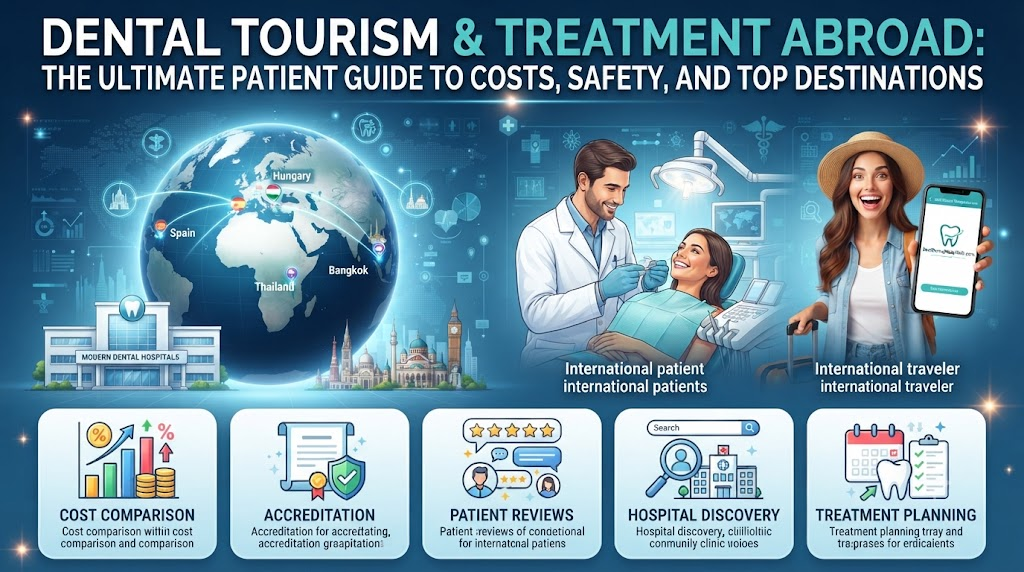
Medical and dental care has expanded beyond national borders. Every year, hundreds of thousands of individuals travel internationally to receive specialized, high-quality, and cost-effective oral healthcare. This movement—widely known as Dental tourism—has evolved from a niche alternative into a mainstream global healthcare pathway.This guide offers an independent, clinical, and practical overview of international dental care. It covers treatment options, diagnostic checklists, destination profiles, cost structures, safety protocols, and long-term recovery management to help you make informed decisions about your oral health.
What is Dental Tourism?
Dental tourism refers to the practice of traveling outside one’s home country or local region to receive elective, restorative, cosmetic, or surgical dental care. This phenomenon combines clinical travel with leisure or rest, though the primary focus remains receiving medical treatment.
+-------------------------------------------------------------------+
|                        DENTAL TOURISM SCOPE                       |
+-------------------------------------------------------------------+
|                                                                   |
|  [Routine Travel] ------> Hygiene, minor fillings, simple crowns   |
|                                                                   |
|  [Cosmetic Tourism] ----> Veneers, teeth whitening, bonding       |
|                                                                   |
|  [Implant Tourism] -----> Single/multiple implants, sinus lifts   |
|                                                                   |
|  [Full-Mouth Rehab] ----> All-on-4, All-on-6, full reconstruction |
|                                                                   |
+-------------------------------------------------------------------+
The Spectrum of Cross-Border Dental Care
- Routine Dental Travel: Involves minor procedures such as cleanings, direct resin fillings, or simple single crowns. Typically undertaken by travelers already visiting a country for business or vacation.
- Cosmetic Dental Tourism: Focuses on aesthetic enhancements such as porcelain veneers, composite bonding, and professional whitening.
- Implant Tourism: Specialized travel for oral surgery, including single-tooth implants, implant-supported bridges, bone grafting, and sinus lifts.
- Full-Mouth Rehabilitation: Complex, multi-disciplinary care involving the complete restoration of upper, lower, or both dental arches using fixed prostheses, custom frameworks, or hybrid implants.
Why Do People Seek Dental Treatment Abroad?
Patients travel for dental care primarily due to structural differences in healthcare systems, insurance coverage limitations, and regional pricing variations.
Core Motivations
- Significant Cost Variations: Dental care in countries like the United States, Canada, the United Kingdom, and Australia can be expensive, particularly for major restorative procedures. Out-of-pocket costs in international destinations are often substantially lower due to lower operational overhead, localized manufacturing of components, lower malpractice insurance premiums, and favorable currency exchange rates.
- Access to Specialists: Certain destinations feature centralized, multi-specialty dental centers where oral surgeons, prosthodontists, endodontists, and periodontists work under one roof.
- Reduced Waiting Times: In countries with public healthcare systems (such as the UK or Canada), accessing specialized or restorative care through public channels can involve long waiting lists. Private cross-border clinics often offer flexible scheduling.
- Advanced Technology Integration: Many high-volume international dental centers invest in modern equipment, including 3D Cone Beam Computed Tomography (CBCT), CAD/CAM digital impression scanners, and dynamic surgical navigation systems.
- Integrated Patient Support: Facilities catering to international patients often provide all-inclusive logistical support, including multilingual coordinators, airport transfers, and local accommodation arrangements.
Clinical Reality Check: A lower cost does not inherently mean lower quality, nor does a higher price guarantee clinical excellence. Treatment decisions should always balance cost with clinical standards, provider experience, and safety protocols.
How to Choose the Best Dental Hospital
Selecting an international healthcare facility requires systematic evaluation. Relying solely on marketing materials or polished social media photos can lead to poor clinical outcomes. Use this structured checklist to evaluate prospective providers:
                  +-----------------------------------+
                  |   HOSPITAL SELECTION CHECKLIST    |
                  +-----------------------------------+
                                    |
   +-------------------+------------+------------+-------------------+
   |                   |                         |                   |
[Clinical Credentials] [Facility Accreditations] [Diagnostic Tech] [Safety & Hygiene]
   |                   |                         |                   |
   v                   v                         v                   v
• Board Certification  • ISO / JCI Standards     • 3D CBCT Scanning  • Autoclave Class B
• Specialist Status    • National Health Audits  • CAD/CAM Milling   • Cleanroom Suites
Key Criteria for Evaluation
- Dentist Qualifications and Specialist Training: Verify that the practitioner executing complex procedures holds advanced postgraduate qualifications in oral surgery, prosthodontics, or periodontics, rather than general dentistry alone.
- Institutional Experience: Research how long the clinic or hospital has operated and its experience level with international patients.
- Formal Accreditations: Look for independent, third-party clinic accreditations such as ISO certifications (e.g., ISO 9001 for quality management) or regional/international medical accreditations (such as JCI or TEMOS).
- Sterilization and Infection Control: Ensure the facility adheres to international infection control protocols, including Class B autoclave sterilization, air filtration systems in surgical suites, and single-use disposable consumables.
- Diagnostic Infrastructure: Confirm the availability of onsite advanced imaging technology, specifically 3D CBCT scanners. Precise 3D imaging is essential for accurate bone density measurement and nerve mapping during implant planning.
- Material and Implant System Transparency: Legitimate facilities disclose the brand, model, and origin of the implant systems and restorative materials (e.g., Straumann, Nobel Biocare, Zimmer Biomet, Dentsply Sirona) they use.
- Emergency Preparedness: Inquire about protocol procedures for surgical complications or medical emergencies, including partnerships with nearby full-service acute-care hospitals.
- Clear Aftercare Policies: Request a written warranty or clinical follow-up protocol outlining how complications or failed restorations are managed post-treatment.
- Language & Administrative Support: Ensure the clinical team includes fluent speakers of your preferred language or provides dedicated professional medical translators.
Best Countries for Dental Tourism
Evaluating international destinations requires reviewing regulatory frameworks, clinical training standards, geographic proximity, and travel infrastructure. No single country is universally “best” for every patient; the ideal destination depends on individual medical requirements, budget, travel distance, and personal comfort.
| Destination | Primary Treatments Offered | Diagnostic & Material Standards | Travel Infrastructure & Accessibility | Critical Considerations |
| Mexico | Single Implants, Crowns, Root Canals, Cosmetic Dentistry | Varies widely; high-end clinics use US-equivalent 3D imaging and certified implant brands | Excellent for North American travelers; easy land border crossings (e.g., Los Algodones, Tijuana) | Quality spans a wide spectrum; verify individual dentist credentials thoroughly |
| Turkey | Veneers, Smile Makeovers, Implants, All-on-4 | Advanced digital dentistry (CAD/CAM); widespread use of top European and US implant systems | Major hub for European, UK, and Middle Eastern travelers; robust medical tourism infrastructure | Beware of aggressive cosmetic tooth reduction (“over-grinding”) for veneers |
| Hungary | Complex Restorative Care, Full-Mouth Implants, Oral Surgery | Strict European Union healthcare regulations; high concentration of specialized dental surgeons | Easily accessible from Western Europe and the UK via short flights | Treatment plans often favor multi-stage procedures, requiring return trips |
| India | Full-Mouth Rehabilitation, Maxillofacial Surgery, Implants | Highly trained, English-speaking specialists; top multi-specialty tertiary hospitals | Longer travel times for Western patients; excellent value for extensive surgical cases | Longer flight times necessitate careful recovery planning before returning home |
| Thailand | Cosmetic Dentistry, Implants, Full-Mouth Reconstruction | JCI-accredited international hospitals; rigorous infection control standards | Popular global travel destination; well-developed medical tourism coordination services | High humidity and long travel distances require extra attention to post-op recovery |
| Costa Rica | Dental Implants, Cosmetic Restorations, All-on-4 | Western-trained specialists; high compliance with US clinical guidelines | Convenient direct flights from North America; well-organized patient coordination | Costs are slightly higher than in some border towns, but standards are consistently high |
| Poland / Czech Republic | Restorative Dentistry, Implants, Crowns | Strict EU clinical and hygiene standards; modern digital lab facilities | Short, low-cost flights from across Northern and Western Europe | English fluency varies outside major metropolitan medical centers |
Dental Implants Abroad: Procedure & Timeline
A dental implant is a biocompatible titanium or zirconia post surgically inserted into the jawbone to replace the root of a missing tooth. Over time, the implant fuses with the natural bone tissue in a biological process called osseointegration, establishing a stable base for a crown, bridge, or full-arch prosthesis.
       [STAGE 1: DIAGNOSIS]
     CBCT Scan & Surgical Plan
                │
                ▼
       [STAGE 2: SURGERY]
   Implant Placement + Grafting
                │
                ▼
  [STAGE 3: OSSEOINTEGRATION]
    Healing Period (3-6 Months)
                │
                ▼
      [STAGE 4: PROSTHETICS]
   Abutment & Crown Placement
The Typical Treatment Timeline
- Initial Evaluation & 3D Diagnostics: The clinical team reviews 3D CBCT scans to evaluate jawbone density, bone height, and anatomical structures like nerves and sinus cavities.
- Surgical Placement: Under local anesthesia or intravenous sedation, the surgeon places the implant post into the jawbone. If bone volume is insufficient, additional procedures like bone grafting or a sinus lift may be performed simultaneously.
- Osseointegration (3 to 6 Months): The patient returns home while the bone cells bond with the implant surface. During this healing period, a temporary bridge or denture may be fitted.
- Abutment & Impression: Once osseointegration is confirmed, the practitioner attaches an abutment (the connecting piece) and takes a digital or physical impression of the mouth.
- Prosthetic Placement: The final, custom-fabricated ceramic or zirconia crown, bridge, or fixed prosthesis is permanently secured to the implant.
Important Clinical Note: Attempting to compress a standard multi-stage implant timeline into a single short trip can increase the risk of surgical failure or infection. Always discuss realistic healing timelines with your treating surgeon.
Dental Implant Cost Comparison
Cost variations across countries stem primarily from differences in local economic conditions, labor costs, operational overhead, facility lease fees, and professional liability insurance rates—not necessarily differences in material quality.
Cost Breakdown Matrix (Estimates for Comparison Only)
| Country | Single Dental Implant (Post Only) | Complete Single Implant (Post, Abutment & Crown) | All-on-4 (Per Arch – Fixed) |
| United States | $1,500 – $3,000 | $3,000 – $6,000 | $15,000 – $30,000 |
| United Kingdom | £1,200 – £2,500 | £2,000 – £4,000 | £10,000 – £20,000 |
| Mexico | $700 – $1,200 | $1,200 – $2,200 | $7,000 – $12,000 |
| Turkey | $450 – $900 | $800 – $1,600 | $5,000 – $9,500 |
| Hungary | $600 – $1,100 | $1,000 – $2,000 | $6,500 – $11,000 |
| India | $400 – $800 | $700 – $1,400 | $4,500 – $8,500 |
| Thailand | $800 – $1,400 | $1,400 – $2,500 | $8,000 – $13,000 |
Disclaimer: These figures represent broad international industry averages for reference only. Actual quotes vary based on individual anatomy, clinical complexity, material choices, and chosen facility.
How to Compare Dental Implant Quotes
A common issue in cross-border dental travel is receiving an incomplete preliminary quote that excludes necessary auxiliary procedures. When comparing proposals from different international providers, ensure every line item is explicitly detailed.
What an Itemized Quote Must Include
- Diagnostic Imaging: Costs for initial 3D CBCT scans, digital X-rays, and intraoral scanning.
- Surgical Component: The implant fixture (brand and model), surgical fees, and local anesthesia or IV sedation fees.
- Auxiliary Surgical Procedures: Bone graft materials, protective membranes, or sinus lifts if bone volume is insufficient.
- Prosthetic Components: The abutment (standard titanium vs. custom zirconia), temporary crown/prosthesis during healing, and final permanent restoration.
- Laboratory Fees: Custom fabrication costs for crowns or full-arch bridges in the dental laboratory.
- Post-Operative Care: Follow-up visits, diagnostic checks, prescription medications (antibiotics, pain management, antiseptic rinses), and surgical removal of sutures.
Evaluating Best Dental Implant Hospitals
When searching for the best dental implant hospitals, look beyond marketing claims and evaluate clinical infrastructure and surgical expertise.
       [SURGICAL EXPERTISE]
  Postgraduate Oral/Maxillofacial
     & Prosthodontic Certification
                 │
                 ▼
     [DIAGNOSTIC PRECISION]
   On-site 3D CBCT Imaging &
    Guided Surgery Systems
                 │
                 ▼
     [PREMIUM MATERIALS]
   Traceable Top-Tier Implant Systems
    (Straumann, Nobel Biocare, etc.)
                 │
                 ▼
     [STERILE ENVIRONMENT]
    Class B Autoclaves & Dedicated
      Surgical Operating Suites
Essential Quality Markers
- Surgeon Specialization: Confirm that your procedure will be performed by a board-certified oral surgeon, periodontist, or prosthodontist who specializes in surgical placement and implant prosthetics.
- Established Implant Systems: Verify that the facility uses globally recognized implant brands (e.g., Straumann, Nobel Biocare, Astra Tech, BioHorizons). These brands provide internationally standardized components, ensuring that local dentists can easily obtain matching parts if maintenance is needed years later.
- Computer-Guided Surgery: Top implant centers use 3D digital planning software to generate custom surgical guides, improving placement accuracy and minimizing surgical trauma.
- Sterilization Protocols: Look for clinics with dedicated sterilization areas, Class B autoclaves, and documented infection control procedures.
All-on-4 Dental Implants Abroad
The All-on-4 dental implant technique is a specialized surgical procedure designed to restore an entire arch of missing or severely compromised teeth using four strategically positioned implants.
                  [ALL-ON-4 SURGICAL CONCEPT]

         Front (Anterior)          Back (Posterior)
        2 Straight Implants       2 Angled Implants (up to 45°)
           ┌───┐    ┌───┐            /            \
           │   │    │   │           /              \
           └───┘    └───┘          /                \
      [ Dense Front Bone ]    [ Avoids Sinus & Nerve Cavities ]
How the Technique Works
- Two Straight Anterior Implants: Placed vertically in the front portion of the jaw, where bone density is typically higher.
- Two Tilted Posterior Implants: Inserted at an angle (up to 45 degrees) in the back of the jaw. This angling maximizes contact with available bone and helps avoid anatomical structures like the maxillary sinus or inferior alveolar nerve, often eliminating the need for complex bone grafts.
- Immediate Function Provision: In suitable candidates, a rigid temporary full-arch bridge can be attached on the day of surgery, providing immediate aesthetic and functional restoration while the implants heal.
Key Clinical Considerations
- Not Suitable for Every Patient: Severe bone resorption, uncontrolled systemic conditions (such as unmanaged diabetes), or heavy bruxism (teeth grinding) may require alternative treatment approaches.
- Maintenance Requirements: Fixed full-arch restorations require strict daily oral hygiene, including the use of specialized water flossers and super-floss under the bridge, alongside regular professional maintenance.
Full Mouth Dental Implants Abroad
Full mouth dental implants involve restoring both the upper and lower arches to resolve advanced tooth loss, widespread decay, or severe periodontal disease.
Reconstructive Options
- Fixed Full-Arch Bridges (e.g., All-on-4 / All-on-6): Screw-retained hybrid prostheses or full-zirconia bridge arches mounted permanently on 4, 6, or 8 implants per jaw. These can only be removed by a dentist.
- Implant-Supported Overdentures: Removable full dentures that snap securely onto dental implants or a precision metal bar, offering far greater stability than traditional removable dentures.
┌────────────────────────────────────────────────────────────────────────┐
|                   FULL-MOUTH RESTORATION OPTIONS                       |
├──────────────────────────┬─────────────────────────────────────────────┤
| Option                   | Key Features                                |
├──────────────────────────┼─────────────────────────────────────────────┤
| Fixed Arch (All-on-4/6)  | Permanently attached; maximum stability;    |
|                          | non-removable by patient                    |
├──────────────────────────┼─────────────────────────────────────────────┤
| Removable Overdenture    | Snaps onto implants/bar; high stability;    |
|                          | removable for easy daily cleaning           |
└──────────────────────────┴─────────────────────────────────────────────┘
Patient Safety Advisory: Full-mouth reconstruction is a major surgical and prosthetic undertaking. Patients should ensure their preliminary care plan includes a comprehensive diagnostic stage, bone density evaluation, and a defined strategy for managing post-operative adjustments.
Cosmetic Dentistry Abroad
Cosmetic dentistry focuses on enhancing the visual appearance of your smile, including color, alignment, shape, and overall facial symmetry.
Common Cosmetic Procedures
- Porcelain Veneers: Ultra-thin custom porcelain shells bonded to the front surface of teeth to correct discoloration, minor misalignments, or chips. High-quality cosmetic dentistry prioritizes minimal enamel removal to preserve long-term tooth health.
- Dental Crowns: Full-coverage caps placed over compromised teeth to restore both structural strength and appearance.
- Teeth Whitening: Professional-grade chemical bleaching treatments performed in-office or provided as custom take-home kits.
- Composite Bonding: Direct application of tooth-colored resin to repair minor aesthetic imperfections in a single visit.
+-----------------------------------------------------------------------+
|                    COSMETIC TREATMENT COMPARISON                      |
+-----------------------------------------------------------------------+
|  [Veneers] ---------> Minimal surface reduction; ideal for staining,  |
|                       gaps, and minor shape corrections.             |
|                                                                       |
|  [Crowns] ----------> Full 360-degree reduction; required for heavy   |
|                       structural damage or root-canal-treated teeth.  |
+-----------------------------------------------------------------------+
Aesthetic Planning Warning: Be cautious of clinics offering to place full-coverage crowns on healthy teeth purely for cosmetic reasons. Removing healthy natural enamel is irreversible and should be carefully considered against less invasive options like porcelain veneers or orthodontic aligners.
Dental Treatment Abroad: Complete Process
A successful international dental care plan requires methodical preparation before, during, and after travel.
[STEP 1] Diagnosis & Local Records
   │
[STEP 2] Virtual Consults & Quotes
   │
[STEP 3] Credential & Hospital Verification
   │
[STEP 4] Travel & Treatment Execution
   │
[STEP 5] Post-Op & Long-Term Aftercare
Step-by-Step Patient Workflow
- Step 1: Obtain Initial Records: Visit a local dentist or imaging center to secure up-to-date digital X-rays or 3D CBCT scans.
- Step 2: Request Teleconsultations: Share your digital records with selected international hospitals to receive preliminary treatment plans and quotes.
- Step 3: Evaluate Credentials and Proposals: Compare treatment details, material specifications, treatment durations, and doctor credentials across multiple providers.
- Step 4: Schedule Pre-Op Consultation: Speak directly with the treating doctor via video call to discuss your health history, treatment expectations, and potential clinical risks.
- Step 5: Coordinate Travel Logistics: Book flexible travel arrangements, secure medical travel insurance, and confirm local airport transfers and accommodations near the hospital.
- Step 6: Undergo On-Site Diagnostics: Undergo clinical examinations, physical impressions, and 3D imaging upon arrival to finalize the treatment plan.
- Step 7: Complete Treatment: Receive your surgical or prosthetic care according to the planned clinical schedule.
- Step 8: Attend Post-Op Evaluations: Complete required post-operative assessments and byte adjustments before returning home.
- Step 9: Receive Medical Records: Obtain copies of your full medical records, including implant brand ID tags, surgical notes, post-op X-rays, and care instructions.
- Step 10: Continue Local Aftercare: Maintain routine check-ups and cleanings with a primary local dentist.
Risks of Dental Tourism
While cross-border care offers significant advantages, patients should carefully evaluate and mitigate potential risks before booking treatment.
       [POTENTIAL RISKS IN DENTAL TRAVEL]
                       │
  ┌────────────────────┼────────────────────┐
  ▼                    ▼                    ▼
[Clinical Risks]    [Logistical Risks]   [Financial Risks]
 Dynamic healing;    Tight travel schedules;  Unexpected extra
 complications after  distance from treating   procedures or repeat
 returning home       surgeon                  travel costs
Potential Risks & Mitigation Strategies
- Treatment Complications: Surgical risks like infection, implant failure, or tissue irritation can occur after returning home, making immediate physical follow-ups with the original surgeon difficult.
- Compressed Timelines: Rushing surgical healing or prosthetic laboratory work to fit tight travel itineraries can compromise quality.
- Communication Barriers: Misunderstandings regarding treatment goals or post-operative care instructions can happen if clear, fluent translation is unavailable.
- Variations in Legal Protections: Medical malpractice regulations, patient protection laws, and legal recourse options vary significantly by country.
- Finding Local Follow-Up Care: Some local dentists may be hesitant to perform maintenance or repairs on complex implant systems placed abroad, especially if unfamiliar brands were used.
Aftercare After Dental Treatment Abroad
Post-operative recovery directly impacts long-term treatment outcomes. Having an organized aftercare strategy before starting travel helps ensure a smooth recovery.
Post-Treatment Management Protocols
- Prescription Medication Compliance: Complete all prescribed antibiotic treatments and take anti-inflammatory medications or pain relievers exactly as directed by your surgeon.
- Oral Hygiene Adjustments: Use recommended soft-bristled toothbrushes, non-alcoholic chlorhexidine antiseptic mouthwashes, and specialized cleaning tools like interdental brushes or water flossers around healing implants.
- Dietary Adjustments: Follow dietary restrictions closely. Stick to a soft or liquid diet during initial healing stages to avoid mechanical stress on new implants or temporary prostheses.
- Managing Warning Signs: Contact your treating hospital immediately if you experience persistent bleeding, high fever, severe unmanaged pain, progressive swelling after 72 hours, or a loose implant components.
- Local Care Coordination: Arrange routine preventive cleanings and yearly check-ups with a local dentist who is comfortable monitoring your restorations.
Dental Tourism Travel Checklist
Use this checklist to keep essential documents and items organized for your treatment trip.
[ ] Complete Medical & Dental History Records
[ ] Original 3D CBCT Scans / X-Ray DICOM Files
[ ] Passport (valid for at least 6 months) and Necessary Visas
[ ] Written Itemized Treatment Plan & Written Guarantee Terms
[ ] Emergency Contact Numbers for Hospital & Local Transportation
[ ] Valid Prescription Medications in Original Packaging
[ ] Medical Travel Insurance Documenting International Coverage
[ ] Multi-Currency Credit Cards / Foreign Currency
[ ] Soft-Food Recovery Essentials & Recommended Oral Hygiene Products
Dental Tourism Cost Checklist
When planning your total budget, factor in all associated travel expenses alongside the core dental fees.
$$\text{Total Cost} = C_{\text{treatment}} + C_{\text{diagnostics}} + C_{\text{travel}} + C_{\text{accommodation}} + C_{\text{contingency}}$$
Where:
- $C_{\text{treatment}}$ = Primary surgical, restorative, and laboratory fees.
- $C_{\text{diagnostics}}$ = Pre-op imaging, 3D CBCT scans, and diagnostic models.
- $C_{\text{travel}}$ = Flights, train fares, visas, local airport transfers, and taxis.
- $C_{\text{accommodation}}$ = Hotel or apartment stays across all necessary treatment visits.
- $C_{\text{contingency}}$ = Dedicated safety fund (15–20% recommended) for unexpected stays, extra medications, or secondary care needs.
Dental Tourism: Price vs. Quality
Low prices should never be the sole factor in choosing an international provider. Outstanding dental care relies on precise diagnostics, quality biocompatible materials, skilled surgical technique, and uncompromising hygiene standards.
                      [THE BALANCED DECISION MATRIX]

         PRICE CONSIDERATION                  QUALITY ASSESSMENT
     ┌────────────────────────┐            ┌────────────────────────┐
     | • Transparent Quote    |            | • Specialist Surgeon   |
     | • Detailed Line Items  |  <======>  | • Recognized Brands    |
     | • Clear Financial Terms|            | • 3D CBCT Diagnostics  |
     └────────────────────────┘            └────────────────────────┘
When comparing options, look for a balanced balance between reasonable pricing and high clinical standards. Extremely low prices compared to regional averages can sometimes signal compromised infection control, uncertified implant brands, outsourced low-grade lab work, or hurried treatment steps.
Comparison Table
Use this reference table to evaluate prospective international healthcare facilities systematically.
| Assessment Factor | Diagnostic Criteria | Clinical Rationale |
| Practitioner Credentials | Board certification, specialized postgraduate training, verified professional memberships | Ensures your surgeon possesses advanced expertise for complex procedures. |
| Facility Accreditation | ISO certifications, national health audits, or recognized international accreditations | Confirms compliance with global safety, hygiene, and administrative standards. |
| Diagnostic Technology | In-house 3D CBCT scanners, intraoral digital scanners, dynamic navigation tools | Essential for accurate treatment planning and preventing nerve or sinus injuries. |
| Material Traceability | Documented use of globally recognized implant systems (e.g., Straumann, Nobel) | Guarantees long-term availability of matching components and verified biocompatibility. |
| Pricing Structure | Detailed line-item breakdown including diagnostic, surgical, lab, and post-op costs | Eliminates hidden fees and allows accurate side-by-side cost comparisons. |
| Infection Control | Class B autoclaves, sterile surgical suites, single-use consumables | Prevents cross-contamination and minimizes post-operative infection risks. |
| Aftercare Policy | Written post-treatment guidelines, documented warranties, local coordination support | Protects your investment and ensures a clear plan for managing long-term recovery. |
How to Identify a Trustworthy Dental Provider
Distinguishing high-quality dental centers from high-volume “marketing clinics” is critical for patient safety.
+-----------------------------------++-----------------------------------+
|     POSITIVE SAFETY SIGNALS       ||       RED FLAG WARNING SIGNS      |
+-----------------------------------++-----------------------------------+
| [✓] Transparent itemized quotes   || [✗] Pressure for fast booking    |
| [✓] Verified doctor credentials   || [✗] Unexplained low pricing      |
| [✓] Detailed diagnostic stage     || [✗] Guaranteed 100% success rate |
| [✓] Clear aftercare & warranties  || [✗] Vague, non-itemized quotes   |
| [✓] Direct surgeon communication  || [✗] Reluctance to name brands    |
+-----------------------------------++-----------------------------------+
Positive Signals
- Transparent, itemized pricing provided prior to travel.
- Easy verification of doctor credentials and specialist board registrations.
- Requirements for comprehensive medical histories and 3D CBCT scans before surgery.
- Clear explainers on treatment risks, alternative treatment options, and realistic timelines.
- Written documentation detailing warranty coverage and long-term aftercare plans.
Red Flag Warning Signs
- High-pressure sales tactics requiring immediate deposits or fast booking.
- Guarantees of 100% treatment success or promises of “painless, permanent results.”
- Refusal or hesitation to provide the brand names and lot numbers of implant materials.
- Overly aggressive plans suggesting total tooth extraction when teeth could be saved through conservative treatment.
- Vague quotes that combine diagnostic, surgical, and restorative costs into an un-itemized lump sum.
Dental Tourism for Different Patient Needs
Treatment planning must be tailored to your specific oral health needs, available time, and budget.
       [PATIENT EVALUATION PATHWAYS]
                    │
  ┌─────────────────┼─────────────────┐
  ▼                 ▼                 ▼
[Single Missing]  [Full-Arch Loss]  [Aesthetic Only]
Single Implant +  All-on-4 / 6      Minimal-prep
Crown (1-2 Trips) Surgical Arch     Porcelain Veneers
                  (2 Trips Typical) (1 Trip Typical)
Guidance by Clinical Need
- Single Missing Tooth: Typically straightforward. Can be addressed with a single implant placement, followed by a crown attachment after 3–4 months of osseointegration.
- Multiple Missing Teeth: May benefit from implant-supported bridges, reducing the total number of implant posts required while restoring full chewing function.
- Full-Arch Tooth Loss: Often suited for All-on-4, All-on-6, or implant-supported overdentures. Requires careful evaluation of jawbone density and structural support needs.
- Cosmetic Improvements: Best addressed with conservative treatments such as minimal-preparation veneers or whitening, ensuring natural tooth structure is preserved whenever possible.
Common Mistakes to Avoid
- Making Decisions Based Solely on Price: Choosing the lowest bidder often means compromising on surgeon experience, clinic hygiene, or material quality.
- Underestimating Travel & Recovery Time: Booking flights too soon after surgery can increase discomfort and the risk of post-op complications.
- Skipping Pre-Travel Teleconsultations: Traveling without a detailed preliminary review of your 3D X-rays can lead to unexpected changes in cost or treatment plans upon arrival.
- Failing to Verify Implant Brands: Unbranded or low-quality implants can make finding replacement parts or local maintenance difficult in the future.
- Ignoring Long-Term Aftercare Plans: Not arranging local follow-up care can leave you unsupported if minor adjustments or repairs are needed later.
Expert Recommendations for Dental Tourists
- Prioritize Specialist Expertise: Ensure your surgeon is board-certified in oral surgery, periodontics, or prosthodontics.
- Demand 3D Imaging: Never undergo implant placement without a thorough 3D CBCT scan to check bone volume and nerve paths.
- Keep All Documentation: Retain copies of surgical notes, radiograph files, itemized invoices, and official implant ID passports.
- Choose Traceable Implant Brands: Select globally recognized implant systems so local dentists can easily service them back home.
- Build in Buffer Days: Add a few extra days to your travel itinerary to allow time for post-op checks and comfortable recovery before flying.
- Maintain Realistic Expectations: Understand that biological healing takes time, and complex restorations may require multiple visits.
- Secure a Contingency Fund: Keep a financial buffer for unexpected stay extensions, auxiliary medications, or adjustments.
- Communicate Clearly with Your Surgeon: Ask questions during your consultations until you fully understand every step of your care plan.
Frequently Asked Questions (FAQs)
1. What is dental tourism?
Dental tourism is the practice of traveling outside your home country or local region to receive elective, restorative, cosmetic, or surgical dental treatments.
2. Is getting dental treatment abroad safe?
Yes, cross-border dental care is safe when performed by qualified specialists at accredited facilities that adhere to international infection control standards and modern diagnostic protocols.
3. Which countries are most popular for dental tourism?
Popular destinations include Mexico, Turkey, Hungary, India, Thailand, Costa Rica, Poland, and Spain, each offering well-developed infrastructure for international healthcare travelers.
4. How much can I save on dental implants abroad?
Patients often save between 40% and 70% on major restorative care compared to domestic prices in North America or Western Europe, depending on the destination, materials, and complexity of the case.
5. Why are dental treatments less expensive in other countries?
Lower prices are primarily driven by lower local labor costs, reduced facility overhead, localized manufacturing, and lower malpractice insurance rates—not necessarily a lower standard of clinical care.
6. How do I choose a safe international dental hospital?
Evaluate surgeon credentials, verify independent facility accreditations (like ISO standards), ensure modern 3D CBCT diagnostics are used, confirm traceable implant brands, and demand clear written aftercare policies.
7. What are All-on-4 dental implants?
All-on-4 is a surgical technique that replaces an entire arch of missing teeth using four strategically placed implants—two straight in the front and two angled in the back—to maximize existing bone support.
8. Can I get full-mouth dental implants completed in a single trip?
While temporary teeth can often be attached during your initial trip, permanent full-mouth implants usually require a multi-stage approach with 3 to 6 months between visits to allow proper healing (osseointegration).
9. What essential items should a dental implant quote include?
A complete quote must itemize consultation fees, 3D imaging/CBCT costs, surgical placement, implant fixtures, abutments, temporary prostheses, permanent crowns, lab fees, medications, and follow-up checks.
10. What are the main risks associated with dental tourism?
Key risks include post-operative complications after returning home, tight travel itineraries that rush healing, communication challenges, and difficulties finding local dentists to maintain foreign restorations.
11. What happens if an implant or restoration fails after I return home?
Reputable clinics offer written warranty terms covering component replacements. However, patients usually need to return to the treating facility for warranty work unless a local partner clinic network is available.
12. Are foreign dental implant materials high quality?
Leading international hospitals use the same globally recognized implant brands (e.g., Straumann, Nobel Biocare) found in Western clinics. Always ask for the brand name and lot numbers for your records.
13. How long should I plan to stay abroad for implant surgery?
An initial trip for implant placement typically requires 7 to 10 days to allow for pre-op diagnostics, surgery, initial healing, and post-operative checks before flying home.
14. Will my domestic health or dental insurance cover care abroad?
Most standard domestic dental plans do not cover international care. However, some specialized medical travel policies or flexible spending accounts (FSAs/HSAs) may allow reimbursement. Check with your provider beforehand.
15. Can I travel alone for major dental surgery abroad?
While minor treatments are easily handled alone, having a companion along for major procedures like full-mouth reconstructions or surgeries requiring IV sedation is strongly recommended for extra support during early recovery.
Conclusion
Cross-border dental travel offers a practical, high-quality way to restore oral health and save money on major restorative care. However, successful outcomes require careful planning, objective research, and realistic expectations.Prioritizing clinical qualifications, facility accreditations, precise 3D diagnostics, and transparent aftercare policies over rock-bottom pricing helps ensure a safe, successful treatment journey. Always consult with qualified dental professionals, request complete itemized treatment plans, and choose accredited hospitals that put patient safety first.