Introduction
The human shoulder is one of the most remarkable and complex joints in the body, offering an extraordinary range of motion. Whether you are lifting a heavy object, reaching for an item on a high shelf, playing a competitive sport, or performing daily household tasks, your shoulders are constantly engaged. However, this high degree of mobility makes the shoulder joint uniquely vulnerable to strain, overuse, and injury if proper care and mechanics are not observed.Understanding these preventive measures helps foster long-term physical well-being. To help patients and healthcare seekers navigate these topics, platforms like BESTORTHOHOSPITALS offer educational resources designed to guide individuals toward informed, responsible healthcare decisions. This guide will explore basic shoulder anatomy, common risk factors, everyday habits that reduce risk, and when professional orthopedic evaluation is necessary.
Understanding the Shoulder Joint
Basic Shoulder Anatomy
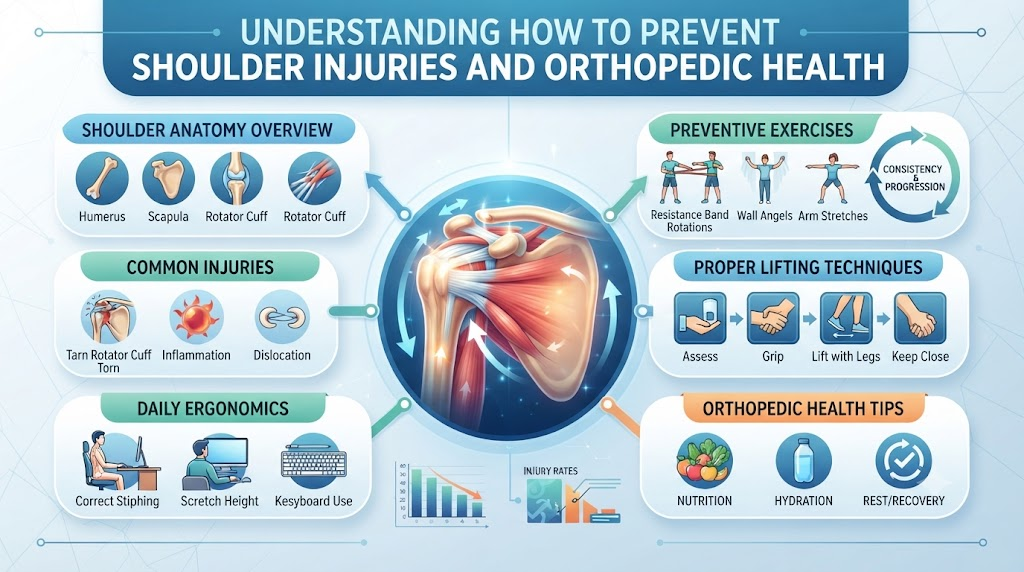
The shoulder is a ball-and-socket joint made up of three primary bones: the collarbone, the shoulder blade, and the upper arm bone. Surrounding these bones is a complex network of muscles, tendons, and ligaments that provide support. The rotator cuff—a group of four specific muscles and tendons—plays a particularly vital role in stabilizing the joint and enabling smooth arm rotation.
Why the Shoulder Is Vulnerable to Injury
Unlike the hip joint, which is deeply encased and structurally rigid, the shoulder is designed for maximum mobility. The socket of the shoulder is relatively shallow, resembling a saucer rather than a deep cup. This shallow design allows for vast rotational freedom, but it also means the joint relies heavily on surrounding muscles and soft tissues for stability rather than bone structure alone.
How the Shoulder Works During Daily Movement
During daily life, the shoulder coordinates complex actions such as lifting, pulling, pushing, and overhead reaching. These movements require seamless cooperation between the main shoulder joint, the shoulder blade, and the upper back to distribute physical loads evenly.
The Importance of Shoulder Stability
Stability is essential for preventing excessive or abnormal joint movement. When the supporting rotator cuff muscles and shoulder blade stabilizers work harmoniously, they keep the head of the upper arm bone securely centered within the shallow socket during dynamic movements.
Common Types of Shoulder Injuries
Rotator Cuff Injuries
Rotator cuff issues involve inflammation, tendinopathy, or tearing of the tendons that stabilize the shoulder joint, often resulting from repetitive overhead activity or age-related wear.
Shoulder Strains and Sprains
Strains involve overstretched or torn muscle fibers or tendons, while sprains affect ligaments. These typically occur due to sudden awkward movements, heavy lifting, or minor trauma.
Shoulder Impingement
Impingement happens when surrounding bone or tissue rubs against the rotator cuff tendons during arm elevation, causing irritation and discomfort during overhead tasks.
Shoulder Dislocation and Instability
A dislocation occurs when the top of the arm bone pops out of the shoulder socket, which can stretch or tear supporting ligaments and lead to ongoing joint instability.
Tendon Problems
Tendinitis or chronic inflammation of the biceps or rotator cuff tendons can develop from repetitive friction and overuse during sports or occupational tasks.
Overuse Injuries
Gradual microtrauma from repetitive motions without adequate rest can lead to persistent aches and structural irritation within the shoulder complex.
Sports-Related Shoulder Injuries
Athletes engaged in throwing, swimming, contact sports, or weightlifting face specific risks of acute or chronic shoulder strains due to high force demands.
Not all shoulder discomfort represents a severe structural injury; many mild aches resolve with temporary rest and modified activity.
Common Causes and Risk Factors for Shoulder Injuries
Repetitive Overhead Movements
Occupations or sports that require frequent arm movements above shoulder height place ongoing mechanical stress on the rotator cuff tendons.
Poor Exercise Technique
Lifting weights with incorrect form or improper biomechanics concentrates excessive stress on vulnerable shoulder structures instead of distributing load evenly.
Sudden Increases in Activity
Ramping up workout intensity, weight, or training duration too quickly without allowing the body time to adapt frequently leads to overuse strains.
Muscle Weakness
Imbalances in strength between the large chest and shoulder muscles and the smaller upper back and rotator cuff stabilizers can compromise joint alignment.
Limited Mobility
Stiffness in the thoracic spine or restricted shoulder rotation forces surrounding tissues to compensate, increasing strain during movement.
Previous Shoulder Injuries
Having a history of shoulder sprains, strains, or dislocations increases the statistical likelihood of future re-injury if rehabilitation was incomplete.
Poor Posture
Slouching forward rounds the shoulders, narrows the subacromial space, and alters optimal biomechanics during arm elevation.
Workplace Demands
Heavy manual labor, constant reaching, and awkward working postures can contribute to cumulative musculoskeletal wear over time.
Sports and Contact Injuries
Direct impacts, falls, or sudden tackles in athletic environments can cause acute traumatic injuries to the shoulder girdle.
Age-Related Changes
Natural physiological changes in tendon elasticity and blood supply occur with age, making tissues slightly more susceptible to wear and tear.
Having a risk factor does not guarantee that a shoulder injury will occur; rather, it highlights areas where preventive habits can be beneficial.
Everyday Habits That May Help Reduce the Risk of Shoulder Injuries
| Prevention Habit | Why It May Help | Practical Way to Apply It |
| Warm Up Before Activity | Increases blood flow to muscles and improves joint tissue elasticity. | Perform five to ten minutes of light aerobic movement and dynamic stretches. |
| Increase Activity Gradually | Allows muscles, tendons, and bones to adapt to rising physical demands. | Follow the ten percent rule when increasing workout weight or duration. |
| Maintain Good Exercise Technique | Ensures proper load sharing across appropriate muscle groups. | Focus on controlled form, work with mirrors, or seek professional coaching. |
| Build Shoulder and Upper-Body Strength | Enhances joint stability and supports the rotator cuff network. | Include balanced upper back and shoulder strengthening exercises weekly. |
| Maintain Shoulder Mobility | Preserves full range of motion and prevents compensatory movement. | Incorporate gentle daily stretching and thoracic rotation drills. |
| Avoid Repetitive Overload | Prevents cumulative microtrauma from continuous identical movements. | Break up long repetitive tasks with short restorative rest intervals. |
| Take Breaks During Repetitive Work | Gives soft tissues time to rest and resets postural alignment. | Stand up, stretch, and roll your shoulders every hour during desk work. |
| Use Good Posture and Ergonomics | Reduces unnecessary postural strain on cervical and shoulder muscles. | Adjust desk chairs, monitors, and keyboards to maintain neutral alignment. |
| Allow Adequate Recovery | Facilitates cellular tissue repair and prevents chronic fatigue. | Schedule rest days between intense upper-body training sessions. |
| Address Persistent Shoulder Symptoms Early | Prevents minor strains from developing into chronic, stubborn conditions. | Consult a healthcare professional if mild shoulder discomfort lingers. |
These habits may help reduce modifiable risk factors, but no exercise routine or prevention strategy can guarantee complete protection from injury. Because musculoskeletal health is influenced by individual biology, genetics, and unexpected physical events, injuries can occasionally happen even with careful preparation. Adopting these routines should be viewed as part of a sensible approach to physical wellness.
The Importance of Warming Up Before Activity
Why Warm-Ups Matter
A proper warm-up raises core body temperature, increases blood circulation to working muscles, and enhances the viscosity of synovial fluid within the joint, allowing smoother movement.
Preparing the Shoulder for Movement
Dynamic warm-ups prepare the complex rotator cuff muscles and scapular stabilizers for the specific demands of exercise or sports participation.
Gentle Mobility Before Exercise
Incorporating arm circles, gentle shoulder rolls, and cross-body reaches helps lubricate the joint surfaces before any heavy lifting or rapid motion begins.
Sport-Specific Preparation
Tailoring your warm-up to mimic the exact movements you will perform—such as light practice throws for baseball players or gentle arm swings for swimmers—optimizes neuromuscular coordination.
Common Warm-Up Mistakes
Rushing straight into heavy lifting or intense activity without preparation shocks cold tendons and increases the risk of acute strain.
Building Shoulder Strength Safely
Why Strength Supports Strength Stability
Strong muscles surrounding the shoulder act as dynamic restraints, keeping the joint centered and stable during high-force activities.
The Role of the Rotator Cuff
Targeted exercises focusing on internal and external rotation help fortify the delicate tendons responsible for fine-tuning joint control.
Upper Back and Shoulder Blade Muscles
Strengthening the rhomboids, trapezius, and serratus anterior ensures the shoulder blade moves smoothly, preventing impingement during arm elevation.
Balanced Strength Training
Avoid overtraining the front deltoids and chest while neglecting the posterior shoulder chain; balance is key to healthy posture and joint function.
Starting At an Appropriate Level
Beginners should use light resistance or body weight, mastering form completely before adding external loads.
Gradual Progression
Progressive overload should be applied slowly over weeks and months rather than jumping rapidly to heavier weights.
Individuals with pain or previous injuries should seek personalized exercise guidance from qualified physical therapists or orthopedic specialists.
Maintaining Healthy Shoulder Mobility
Why Mobility Matters
Mobility combines flexibility and active control, ensuring your shoulder can move freely through its complete physiological arc without pinching surrounding tissues.
Shoulder Range of Motion
Maintaining internal rotation, external rotation, overhead flexion, and extension prevents joint stiffness.
Gentle Movement and Flexibility
Regular stretching of the chest, lats, and posterior shoulder capsule keeps tight tissues from pulling the joint out of alignment.
Avoiding Forced Stretching
Stretching should never cause sharp pain; forceful bouncing or aggressive pulling can tear muscle fibers and provoke protective spasms.
Balancing Mobility With Stability
Excessive joint laxity can be as problematic as stiffness; mobility work should always be paired with adequate stabilizing strength.
How Proper Posture Can Support Shoulder Health
Sitting Posture
Sitting with an unsupported, slouched spine rounds the shoulders forward, placing chronic tension on upper back muscles and altering shoulder mechanics.
Desk and Computer Ergonomics
Positioning your monitor at eye level, keeping elbows bent at right angles, and using a supportive chair helps maintain neutral spinal and shoulder alignment.
Standing Posture
Standing tall with ears aligned over shoulders and chest open promotes balanced muscle recruitment across the upper torso.
Smartphone and Device Habits
Looking down continuously at handheld screens (“text neck”) strains cervical and shoulder girdle muscles, contributing to postural fatigue.
Frequent Position Changes
No posture should be held rigidly for hours; changing positions frequently encourages healthy muscle contraction and circulation.
Proper posture is only one component of shoulder health and should not be presented as the sole cause of all shoulder discomfort.
Preventing Shoulder Injuries During Exercise
- Learn Proper Technique: Master movement patterns with a professional trainer or physical therapist before attempting complex or heavy lifts.
- Start With Appropriate Resistance: Choose weights that allow you to complete your repetitions with strict, controlled form.
- Avoid Sudden Training Increases: Follow gradual progression principles to prevent overloading tendons and ligaments.
- Balance Different Muscle Groups: Train opposing muscle groups equally to maintain structural symmetry and prevent imbalances.
- Listen to Pain Signals: Stop immediately if you experience sharp or unusual pain during a movement; do not try to push through it.
- Allow Time for Recovery: Give your upper body at least forty-eight hours of recovery between intense shoulder-focused training sessions.
- Seek Professional Guidance When Needed: Consult orthopedic specialists or physical therapists if you need help designing a safe exercise program.
Shoulder Injury Prevention for Athletes
Throwing Sports
Pitchers and quarterbacks require specialized rotator cuff conditioning, core stability, and strict pitch-count limits to prevent repetitive overuse trauma.
Swimming
Swimmers need meticulous stroke mechanics, core control, and balanced shoulder conditioning to avoid swimmer’s shoulder impingement.
Tennis and Racquet Sports
Racquet sports demand strong scapular stabilization and proper follow-through mechanics to absorb impact forces efficiently.
Weight Training
Lifters must prioritize secure grip mechanics, controlled eccentric lowering phases, and balanced pressing-to-pulling ratios.
Contact Sports
Football, rugby, and hockey players benefit from protective equipment, proper tackling technique, and neck-and-shoulder strengthening protocols.
Preventing Shoulder Injuries at Work
Desk-Based Work
Ensure your workstation is ergonomically adjusted so your shoulders remain relaxed and unbunched while typing or using a mouse.
Repetitive Manual Work
Take frequent micro-breaks during assembly-line or repetitive manual tasks to rest overworked muscles and reset posture.
Lifting and Carrying
When lifting objects, keep loads close to your body, use your leg strength rather than your arms, and avoid twisting while lifting.
Overhead Tasks
If working overhead, use secure step stools to keep your hands at comfortable chest or eye level whenever possible.
The Role of Rest and Recovery
Why Recovery Matters
Rest is the biological window during which muscle fibers repair, micro-tears heal, and soft tissues adapt to physical conditioning.
Avoiding Repetitive Overload
Continuous high-frequency loading without rest breaks breaks down tissue faster than the body can rebuild it.
Balancing Activity and Rest
Alternate heavy upper-body workout days with lower-intensity cardiovascular or rest days.
Sleep and Physical Recovery
Deep sleep triggers the release of growth hormones essential for musculoskeletal repair and tissue regeneration.
Returning to Activity Gradually
After a period of inactivity, re-enter your exercise routine at a fraction of your previous volume and intensity.
Common Mistakes That Can Increase Shoulder Injury Risk
Skipping Warm-Ups
Jumping straight into strenuous upper-body workouts with cold, stiff joints and tendons.
Ignoring Pain
Treating sharp or lingering shoulder aches as normal discomfort and attempting to push through it.
Exercising With Poor Technique
Sacrificing strict form to lift heavier weights or complete repetitions faster.
Increasing Weight Too Quickly
Ramping up resistance levels before supporting stabilizing muscles are adequately conditioned.
Training the Same Muscles Repeatedly
Failing to include rest days or focusing exclusively on mirror muscles like the chest and front deltoids.
Neglecting Mobility
Allowing the thoracic spine and shoulder capsules to become stiff and restricted.
Returning to Sport Too Soon After an Injury
Rushing back to high-impact activities before regaining full strength and stability.
Treating Serious Injuries Without Evaluation
Attempting to self-manage severe trauma, persistent weakness, or instability without professional medical assessment.
Practical Daily Tips for Healthy Shoulders
- Perform a dynamic warm-up incorporating gentle arm circles and mobility drills before exercising.
- Increase your training weight, distance, or intensity gradually over weeks and months.
- Prioritize strict exercise technique and proper biomechanics during every repetition.
- Strengthen your rotator cuff and upper back muscles to support balanced joint stability.
- Stretch tight chest and latissimus muscles regularly to maintain an open, upright posture.
- Take short, frequent rest breaks during long periods of repetitive manual or desk work.
- Ergonomically optimize your workstation to keep your shoulders relaxed and neutral.
- Avoid lifting heavy items suddenly or awkwardly away from your body’s center of gravity.
- Use your leg and core strength when lifting heavy objects rather than relying solely on your arms.
- Allow adequate rest and recovery days between intensive upper-body workouts.
- Stop exercising immediately if you feel sharp, pinching, or unusual joint pain.
- Respect previous injury history by incorporating tailored strengthening and mobility maintenance.
- Avoid overtraining specific muscle groups while neglecting their opposing counterparts.
- Consult a qualified physical therapist or orthopedic specialist if mild shoulder discomfort lingers.
- Follow professional rehabilitation and conditioning advice closely if recovering from past musculoskeletal issues.
When Should You See an Orthopedic Specialist?
Sudden Severe Pain
Intense, sharp pain occurring suddenly during or after an activity warrants prompt professional evaluation.
Visible Deformity
Any obvious bump, asymmetry, or abnormal shifting in the shoulder contour requires immediate medical attention.
Inability to Move the Arm Normally
Difficulty lifting your arm away from your side or rotating it normally is a sign of a significant structural issue.
Significant Swelling
Rapid or pronounced swelling around the joint can indicate acute inflammation or internal trauma.
Numbness or Weakness
Radiating numbness, tingling down the arm, or sudden hand weakness suggests nerve involvement or severe rotator cuff tearing.
Persistent Pain
Shoulder aches that do not improve with a few days of rest and modified activity should be checked by a doctor.
Pain After a Fall or Major Injury
Trauma resulting from sports accidents, falls, or motor vehicle incidents must be evaluated promptly.
Repeated Shoulder Instability
If your shoulder feels loose, slips out of place, or repeatedly threatens to pop out, specialized orthopedic assessment is essential.
How Shoulder Injuries Are Evaluated
Medical History
The orthopedic specialist discusses how the injury occurred, the nature of your symptoms, your daily activities, and your past medical background.
Physical Examination
The doctor inspects the shoulder contour, checks for tenderness, and evaluates skin condition and muscle symmetry.
Movement and Strength Assessment
Specialized clinical maneuvers and gentle resistance testing help pinpoint which specific muscles, tendons, or ligaments are irritated or injured.
X-Rays
X-rays provide clear images of the bones, allowing doctors to detect fractures, bone spurs, arthritis, or joint misalignment.
Ultrasound
Diagnostic ultrasound offers real-time visualization of soft tissues, tendons, and bursa, making it useful for evaluating rotator cuff integrity.
MRI and Other Imaging
Magnetic resonance imaging provides highly detailed views of soft tissues, labrum tears, and deep ligamentous structures when complex diagnostics are needed.
Personalized Treatment Planning
Based on evaluation findings, the specialist designs a customized treatment plan tailored to the patient’s specific injury and functional goals.
Treatment and Rehabilitation After a Shoulder Injury
Activity Modification
Temporarily modifying daily tasks, work duties, or exercise routines removes continuous stress from healing tissues.
Physical Therapy and Rehabilitation
Structured physical therapy focuses on restoring full pain-free range of motion, correcting biomechanics, and rebuilding rotator cuff and scapular strength.
Pain Management Under Professional Guidance
Doctors may recommend appropriate anti-inflammatory medications or targeted therapies to control acute discomfort during early healing.
Returning to Exercise Gradually
Re-entering physical activity requires a cautious, step-by-step progression supervised by rehabilitation professionals.
Surgical Evaluation in Selected Cases
For severe structural issues—such as complete rotator cuff tears, recurrent dislocations, or labral tears that fail conservative care—orthopedic surgeons may discuss surgical repair options.
Long-Term Prevention Strategies
Post-injury rehabilitation emphasizes lifelong maintenance habits to reduce the risk of future joint issues.
Modern Advances in Shoulder Care
Improved Diagnostic Imaging
High-resolution MRI and advanced ultrasound equipment allow orthopedic specialists to diagnose soft tissue injuries with exceptional precision.
Sports Medicine Rehabilitation
Modern rehabilitation protocols utilize advanced neuromuscular training, blood flow restriction therapy, and science-backed conditioning.
Minimally Invasive Procedures
Arthroscopic surgical techniques allow surgeons to repair torn rotator cuffs and stabilize joints through tiny incisions, resulting in less tissue trauma and smoother recovery.
Personalized Rehabilitation Programs
Tailored recovery plans account for an individual’s age, sport, occupation, and unique anatomical needs.
Remote Rehabilitation and Telehealth
Telehealth platforms make it convenient for patients to consult with physical therapists, review exercise form, and track home rehabilitation progress remotely.
Frequently Asked Questions (FAQ)
1.How can I prevent shoulder injuries?
Preventing shoulder injuries involves maintaining a balanced routine of upper back and rotator cuff strengthening, preserving joint mobility, practicing proper exercise technique, warming up before activity, increasing training loads gradually, and utilizing good ergonomic posture.
2.What is the most common cause of shoulder injuries?
The most common causes are cumulative overuse from repetitive overhead movements, sudden increases in training intensity, poor biomechanics during lifting, and age-related wear on the rotator cuff tendons.
3.Do warm-ups help prevent shoulder injuries?
Yes, dynamic warm-ups increase blood circulation to the shoulder joint, lubricate surfaces, and prepare the delicate rotator cuff muscles and tendons for physical stress, reducing the likelihood of acute strains.
4.Can shoulder exercises reduce injury risk?
Targeted strengthening exercises for the rotator cuff and scapular stabilizers improve dynamic joint stability, ensuring the upper arm bone stays properly aligned within the socket during movement.
5.How can I protect my shoulders while working at a desk?
Protect your shoulders by ergonomically adjusting your desk chair, monitor height, and keyboard placement so your arms remain relaxed. Take frequent micro-breaks every hour to stand up, roll your shoulders, and reset your posture.
6.Should I exercise if my shoulder hurts?
You should never exercise through sharp, pinching, or worsening shoulder pain. Mild muscular fatigue from a workout is normal, but joint pain or sharp discomfort is a warning sign that requires rest and potential medical evaluation.
7.How can athletes prevent shoulder injuries?
Athletes can reduce risk by maintaining balanced strength across opposing muscle groups, refining sport-specific movement mechanics, adhering to training volume limits, and incorporating structured cool-downs and rest days.
8.Can poor exercise technique cause shoulder problems?
Yes, lifting with improper form—such as letting elbows flare out excessively during bench presses or using momentum during overhead lifts—concentrates excessive shearing force on the shoulder joint and tendons.
9.When should I see a doctor for shoulder pain?
You should see a doctor if you experience sudden severe pain, visible deformity, inability to move your arm, significant swelling, numbness, or if shoulder pain persists despite a few days of rest and modified activity.
10.How can I safely return to exercise after a shoulder injury?
Returning to exercise requires clearance from an orthopedic specialist or physical therapist. You should start with gentle range-of-motion work, progress slowly to light resistance, and strictly avoid movements that provoke pain.
Final Conclusion
Protecting your shoulders is an essential component of maintaining overall musculoskeletal health, independence, and physical vitality. Because the shoulder joint prioritizes exceptional mobility over deep bony stability, it relies heavily on our daily habits, movement awareness, and physical conditioning to stay healthy. Understanding the mechanics of the shoulder, recognizing common risk factors, and appreciating the value of proper technique, gradual progression, and adequate recovery empowers individuals to take charge of their joint health.Implementing everyday preventive habits—such as warming up before physical activity, building balanced strength in the rotator cuff and upper back, maintaining comfortable mobility, and practicing good ergonomic posture—significantly reduces the risk of common injuries.