INTRODUCTION
The thrill of competition, the satisfaction of a personal best in the gym, and the joy of a weekend match—physical activity is a vital part of a healthy life. However, it also brings a distinct set of risks. Every athlete, whether they are a weekend jogger or a competitive professional, has likely dealt with the frustration of a sudden pain or a nagging ache. Understanding these hurdles is the first step toward overcoming them.Sports injuries are a natural, albeit unwelcome, consequence of pushing our bodies to perform. When muscles, ligaments, tendons, or bones are subjected to stress, impact, or repetitive motion, they can sustain damage. While minor injuries may resolve with a few days of rest, others require more specialized attention. The key to staying active for a lifetime lies in recognizing the difference between “soreness” and “injury” and knowing when to seek professional help.At Bestorthohospitals, we believe that knowledge is the athlete’s most valuable tool. By understanding the biomechanics of your body and the nature of common injuries, you can transition from simply “pushing through the pain” to making informed decisions about your health. Early detection and proper orthopedic care are the pillars of long-term joint and muscle health.Consider the scenario of a dedicated runner who suddenly feels a sharp “pop” or a persistent ache in their knee. Many athletes in this position are tempted to wrap the knee, take an over-the-counter painkiller, and get back to their route the next day. This mindset often turns a minor ligament strain into a chronic, long-term injury that keeps them sidelined for months. Recognizing the warning signs and understanding the recovery process is what separates those who get stuck in a cycle of injury and those who return to peak performance. This guide is written to help you understand those signals and navigate the path to healing effectively.
WHAT ARE SPORTS INJURIES?
At their core, sports injuries are musculoskeletal conditions that occur during physical activity. They are categorized based on the tissues involved—muscles, ligaments, tendons, or bones—and the nature of the damage. Our bodies are designed for movement, but they also have structural limits. When that limit is exceeded, whether by a sudden twist, a direct blow, or thousands of repetitions of the same movement, an injury occurs.
Orthopedic medicine views these injuries as a disruption in the body’s kinetic chain. If a ligament in your ankle is strained, it affects how you walk, which changes the load on your knee, which eventually changes your hip alignment. Understanding this “chain reaction” is why orthopedic specialists emphasize comprehensive care rather than just treating the immediate pain site. Whether it is an acute injury—happening suddenly—or a chronic injury—developing slowly over time—the goal of sports medicine is to restore your pre-injury function and prevent future recurrence.
TYPES OF SPORTS INJURIES
Injuries in the sports world are as diverse as the activities themselves. However, they generally fall into specific medical categories.
Sprains (Ligament Injuries)
A sprain happens when a ligament—the tough, fibrous tissue connecting bone to bone—is stretched or torn. Ankles are the most common site for sprains. They range from Grade 1 (micro-tears) to Grade 3 (complete rupture), requiring significant recovery time and often bracing.
Strains (Muscle/Tendon Injuries)
Often confused with sprains, a strain affects muscles or tendons (which connect muscle to bone). Commonly known as a “pulled muscle,” this injury occurs when fibers are overstretched. Hamstring and calf strains are classic examples in sprinting sports.
Fractures (Bone Injuries)
While some fractures are obvious due to the severity of the impact, “stress fractures” are insidious. These are tiny cracks in the bone caused by repetitive force, often seen in runners who increase their distance too quickly.
Dislocations (Joint Injuries)
A dislocation occurs when the two bones forming a joint are forced out of their normal position. Shoulders are frequently prone to dislocation, and because the surrounding ligaments are often damaged in the process, they require professional medical “resetting” and stabilization.
Tendinitis (Overuse Injuries)
This is an inflammation of the tendon. It isn’t caused by a single event but by thousands of tiny, repetitive stresses that outpace the body’s ability to repair itself. Tennis elbow and Achilles tendinitis are prevalent forms of this condition.
COMMON SPORTS INJURIES
| Injury Type | Affected Area | Symptoms | Treatment |
| Sprain | Ligament | Swelling, pain | Rest, therapy |
| Strain | Muscle | Tightness, tear | Rehab |
| Fracture | Bone | Severe pain | Casting/surgery |
| Dislocation | Joint | Deformity | Medical reset |
| Tendinitis | Tendon | Chronic pain | Therapy |
CAUSES OF SPORTS INJURIES
Why do injuries happen? It is rarely just “bad luck.” Most injuries are the result of identifiable imbalances or poor training habits.
- Overtraining: The most common cause. The body needs time to repair the micro-damage caused by exercise. Without rest days, the body breaks down instead of building up.
- Poor Warm-up: A “cold” muscle is brittle. Failing to increase blood flow and prepare the joints for activity is a direct invitation for strains.
- Improper Technique: Repeatedly using incorrect form—like poor squat mechanics or uneven running gait—places stress on tissues that weren’t designed to handle it.
- Lack of Conditioning: Trying to play a high-intensity sport without the baseline strength or endurance to support that intensity is a recipe for disaster.
- Wrong Equipment: Worn-out running shoes or equipment that does not fit correctly can lead to biomechanical issues that manifest as joint pain.
SYMPTOMS OF SPORTS INJURIES
Your body is an expert at sending signals. Ignoring these is the fastest way to turn a minor issue into a major medical problem.
- Pain: Often localized to the injured area but can sometimes be “referred” to other parts of the limb.
- Swelling: An immediate response to tissue damage. It serves to protect the area but can also increase pressure and pain.
- Bruising (Ecchymosis): Visible discoloration under the skin, indicating bleeding from torn blood vessels.
- Weakness: A sudden inability to generate force, which often points to a significant muscle or tendon tear.
- Joint Instability: A feeling that a joint is going to “give way.” This is a classic indicator of ligament damage, such as a torn ACL.
- Limited Range of Motion: If you cannot bend or rotate a joint as far as you normally could, the tissues are likely in a defensive, inflamed state.
DIAGNOSIS IN ORTHOPEDIC HOSPITALS
When you visit an orthopedic specialist, the goal is to see past the skin and observe the injury’s architecture.
- Physical Examination: The doctor performs clinical tests, such as moving the joint in specific ways, to assess the integrity of ligaments and tendons.
- X-rays: Essential for ruling out bone fractures or evaluating joint space.
- MRI Scans: The gold standard for soft tissue. It provides a detailed view of ligaments, tendons, and cartilage, making it the primary tool for diagnosing ACL tears or rotator cuff issues.
- Functional Movement Tests: Analyzing how you move—your gait, your squat, your posture—helps the doctor identify the underlying biomechanical flaws that caused the injury in the first place.
TREATMENT OPTIONS
Treatment is a spectrum that moves from conservative care to surgical intervention, depending on the severity of the injury.
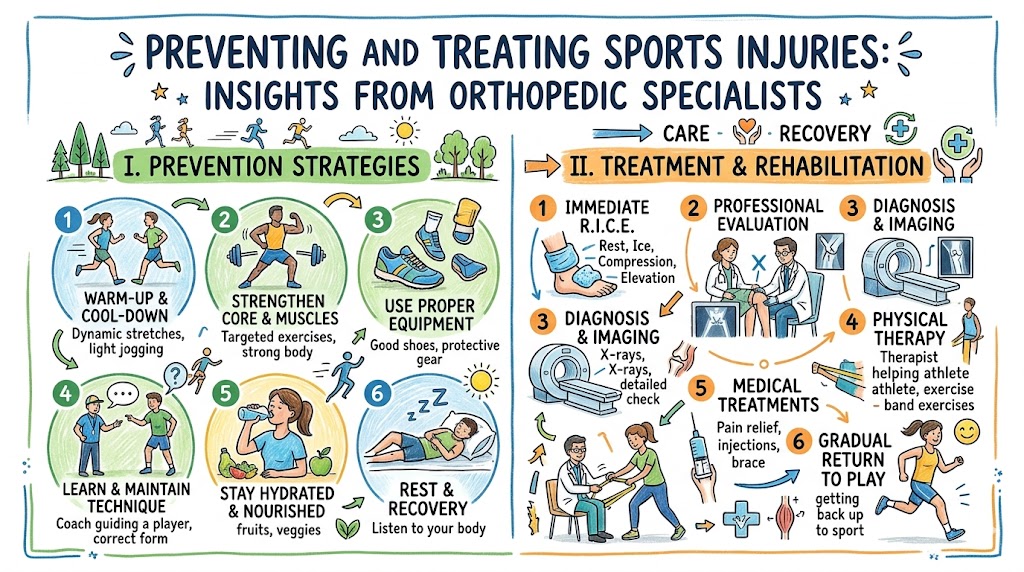
The RICE Method
Rest, Ice, Compression, and Elevation. This remains the initial treatment for almost all acute soft tissue injuries to manage inflammation.
Physiotherapy
This is not optional—it is the foundation of recovery. Physical therapists use targeted exercises to regain strength, balance, and proprioception (your body’s awareness of its position in space).
Bracing and Supports
These tools stabilize the injured area, preventing harmful movements while allowing the healing process to occur under controlled conditions.
Arthroscopic Surgery
For more severe ligament or cartilage injuries, “keyhole” surgery allows orthopedic surgeons to enter the joint with a tiny camera and specialized tools. It is far less invasive than traditional open surgery and allows for faster recovery.
Ligament Reconstruction
In cases like a complete ACL tear, the ligament may need to be replaced using a graft. This is a complex procedure that requires months of dedicated rehabilitation to ensure the new tissue integrates successfully.
REHABILITATION & RECOVERY
Recovery is a journey through defined stages. It is not just about the pain disappearing; it is about rebuilding capacity.
- Protection Phase: The goal is to let the inflammation subside. This is where RICE and bracing come in.
- Range-of-Motion Phase: Gently restoring the ability of the joint to move through its full arc without forcing it.
- Strengthening Phase: Gradually introducing resistance. Starting with isometric exercises (tensing the muscle without moving the joint) and moving toward isotonic (moving against resistance).
- Functional Return: The final stage, where you simulate the actual movements of your sport. If you are a basketball player, this is when you practice cutting, jumping, and pivoting under supervision.
RECOVERY TIMELINE
| Injury Type | Recovery Time | Treatment Focus |
| Sprain | 1–6 weeks | Rest + therapy |
| Strain | 2–8 weeks | Rehab |
| Fracture | 6–12 weeks | Immobilization |
| ACL injury | Months | Surgery + rehab |
PREVENTION OF SPORTS INJURIES
The best injury is the one that never happens. Prevention is rooted in consistency and preparation.
- Dynamic Warm-ups: Move beyond static stretching. Use dynamic movements like leg swings, lunges, and arm circles to “wake up” the muscles and lubricate the joints before starting.
- Progressive Overload: Never jump from running 5km to 15km in a week. Increase your volume and intensity slowly, giving your tendons and bones time to adapt.
- Strength Training: Muscles act as shock absorbers. Stronger muscles protect your ligaments and joints from the impact of sports.
- Listen to Fatigue: There is a difference between “good” soreness from a workout and “bad” pain from an injury. If your form breaks down because you are tired, stop. That is when injuries happen.
- Recovery Days: Sleep is when the body builds tissue. Prioritize rest as a part of your training plan, not as a separate activity.
WHEN TO SEE AN ORTHOPEDIC DOCTOR
Sometimes, the “wait and see” approach is the wrong approach. You should seek an evaluation if:
- The pain is severe, and you cannot bear weight on the limb.
- There is a visible deformity or “misalignment” at the joint.
- The swelling does not go down after 48 hours of rest and ice.
- The joint feels unstable or “gives way” unexpectedly.
- You experience localized pain that has persisted for more than two weeks despite resting.
- You feel numbness or tingling, which can indicate nerve compression or damage.
ROLE OF SPORTS MEDICINE SPECIALISTS
Sports medicine is not just about fixing what is broken; it is about optimizing your entire mechanical system. These specialists act as both doctors and coaches for your tissues. They perform precise diagnoses that general practitioners might miss, plan surgical interventions if needed, and oversee the complex rehabilitation process. Their ultimate goal is to get you back to your desired level of performance while ensuring that your body is robust enough to prevent the same injury from happening again.
REAL-LIFE ATHLETE CASES
- The Weightlifter: A gym-goer experiences shoulder pain while doing overhead presses. By seeing an orthopedic specialist early, they discover a minor rotator cuff strain. With 4 weeks of specific physical therapy focusing on rotator cuff stabilization, they avoid surgery and return to their lifting routine stronger than before.
- The Football Player: An amateur player twists their ankle during a game. The swelling is significant. An orthopedic exam confirms a Grade 2 sprain. By following a structured 6-week rehab program, the player returns to the field without lingering instability.
- The Runner: A long-distance runner notices shin pain that gets worse throughout the week. An X-ray shows a stress fracture in the tibia. They take a planned 8-week break from impact, cross-training with swimming instead, and return to their running schedule with a revised, safer training plan.
FUTURE OF SPORTS MEDICINE
The future is incredibly exciting. We are moving toward “predictive” sports medicine, where wearable sensors monitor your movement patterns and identify the “micro-breaks” in your form that precede an injury. Regenerative medicine, such as PRP (Platelet-Rich Plasma) injections, is also showing potential in helping soft tissues like tendons heal faster. Advanced arthroscopy and even more precise surgical robotics are making treatments faster and recovery more predictable.
FAQs
1. What are the most common sports injuries?
Sprains and strains remain the most common, followed by tendinitis and stress fractures.
2. How long does recovery take?
It depends entirely on the tissue type. Muscle strains heal faster than ligament tears, and bone fractures have their own biological timeline.
3. Can sports injuries be prevented?
You cannot eliminate all risks, but strength training, proper warm-ups, and respecting rest periods can dramatically reduce your likelihood of injury.
4. When is surgery needed?
Surgery is usually reserved for complete ligament ruptures, complex fractures, or chronic issues that haven’t responded to physical therapy.
5. What is an ACL injury?
The ACL (Anterior Cruciate Ligament) stabilizes the knee. A tear is a serious injury that often requires surgical reconstruction for athletes who want to return to pivoting sports.
6. Should I use heat or ice?
Use ice for the first 48 hours to reduce inflammation. Use heat afterward to promote blood flow and muscle relaxation.
7. Can I train through the pain?
If the pain is sharp or causes a change in your form, you should stop. “No pain, no gain” does not apply to joints and ligaments.
8. Why do joints crack?
Usually, it is just gas bubbles popping in the fluid. It is harmless unless it is accompanied by pain.
9. Are supplements helpful for joint health?
While some people find collagen or glucosamine helpful, there is no substitute for a well-balanced diet and strength training.
10. What is a “stinger”?
It is a nerve injury common in contact sports, where the nerves in the shoulder/neck are compressed. It usually resolves quickly but should be evaluated.
11. Is yoga good for recovery?
Yes, it promotes flexibility and balance, but ensure your poses are suited to your specific injury.
12. When can I return to sport?
You should return only when you have regained full range of motion, strength, and confidence in the injured area, and have been cleared by your doctor.
13. Do I need an MRI for every injury?
No, a physical exam by a specialist is often enough for minor injuries. MRIs are for complex or persistent cases.
14. What if I re-injure the same spot?
Re-injury suggests the initial healing or rehabilitation was incomplete. It requires a deeper look at your biomechanics.
15. How do I choose the best hospital?
Look for a center with a dedicated sports medicine department, experienced physical therapists, and a focus on non-surgical care first.
FINAL CONCLUSION
Sports injuries are a challenging chapter in any athlete’s life, but they do not have to be the end of your story. The recovery journey is a test of patience, discipline, and commitment, and it often provides a rare opportunity to rebuild your body with more intelligence and stability than it had before. By understanding the causes of common injuries and committing to preventive practices like strength training and proper recovery, you are making an investment in your long-term mobility.Remember, your body is an extraordinary system capable of incredible healing. Treat it with the respect it deserves, listen to the signals it sends you, and when in doubt, seek the guidance of a specialist.You have the tools and the information you need to stay active, stay strong, and get back to doing what you love. Keep moving, stay mindful, and trust the process of your recovery.