Introduction
Our bones are the framework of our lives. They provide the support, protection, and mobility we often take for granted until their structural integrity begins to fade. Osteoporosis is a condition characterized by a loss of bone mass and density, making bones weak and brittle. Because this process is often slow and painless, it is frequently described as a “silent disease.” Many people remain unaware of their condition until a sudden fall or minor stress leads to a fracture.
At BestOrthoHospitals, we are dedicated to providing clear, evidence-based information that empowers patients to take charge of their orthopedic health. Whether you are seeking information on diagnostic screenings, prevention strategies, or specialized orthopedic care, our platform is designed to guide you through every stage of bone wellness. In this guide, we will explore the mechanisms behind bone health, the early warning indicators of osteoporosis, and the lifestyle adjustments that can make a profound difference in your later years.
What Is Osteoporosis?
Osteoporosis is a metabolic bone disease that results in the loss of bone tissue. Inside a healthy bone, the structure resembles a honeycomb, with thick walls and small gaps. In a bone with osteoporosis, the gaps become much larger, and the walls become thin and fragile.
- The Remodeling Process: Throughout your life, your body constantly breaks down old bone and replaces it with new bone. When you are young, this cycle is balanced, but as you age, bone breakdown starts to outpace bone formation.
- The Result: Bones become porous, weak, and susceptible to breaks from everyday activities, such as standing up, coughing, or bending over.
How to Recognize Signs of Osteoporosis
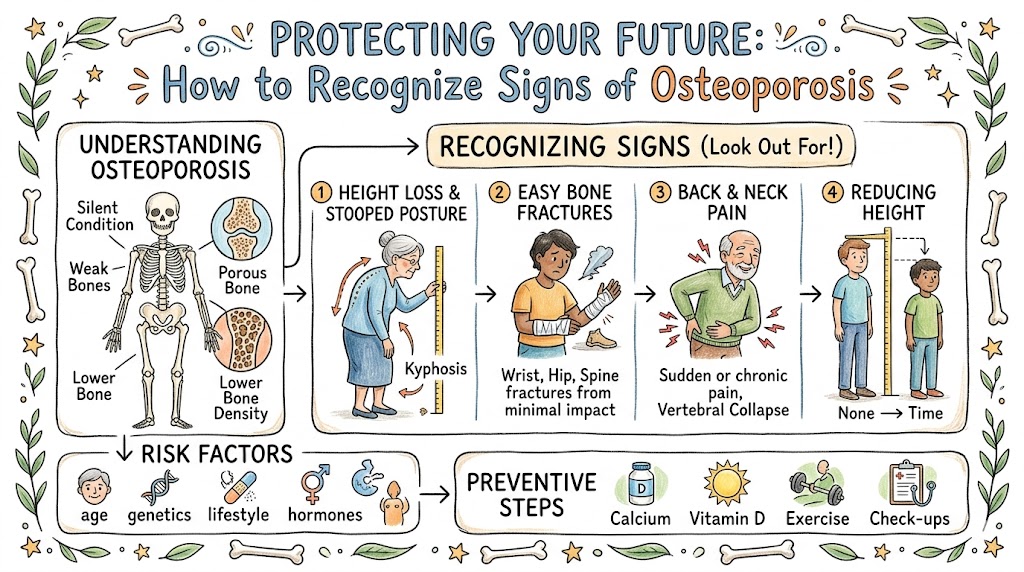
Because osteoporosis typically shows no symptoms in its earliest stages, knowing the later warning signs is critical for seeking a professional evaluation.
- Frequent Fractures: Breaking a bone after a fall that wouldn’t normally cause such an injury is a major red flag.
- Persistent Back Pain: Caused by a collapsed or fractured vertebra (the bones in your spine).
- Loss of Height: A noticeable decrease in stature—often an inch or more over several years—suggests compression in the spine.
- Stooped Posture (Kyphosis): A curvature of the upper back that gives a “hunchback” appearance.
- Reduced Mobility: Difficulty performing everyday movements due to underlying bone or joint discomfort.
Early Signs of Osteoporosis
While major fractures are obvious, early signs are often more subtle and easily overlooked:
- Weaker Grip Strength: Difficulty opening jars or turning door handles can indicate a decrease in bone and muscle strength.
- Brittle Nails: Nails that crack or peel easily may sometimes correlate with low bone calcium or nutritional deficiencies.
- Gradual Height Reduction: A slight but consistent loss of height noted during annual doctor visits.
- Mild Posture Changes: Feeling like you are slumping forward more frequently.
- Decreased Physical Strength: A general feeling of fatigue or physical limitation during light activity.
Who Is at Risk for Osteoporosis?
Risk factors can be categorized as controllable and uncontrollable.
- Postmenopausal Women: The sharp drop in estrogen after menopause accelerates bone loss.
- Older Adults: Risk increases significantly for both men and women as they age.
- Family History: A parent or sibling with a history of fractures, especially hip fractures.
- Lifestyle Choices: Smoking, high alcohol consumption, and a lack of exercise.
- Medical Factors: Use of corticosteroid medications, low calcium/vitamin D intake, and chronic medical conditions like rheumatoid arthritis or celiac disease.
Common Causes of Osteoporosis
- Aging: Bone mass naturally declines after age 30–40.
- Hormonal Changes: Reduced sex hormones (estrogen in women, testosterone in men) play a massive role in bone maintenance.
- Nutritional Deficiencies: Inadequate intake of calcium (the building block) and Vitamin D (the absorber) prevents the body from building strong bones.
- Sedentary Lifestyle: Bones are living tissues; without the stress of weight-bearing exercise, they naturally lose density.
Diagnostic Tests Used to Detect Osteoporosis
| Diagnostic Test | Purpose |
| DEXA Scan | Gold-standard test that measures bone mineral density (BMD). |
| Bone Mineral Density Test | A broader term for scans used to predict fracture risk. |
| X-Rays | Used to identify fractures that have already occurred. |
| Blood Tests | Checks levels of calcium, Vitamin D, and bone-turnover markers. |
| FRAX Assessment | A tool to calculate your 10-year probability of suffering a major fracture. |
Common Fractures Associated with Osteoporosis
Osteoporosis-related fractures most commonly occur in high-stress areas:
- Hip Fractures: Often resulting from a fall, these are the most serious and often require surgery and extensive rehabilitation.
- Spine Fractures: Vertebral compression fractures can occur simply from lifting a heavy object or a forceful sneeze.
- Wrist Fractures: A common site for fractures when individuals instinctively put their hands out to break a fall.
Why Early Detection Matters
Catching low bone density early changes the entire trajectory of your health.
- Fracture Prevention: Implementing treatment early can prevent that first, life-altering break.
- Maintaining Independence: Avoiding fractures means maintaining the ability to walk, travel, and care for yourself.
- Better Outcomes: Bone-strengthening medications are far more effective at slowing bone loss than at rebuilding bone that has already been significantly lost.
Prevention Strategies
- Calcium-Rich Nutrition: Focus on dairy, leafy greens, fortified cereals, and sardines.
- Vitamin D: Spend time in the sun or consider supplements if your doctor recommends them.
- Weight-Bearing Exercise: Activities like walking, jogging, and dancing force bones to work against gravity and become stronger.
- Strength Training: Lifting light weights or using resistance bands strengthens the bones in the arms and upper spine.
- Healthy Habits: Smoking cessation and limiting alcohol to no more than 1–2 drinks per day.
Treatment Options
- Lifestyle Modifications: Adjusting diet and activity levels as prescribed.
- Medications: Bisphosphonates, hormone therapies, or newer bone-building biologics that stimulate bone growth.
- Fall Prevention: Removing tripping hazards at home, using supportive footwear, and improving balance through exercises like Tai Chi.
- Rehabilitation: Physical therapy to regain strength and stability if bone loss has already occurred.
How BestOrthoHospitals.com Helps Patients
At BestOrthoHospitals, we provide the bridge between clinical data and patient understanding. We offer:
- A directory of specialized orthopedic facilities.
- Educational resources to help you prepare for bone density screenings.
- Guidance on finding top-rated specialists who prioritize patient-centered care.
Future of Osteoporosis Care
The field is advancing with AI-assisted fracture risk assessments, which can analyze X-rays to detect hidden bone weakness. New bone-building medications that work faster than existing treatments are in development, and personalized treatment plans based on a patient’s specific genetic markers for bone strength are becoming a reality.
Expert Tips for Maintaining Strong Bones
- Start Early: Bone health is built in childhood, but it’s never too late to start improving it.
- Know Your Numbers: Don’t be afraid to ask for a DEXA scan if you are over 50.
- Prioritize Balance: As we age, preventing the fall is just as important as strengthening the bone.
- Consistency is Key: A 20-minute walk every day is better for bone density than a two-hour gym session once a month.
FAQs
Q1. What are the first signs of osteoporosis?
A: Often there are none, which is why it is called a “silent disease.”
Q2. Can osteoporosis develop without symptoms?
A: Yes, it is very common to have no symptoms until a fracture occurs.
Q3. What age does osteoporosis usually begin?
A: Bone loss often starts in the 40s or 50s, but diagnosis often happens later.
Q4. How is osteoporosis diagnosed?
A: Primarily through a DEXA scan that measures bone mineral density.
Q5. Can osteoporosis be prevented?
A: Yes, through a combination of diet, exercise, and lifestyle changes.
Q6. Is osteoporosis painful?
A: The condition itself is not painful, but the resulting fractures are.
Q7. Does calcium prevent all fractures?
A: Calcium helps, but it must be paired with Vitamin D and exercise.
Q8. Can I lift heavy weights?
A: Always check with a doctor, but weight-bearing exercise is vital.
Q9. Are there natural treatments?
A: Lifestyle changes are natural, but severe cases require medication.
Q10. How often do I need a scan?
A: Your doctor will recommend a schedule based on your risk levels.
Q11. Is it common in men?
A: It is more common in women, but men are also at risk.
Q12. What is a “vertebral compression fracture”?
A: When the spine weakens and collapses under its own weight.
Q13. Should I quit smoking for my bones?
A: Absolutely, smoking reduces blood flow to bones.
Q14. What if I fall?
A: Even if you feel okay, get checked for fractures.
Q15. How do I find help?
A: Visit BestOrthoHospitals to find a specialist.
Conclusion
Understanding how to recognize signs of osteoporosis is about listening to your body and staying ahead of the curve. While the idea of thinning bones can be intimidating, the reality is that the vast majority of fractures are preventable. By paying attention to height loss, posture changes, and back pain, you can advocate for the diagnostic testing needed to confirm your bone health. Early detection is the golden ticket to maintaining your quality of life well into your later years.Bone health is a lifelong marathon, not a sprint. The choices you make today—the nutritious meals you eat, the weight-bearing exercises you perform, and the proactive medical screenings you schedule—form the foundation of your future mobility. You don’t have to do this alone; there are highly skilled orthopedic specialists who can help you build a personalized plan to keep your skeletal system strong and resilient.