Introduction
Pediatric orthopedic surgery is a specialized field dedicated to treating the musculoskeletal system in children, adolescents, and infants. Unlike adults, children have developing bones that require unique care and expertise to ensure proper growth and long-term function. When a child faces a condition like scoliosis, clubfoot, or a complex fracture, finding the right surgical team is the most important step in their care journey.Specialized pediatric orthopedic hospitals offer more than just surgical expertise; they provide family-centered environments, specialized pediatric anesthesia, and integrated rehabilitation programs tailored to a child’s developmental needs. At BestOrthoHospitals, we aim to guide parents through the process of choosing the best care for their child. This guide explores the common conditions requiring surgery, the advanced technologies available, and the factors that define a top-tier pediatric orthopedic institution.
Understanding Pediatric Orthopedic Surgery
Pediatric orthopedics focuses on the diagnosis and treatment of conditions affecting the bones, joints, and muscles in children. Because a child’s skeleton is still maturing, the presence of growth plates—areas of cartilage where growth occurs—makes surgical treatment distinctly different from adult orthopedics.
Why Specialized Care Matters
Children are not simply “small adults.” Their anatomy, physiology, and psychological needs are unique. Specialized centers focus on protecting growth plates, correcting deformities before they become permanent, and providing care that helps children return to play and school as quickly and safely as possible.
PEDIATRIC ORTHOPEDICS OVERVIEW TABLE
| Aspect | Description |
| Medical Specialty | Pediatric Orthopedic Surgery |
| Patients Treated | Infants, children, and adolescents |
| Common Conditions | Scoliosis, clubfoot, fractures, hip dysplasia |
| Specialists Involved | Pediatric Orthopedic Surgeons, PTs, Child Life Specialists |
| Main Goal | Preserving growth and restoring function |
Common Pediatric Orthopedic Conditions
PEDIATRIC CONDITIONS TABLE
| Condition | Common Age Group | Typical Treatment |
| Clubfoot | Infancy | Casting and/or surgery |
| Hip Dysplasia | Infancy/Childhood | Bracing or surgery |
| Limb Length Difference | Adolescence | Lengthening procedures |
| Scoliosis | Adolescence | Bracing or spinal fusion |
| Fractures | Childhood | Casting or pinning |
| Cerebral Palsy | Childhood | Tendon lengthening/reconstruction |
| Bone Infection | Childhood | Surgery and antibiotics |
| Sports Injuries | Adolescence | Ligament repair/reconstruction |
When Surgery May Be Recommended
Surgery is typically considered when non-surgical treatments like bracing, casting, or physical therapy are insufficient to correct a deformity, stabilize a fracture, or improve mobility.
SURGICAL PROCEDURES TABLE
| Procedure | Purpose | Typical Candidates |
| Clubfoot Surgery | Realigning the foot | Infants with severe deformities |
| Hip Reconstruction | Improving socket stability | Children with dysplasia |
| Spinal Surgery | Correcting curvature | Teens with severe scoliosis |
| Fracture Fixation | Stabilizing bones | Children with severe breaks |
| Limb Correction | Balancing length | Teens with growth discrepancies |
| Tendon Procedures | Enhancing mobility | Children with CP |
Diagnosis Before Surgery
DIAGNOSTIC TESTS TABLE
| Test | Purpose | What It Evaluates |
| Physical Exam | Baseline health | Range of motion, strength |
| X-Ray | Immediate imaging | Bone integrity and alignment |
| MRI | Soft tissue detail | Ligaments, cartilage, nerves |
| CT Scan | Complex bone anatomy | Detailed fracture mapping |
| Gait Analysis | Movement study | Functional walking patterns |
| Growth Assessment | Tracking trends | Predicted growth and maturity |
Advanced Technologies Used
- 3D Surgical Planning: Surgeons use 3D models to map out complex procedures before ever stepping into the operating room.
- Pediatric Navigation Systems: Similar to GPS for surgery, these provide real-time guidance during delicate operations.
- Growth-Friendly Implants: Specialized devices that can be adjusted as a child grows.
- Robotic-Assisted Surgery: Enhances precision for spinal or joint reconstructions.
- Digital Motion Analysis: Uses cameras and sensors to track how a child moves, helping to refine surgery and physical therapy.
TECHNOLOGY TABLE
| Technology | Purpose | Patient Benefit |
| 3D Planning | Procedural prep | Higher accuracy |
| Navigation | Real-time guidance | Reduced surgical time |
| Growth Implants | Adjustability | Fewer repeat surgeries |
| Robotic Assist | Precision | Minimal invasiveness |
| Motion Analysis | Functional outcome | Personalized therapy |
Best Hospitals for Pediatric Orthopedic Surgeries
HOSPITAL COMPARISON TABLE
| Hospital Name | Location | Orthopedics | Advanced Surgery | Rehabilitation | Intl. Patients |
| Kids Ortho Center | Global | Comprehensive | Yes | Yes | Yes |
| Children’s Bone Inst | Global | Specialized | Yes | Yes | Yes |
| Pediatric Spine & Bone | Global | Advanced | Yes | Yes | Yes |
Recovery and Rehabilitation
Recovery for a child often involves a team, including school support, physical therapy, and parents.
RECOVERY TABLE
| Recovery Stage | Focus | Expected Goal |
| Hospital Stay | Safety/Pain control | Stable post-op status |
| Early Recovery | Immobilization/Rest | Proper tissue healing |
| Rehabilitation | Physical therapy | Restoring function/strength |
| Long-Term Follow-Up | Growth monitoring | Ensuring normal development |
Benefits of Specialized Pediatric Orthopedic Hospitals
- Child-Friendly Care: Environments designed to reduce child anxiety, including Child Life Specialists.
- Experienced Surgeons: Doctors who have completed additional training specifically in children’s musculoskeletal growth.
- Multidisciplinary Teams: Seamless coordination between anesthesiologists, surgeons, and pediatric physical therapists.
- Growth Monitoring: Expert care that accounts for the fact that the patient is still growing.
Future of Pediatric Orthopedic Surgery
| Innovation | Potential Benefit |
| AI Planning | Identifying deformities faster |
| Smart Implants | Less invasive adjustments |
| Robotic Surgery | Higher safety margins |
| Personalized Rehab | Faster return to play |
| Remote Follow-Up | Fewer hospital trips |
FAQs
- What is pediatric orthopedic surgery?
Surgery for bone/joint issues in children. - When is it needed?
When non-surgical care isn’t enough. - Is it safe?
Yes, especially in specialized pediatric centers. - How long is recovery?
Varies by procedure and age. - Does it affect growth?
Surgeons are specially trained to protect growth plates. - What rehab is needed?
Usually physical therapy tailored to the child. - Are sports injuries included?
Yes, ACL and meniscus repairs are common. - What do parents expect?
Careful pre-op counseling and support. - How often are follow-ups?
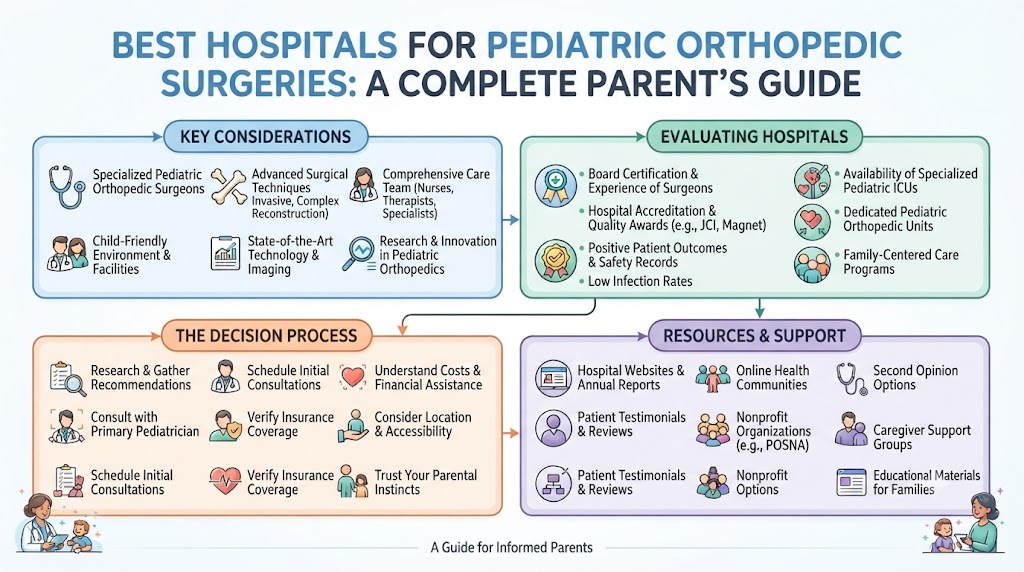
Regularly until the child stops growing. - How to choose a hospital?
Look for pediatric-specific accreditation. - Do I need a referral?
Usually required for specialized centers. - What if the child is scared?
Pediatric hospitals use child life services. - Is it permanent?
It corrects the immediate issue. - How to manage pain?
Pediatric anesthesia is expert at pain control. - Can I stay with them?
Most modern children’s hospitals allow parent presence.
Final Thoughts
Choosing the right surgical hospital for your child is a significant decision that impacts their physical development and quality of life. By seeking care at specialized pediatric orthopedic hospitals, you ensure your child benefits from surgeons who understand the nuance of growing bones and a medical team dedicated to the unique needs of children.We encourage you to visit BestOrthoHospitals to explore hospital comparisons and educational resources. When it comes to your child’s health, knowledge, preparation, and the right team are your greatest assets.