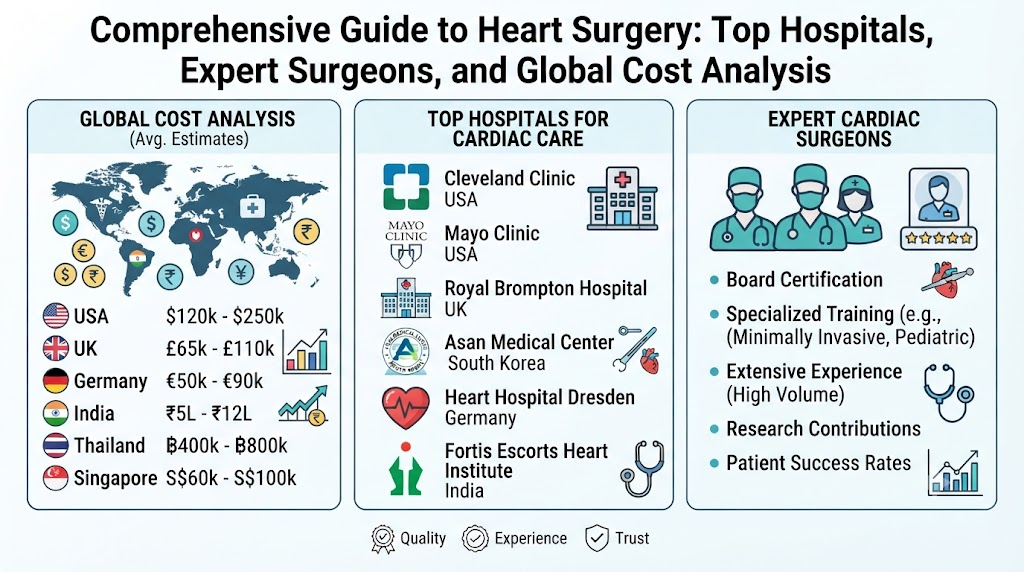
When facing a serious cardiac diagnosis, the road ahead can feel overwhelming. Choosing the right medical destination, understanding the intricacies of a procedure, and managing financial expectations require clear, verified information. A patient’s journey toward recovery depends heavily on the choices made before entering the operating room. Selecting a specialized institution and an experienced surgical team directly correlates with superior clinical outcomes and minimized complication rates.This comprehensive guide to best heart surgery serves as a roadmap for patients and families navigating the complex landscape of global cardiac care. In the following sections, we will demystify common cardiovascular procedures, outline the critical benchmarks that define elite cardiac institutions, evaluate the credentials of world-renowned specialists, and provide a transparent breakdown of treatment costs.
Understanding Heart Surgery
What Is Heart Surgery?
Heart surgery encompasses a range of surgical procedures performed by specialized cardiovascular surgeons to correct structural, electrical, or arterial defects within the heart and its connected blood vessels. These interventions can range from traditional open-chest surgeries to cutting-edge, minimally invasive procedures performed through tiny incisions between the ribs.
When Is Heart Surgery Needed?
Surgical intervention becomes necessary when conservative medical management—such as lifestyle modifications, oral medications, and non-surgical interventional procedures like angioplasty—is insufficient to manage a cardiac condition. It is typically recommended to prevent catastrophic events like myocardial infarctions (heart attacks), repair life-threatening structural anomalies, or alleviate debilitating symptoms that severely restrict a patient’s quality of life.
Common Cardiac Conditions Requiring Surgery
- Coronary Artery Disease (CAD): The progressive narrowing or blockage of the coronary arteries due to plaque buildup, restricting blood flow to the myocardium.
- Heart Valve Disease: Conditions such as stenosis (narrowing) or regurgitation (leakage) affecting the aortic, mitral, tricuspid, or pulmonary valves.
- Congenital Heart Defects: Structural abnormalities present at birth, ranging from septal defects (“holes in the heart”) to complex anomalies like the Tetralogy of Fallot.
- Heart Failure: Advanced stages of myocardial weakening where the heart can no longer pump blood efficiently, necessitating mechanical support or transplantation.
- Arrhythmias: Severe irregular heartbeats, such as atrial fibrillation, that fail to respond to ablation or medication and require surgical intervention (e.g., the Maze procedure).
Best Heart Surgery Hospitals: What Makes Them Stand Out?
When researching global healthcare options, understanding what separates standard medical facilities from the world’s leading cardiac institutions is crucial. The best heart surgery hospitals maintain their reputations by consistently excelling across several core parameters.
Advanced Cardiac Infrastructure
Top-tier centers feature dedicated cardiothoracic surgical suites equipped with intraoperative echocardiography, high-definition imaging systems, and hybrid operating rooms. These hybrid spaces allow a seamless transition from catheter-based interventions to open surgery if required, ensuring maximum patient safety.
Experienced Surgical Teams
The finest institutions employ multidisciplinary teams comprising board-certified cardiothoracic surgeons, cardiac anesthesiologists, perfusionists, and specialized intensive care nurses. High-volume centers benefit from collective experience; teams that perform thousands of surgeries annually naturally develop a refined, precise approach to both routine and highly complex cases.
Success Rates and Outcomes
Reputable hospitals maintain transparent registries of their clinical outcomes. When evaluating the best hospitals for bypass surgery, patients should look for institutions boasting survival rates exceeding 98% for elective procedures, alongside exceptionally low post-operative infection and readmission rates.
International Accreditations
Gold-standard global hospitals hold rigorous international accreditations from bodies such as Joint Commission International (JCI) or national equivalents like the National Accreditation Board for Hospitals & Healthcare Providers (NABH). These stamps of approval guarantee strict adherence to sterilization, patient safety, and clinical governance protocols.
Intensive Care and Recovery Support
The success of a surgical procedure is heavily reliant on post-operative care. The best hospitals for minimally invasive heart surgery and complex open cases feature dedicated Cardiothoracic Intensive Care Units (CTICUs). These units provide one-on-one nursing care, continuous hemodynamic monitoring, and early-stage inpatient physical therapy to accelerate mobilization. Furthermore, specialized pediatric units within the best hospitals for pediatric cardiac surgery offer tailored, child-friendly recovery environments managed by pediatric intensivists.
Best Heart Surgeons in the World and India
Characteristics of Leading Cardiac Surgeons
The world’s top cardiothoracic specialists possess extensive clinical training, often supplemented by fellowships at renowned global institutions. They actively contribute to clinical research, publish in peer-reviewed medical journals, and master evolving techniques such as robotic-assisted cardiosurgery and off-pump (beating-heart) interventions.
Importance of Experience and Specialization
Cardiology is highly specialized. A surgeon who excels at adult coronary revascularization may not possess the specific skill set required for neonatal arterial switch operations. It is imperative to seek out specialists whose primary focus aligns precisely with your specific diagnosis.
Choosing the Right Heart Surgeon
When evaluating the best heart surgeons in the world, look beyond subjective online rankings. Focus on quantifiable data:
- The surgeon’s career volume for your specific procedure.
- Their documentable success and complication rates.
- Their approachability and willingness to explain surgical risks.
- Their affiliation with accredited, high-volume cardiac centers.
For individuals exploring medical travel, identifying the best heart surgeons in India involves verifying their international fellowships, board certifications, and long-term clinical track records within highly accredited hospital networks.
Types of Heart Surgeries
                    ┌───────────────────────────────┐
                    │    Types of Heart Surgery     │
                    └───────────────┬───────────────┘
                                    │
         ┌──────────────────────────┼──────────────────────────┐
         ▼                          ▼                          ▼
┌─────────────────┐        ┌─────────────────┐        ┌─────────────────┐
│     Surgical    │        │   Structural/   │        │   Advanced &    │
│ Revascularization│        │ Valvular Care   │        │ Specialized Care│
└────────┬────────┘        └────────┬────────┘        └────────┬────────┘
         │                          │                          │
         ▼                          ▼                          ▼
  • Coronary Artery          • Valve Repair &           • Pediatric/
    Bypass (CABG)              Replacement                Congenital
  • Off-Pump Surgery         • Transcatheter            • Heart Transplants
  • Minimally Invasive       • Minimally Invasive       • Ventricular Assist
    Options                    Valvuloplasty              Devices (VADs)
Coronary Artery Bypass Surgery (CABG)
Commonly referred to as bypass surgery, CABG is performed to bypass severe arterial blockages. The surgeon harvests a healthy blood vessel—typically from the chest (internal mammary artery), arm (radial artery), or leg (saphenous vein)—and grafts it onto the blocked coronary artery. This re-routes blood flow around the obstruction to adequately nourish the heart muscle.
Heart Valve Repair and Replacement
When heart valves fail to open or close completely, surgical repair or replacement is mandated. Valve repair preserves the patient’s native tissue and is highly preferred for the mitral valve. Valve replacement involves removing the dysfunctional native valve and implanting a substitute. Patients receive either a mechanical valve (durable but requires lifelong blood-thinning medication) or a bioprosthetic/biological valve (derived from animal tissue, requires no long-term anticoagulants, but has a limited lifespan of 12–15 years).
Minimally Invasive Heart Surgery
Unlike traditional surgery requiring a sternotomy (breaking the breastbone), minimally invasive procedures utilize keyhole incisions made between the ribs. Employing specialized endoscopic cameras and elongated instruments, surgeons can perform valve surgeries, atrial septal defect repairs, and select bypass procedures. Benefits include drastically reduced post-operative pain, negligible scarring, and a much faster return to normal activities.
Pediatric Cardiac Surgery & Congenital Heart Defect Surgery
Operating on an infant or child requires highly delicate instruments and extreme precision. Pediatric cardiac surgeries fix congenital structural errors such as Atrial Septal Defects (ASD), Ventricular Septal Defects (VSD), and complex conditions like transposition of the great arteries. These life-saving surgeries ensure normal physical development and prevent long-term pulmonary hypertension.
Heart Transplant Procedures
Reserved for patients suffering from end-stage heart failure who have exhausted all other medical options. The failing heart is completely removed and replaced with a healthy donor heart. While highly complex and dependent on organ donor availability, it offers a definitive lease on life for eligible candidates.
Heart Surgery in India: Why Patients Choose India
Over the past two decades, India has emerged as a premier hub for global medical travel, particularly for complex cardiovascular interventions. Thousands of international patients travel to the country annually to seek treatment.
World-Class Cardiac Hospitals
Major urban centers across India host sprawling medical campuses exclusively dedicated to cardiovascular care. These facilities closely mirror the operational standards, hygiene protocols, and technological landscapes found in premier Western institutions.
Highly Skilled Surgeons
Many leading Indian cardiac specialists have spent years training, teaching, or practicing in top hospitals across the United States, the United Kingdom, and Europe. They bring back global best practices and possess immense practical expertise derived from managing exceptionally high patient volumes domestically.
Affordable Treatment Costs
The primary driver for medical travel to India is cost rationalization. Patients can access cutting-edge cardiac care at a small fraction of the price charged in Western nations, without compromising clinical quality or safety.
Modern Medical Technology
From robotic surgical systems (such as the Da Vinci platform) and advanced hybrid cath labs to advanced mechanical circulatory support devices (ECMO and LVADs), Indian hospitals maintain state-of-the-art technological infrastructures.
International Patient Support Services
To ensure a seamless experience, top Indian hospitals feature dedicated international desks. These departments manage everything from medical visa invitations and airport transfers to language interpretation, customized dietary planning, and remote post-discharge follow-ups.
Patient Safety Note: When researching options for heart surgery in India, prioritize hospitals that maintain dual accreditations from both the JCI (International) and the NABH (National) to guarantee the highest safety benchmarks.
Heart Surgery Cost in India: A Comparative Evaluation
The overall financial commitment for cardiac care depends heavily on multiple intersecting variables. Understanding these components helps families plan realistically and avoids unexpected financial stress.
Factors Affecting Cost
- Hospital Category: Premium private healthcare networks vs. subsidized or charitable medical centers.
- Surgeon Experience: Super-specialists with decades of experience may command higher procedural fees.
- City and Location: Healthcare delivery costs vary between metropolitan hubs and tier-2 cities.
- Procedure Complexity: Combined procedures (e.g., CABG + Valve Replacement) require prolonged operating times and extra resources.
- ICU and Recovery Costs: Extended stays in the intensive care unit due to pre-existing comorbidities (like diabetes or chronic kidney disease) will naturally elevate the final billing.
| Surgical Procedure Type | Estimated Cost Range (USD) | Estimated Cost Range (INR) |
| Coronary Artery Bypass Grafting (CABG) | $4,500 – $7,000 | ₹3,75,000 – ₹5,80,000 |
| Single Valve Replacement Surgery | $5,000 – $8,000 | ₹4,15,000 – ₹6,65,000 |
| Double Valve Replacement Surgery | $6,500 – $9,500 | ₹5,40,000 – ₹7,90,000 |
| Minimally Invasive Heart Surgery | $5,500 – $8,500 | ₹4,55,000 – ₹7,05,000 |
| Pediatric Cardiac Surgery (ASD/VSD) | $4,000 – $6,500 | ₹3,30,000 – ₹5,40,000 |
Bypass Surgery Cost in India
When looking exclusively at myocardial revascularization, the bypass surgery cost in India is incredibly competitive. While a standard CABG procedure in the United States or the United Kingdom can easily exceed $100,000 to $150,000, the equivalent care package in an elite Indian hospital ranges between $4,500 and $7,000.
Typical Cost Components Included in Packages
- Pre-operative Diagnostics: Detailed blood work, chest X-rays, electrocardiograms (ECG), echocardiography, and coronary angiography.
- Surgical Fees: Compensation for the primary surgeon, assisting surgical staff, and the cardiac anesthesia team.
- Hospital Stay: Typically includes 2–3 days in the dedicated CTICU followed by 4–5 days in a private room.
- Consumables and Medications: Cost of specialized cardiopulmonary bypass circuits, surgical sutures, routine intraoperative medications, and immediate post-operative pharmaceuticals.
- Follow-Up Care: Initial post-discharge consultations, wound dressings, and basic diagnostic checks prior to flying or traveling back home.
Heart Valve Replacement Surgery Cost in India
The economic layout for valvular interventions is largely dictated by the specific type of implant selected by the patient and medical team.
Mechanical vs. Biological Valves
- Mechanical Implants: Constructed from durable materials like carbon and titanium. They are highly resilient but require the patient to buy and take daily oral anticoagulants indefinitely, along with regular Prothrombin Time (PT/INR) blood tests.
- Biological Implants: Sourced from bovine (cow) or porcine (pig) tissues. These valves eliminate the long-term need for aggressive blood thinners, but the implants themselves are generally more expensive upfront and may require replacement down the road due to natural structural degradation.
Surgical Complexity and Long-Term Considerations
The heart valve replacement surgery cost in India generally ranges between $5,000 and $9,500. This cost can fluctuate based on whether a single valve (aortic or mitral) or multiple valves are being replaced simultaneously. Additionally, if the patient is deemed a candidate for a transcatheter aortic valve implantation (TAVI/TAVR)—a non-surgical, catheter-based alternative—the cost will be substantially higher due to the premium price of transcatheter valve delivery systems.
How to Choose the Right Heart Hospital
Making a final decision on your treatment facility requires an objective evaluation of several quality metrics:
- Verify Hospital Accreditation: Ensure the facility maintains valid certifications from JCI, NABH, or equivalent global bodies.
- Evaluate Cardiac Surgery Volume: Look for institutions that perform a high volume of surgeries annually; these centers maintain highly optimized care routines.
- Inspect ICU Facilities: The ICU should feature modern isolation capabilities, strict infection control workflows, and continuous staffing by certified intensivist physicians.
- Confirm Emergency Care Capability: The hospital must have a fully functional 24/7 emergency cardiac triage department supported by around-the-clock cath labs.
- Analyze Patient Reviews and Outcomes: Look for audited clinical data and objective feedback from international patient communities rather than rely solely on promotional brochures.
- Assess International Patient Services: If traveling from abroad, verify that the hospital provides an end-to-end support infrastructure to help with logistics, accommodation arrangements for companions, and post-discharge continuity of care.
Step-by-Step Patient Journey
[1. Initial Diagnosis] ───> [2. Specialist Consultation] ───> [3. Treatment Planning]
                                                                        │
                                                                        ▼
[6. Surgery Preparation] <─── [5. Hospital Selection] <─── [4. Cost Estimation]
          │
          ▼
[7. Procedure Day] ───────> [8. Recovery Phase] ─────────> [9. Long-Term Follow-Up]
1. Initial Diagnosis
The journey begins when local primary care physicians or cardiologists identify an anomaly through non-invasive tests like stress tests, echocardiograms, or CT coronary angiograms.
2. Specialist Consultation
The patient meets with a cardiothoracic surgeon to discuss the definitive clinical findings. For comprehensive insights, patients are encouraged to consult educational Surgeon profiles to review specialized backgrounds.
3. Treatment Planning
The medical team formulates a tailored surgical strategy, outlining whether the patient is best suited for traditional open surgery, an off-pump procedure, or a minimally invasive keyhole approach.
4. Cost Estimation
The hospital’s financial counseling desk provides a detailed, broken-down cost structure. Patients can cross-reference these breakdowns against comprehensive Cost guides to ensure market parity.
5. Hospital Selection
The patient and their family evaluate the proposed treatment plan, infrastructure, and financial estimates before formally finalizing the choice of hospital. Detailed Hospital profiles help simplify this cross-comparison.
6. Surgery Preparation
This phase involves a thorough pre-anesthetic check-up (PAC), stabilizing secondary comorbidities (such as blood sugar management), and stopping blood-thinning medications like aspirin or clopidogrel a few days prior to the procedure.
7. Procedure Day
The patient is admitted, prepared for the operating room, placed under general anesthesia, and carefully monitored by the surgical team throughout the duration of the operation.
8. Recovery Phase
This involves a critical initial stay in the CTICU for continuous monitoring, followed by a transition to a standard inpatient ward room where early mobilization and respiratory therapies begin.
9. Long-Term Follow-Up
Prior to hospital discharge, the patient receives a detailed medication schedule, dietary guidelines, and a structured plan for regular physical check-ups to track long-term cardiac function.
Risks, Recovery, and Expectations
Surgical Risks
Every major surgical intervention carries an inherent baseline risk profile. Potential complications include post-operative bleeding, localized wound infections, transient cardiac arrhythmias (such as atrial fibrillation), reaction to anesthesia, and, in rare instances, stroke or myocardial infarction. Discussing these specific risks openly with your surgical team allows you to understand the custom safety measures put in place to mitigate them.
Recovery Timeline
- In-Hospital: Typically spans 5 to 8 days depending on individual healing rates.
- First 2–6 Weeks: The patient continues resting at home, focuses on gradual mobilization, and allows the breastbone (if a sternotomy was performed) to knit back together. Heavy lifting and driving must be strictly avoided during this period.
- 3 Months and Beyond: Most patients experience a full return to routine physical activities, improved energy levels, and a resolution of pre-surgery symptoms.
Lifestyle Modifications and Rehabilitation
Surgery corrects the structural or physical blockages within the heart, but it does not cure the underlying cardiovascular disease process. Patients must commit to a heart-healthy diet low in sodium and saturated fats, complete a structured cardiac rehabilitation program, manage stress levels effectively, and quit all forms of tobacco use immediately.
Expert Tips for Better Cardiac Treatment Decisions
- Seek a Second Opinion: A reputable specialist will always welcome a second opinion. Getting another perspective helps confirm your diagnosis and clarifies the necessity of an open vs. a minimally invasive procedure.
- Evaluate Specific Surgeon Volume: Always ask your chosen surgeon: “How many procedures of this exact nature have you performed over the past twelve months?”
- Look Beyond the Base Package: Ensure your financial planning accounts for external costs such as extended ICU stays, specialized implants, take-home medications, and local accommodation for your travel companions.
- Prioritize Comprehensive Rehabilitation: Long-term success relies heavily on post-operative physical therapy. Choose institutions that offer integrated cardiac rehabilitation paths.
How BestHeartSurgery.com Helps Patients
Navigating complex medical networks can be exhausting during a healthcare crisis. BestHeartSurgery.com serves as a dedicated, independent educational platform designed to streamline your research.
- Hospital Research: Access comprehensive, objective profiles of verified international and domestic cardiac centers.
- Surgeon Information: Review verified credentials, operational experience, and core clinical focus areas of leading specialists.
- Procedure Education: Find detailed breakdowns of various surgeries through easy-to-understand, evidence-based Heart surgery guides.
- Cost Awareness: Compare updated cost tables across geographic regions to plan your medical expenses confidently.
- Treatment Planning Support: Learn how to collect your medical records, formulate targeted questions for your doctors, and organize your medical travel logistics cleanly.
Frequently Asked Questions (FAQ)
Which are the best heart surgery hospitals?
The best hospitals are those holding recognized international accreditations (like JCI or NABH), performing high volumes of annual cardiac procedures, and maintaining verified survival rates above 98% for elective cases.
How do I choose the best heart surgeon?
Focus on board certifications, specialized fellowship training, and the surgeon’s personal lifetime experience with your specific procedure. High-volume operators typically demonstrate the lowest complication rates.
What is the average heart surgery cost in India?
A comprehensive cardiac treatment package in India generally ranges from $4,000 to $9,500, depending on the complexity of the diagnosis, the choice of hospital tier, and the specific surgical approach required.
What is the typical bypass surgery cost in India?
Bypass surgery (CABG) package costs in premier Indian hospitals generally run between $4,500 and $7,000. This includes pre-operative tests, surgeon fees, hospital room stay, essential medications, and acute post-operative ICU care.
What is the heart valve replacement surgery cost in India?
A single valve replacement generally costs between $5,000 and $8,000, whereas double valve procedures range from $6,500 to $9,500. The ultimate pricing depends heavily on whether mechanical or biological tissue valves are used.
Is undergoing heart surgery in India safe for international patients?
Yes. When performed at accredited, top-tier medical institutions by experienced specialists, the clinical success rates in India are entirely on par with leading healthcare institutions globally.
How long does the recovery process take after open-heart surgery?
Initial hospital discharge occurs within 5–8 days. A baseline recovery of the breastbone and surrounding tissues takes approximately 6–8 weeks, while a return to optimal physical energy levels occurs around the 3-month mark.
What exactly is minimally invasive heart surgery?
It is a modern surgical methodology where operations are executed via small incisions made between the ribs, avoiding a traditional sternotomy. This yields less blood loss, decreased infection risks, minimal scarring, and much faster healing times.
Which hospitals are best for pediatric cardiac surgery?
Look for large, multi-specialty healthcare institutions that house a dedicated pediatric cardiothoracic department, specialized neonatal ICUs, and board-certified pediatric cardiac surgeons. Helpful materials can be found by exploring specialized Pediatric cardiac surgery resources.
Can I travel safely by air after undergoing heart surgery?
Most patients can travel by air 2 to 4 weeks post-surgery, provided they have received an explicit clinical clearance certificate from their primary operating cardiothoracic surgeon following an echo check.
Conclusion
Making major decisions around cardiac care requires balancing clinical urgency with careful, calculated research. Whether you are exploring surgical avenues locally or evaluating medical travel possibilities abroad, prioritizing institutional quality, verifiable surgeon volume, and hospital transparency is essential. Finding a balance between accessible care and medical excellence ensures you do not have to compromise on safety when managing your health.
While the financial variations across regional lines are stark, institutions globally continue to deliver exceptional clinical successes. By leaning on accredited institutions, gathering second opinions, and using transparent research tools, patients can approach their treatment journey with clarity and confidence. The path toward cardiac recovery is a collective effort—built on advanced science, skilled medical professionals, and informed, proactive patient choices.