Introduction
Spinal fusion surgery joins two or more bones in the spine. A surgeon may suggest it to improve stability or treat certain spine problems. Preparing early can help you understand the process, plan for recovery, and feel more ready for surgery.
The right steps depend on your health, the part of your spine being treated, and your surgeon’s plan. You can learn more about orthopedic care at Bestorthohospitals. Your own surgical team should guide your care and give you instructions for your procedure.
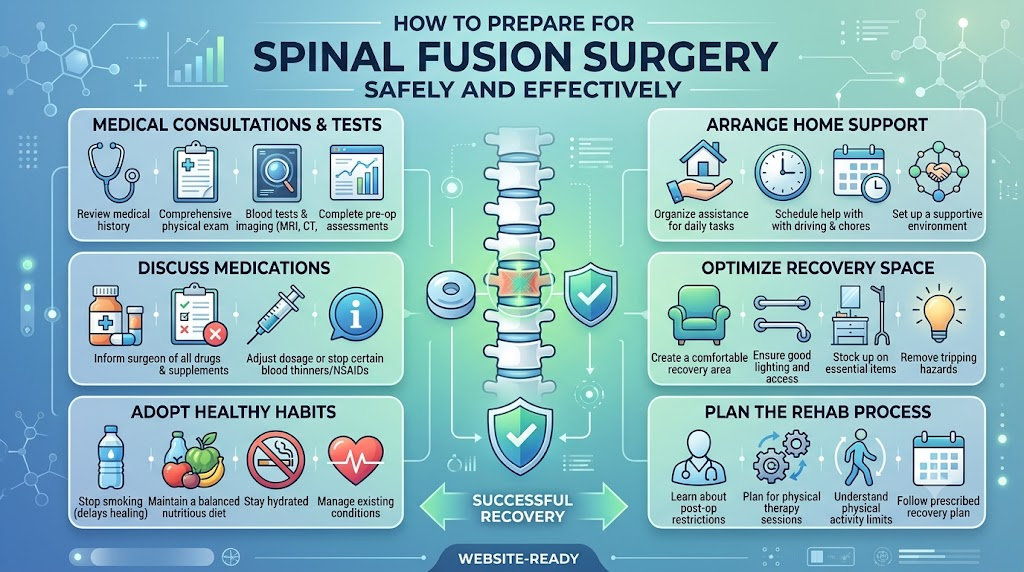
This article explains medical checks, medicines, healthy habits, hospital preparation, home safety, and questions to ask your spine surgeon. It also covers what to expect before spinal fusion and how to plan for the weeks after surgery.
Understanding Spinal Fusion Surgery
Spinal fusion is an operation that joins two or more bones in the spine so they can heal into one solid section. It may help treat certain problems that cause pain, weakness, or an unstable spine.
A surgeon may consider spinal fusion for:
- Some cases of spinal instability, when the spine does not stay in a safe position.
- Certain cases of slipped vertebrae, where one spine bone moves out of place.
- Selected spinal fractures.
- Some spinal curves or other deformities.
- Certain long-term spine conditions that have not improved with other care.
Spinal fusion is not the right choice for every patient with back pain. The surgeon reviews your symptoms, scans, general health, and past treatments before discussing the likely benefits and risks.
During the operation, the surgeon may use bone graft material to help the bones join. Screws, rods, or other tools may hold the bones in place while healing takes place. The exact method depends on the part of the spine being treated and the reason for surgery.
Fusion takes time. Pain may improve at different rates, and the bones may need several months to join. Your surgeon will explain the expected course for your own procedure.
Complete Medical Checks Before Surgery
Medical checks help the care team understand your health and plan for surgery. They can also help find health issues that may need care before the operation.
Your pre-surgery review may include:
- Medical history: Your doctor will ask about your symptoms, past operations, long-term health problems, and past treatment.
- Blood tests: These may check for anemia, infection, blood sugar concerns, or other issues when needed.
- Imaging scans: X-rays, MRI, or CT scans may help the team study your spine and plan the operation.
- Heart and lung checks: These may be needed based on your age, health history, symptoms, and the planned surgery.
- Allergy review: Tell the team about drug allergies and any past problems with anesthesia.
- Anesthesia review: The anesthesia team will assess your health and explain how they plan to keep you safe and comfortable during surgery.
Not every patient needs every test. The team chooses tests based on your needs rather than using the same set for everyone.
Tell your doctor about recent illness, fever, a skin infection, new breathing problems, or any major change in your health. Do this as soon as possible, even if surgery is close. The team will decide whether any change to the plan is needed.
Review All Medicines and Supplements
Your surgeon and anesthesia team need a complete list of everything you take. Some medicines affect bleeding, blood sugar, blood pressure, or the way your body responds to anesthesia.
Include:
- Prescription medicines.
- Over-the-counter pain relievers.
- Blood-thinning medicines.
- Medicines for diabetes or high blood pressure.
- Vitamins and herbal products.
- Medicines used for long-term pain.
- Any medicine you take only from time to time.
Some medicines may need to be changed before surgery. Others may need to continue. Do not stop, skip, or change any medicine on your own. The risk of stopping a medicine may be greater than the risk of taking it.
Ask for clear instructions on which medicines to take on the morning of surgery. If you are unsure about a medicine or supplement, check with the surgical team or the clinician who prescribed it. Do not assume that a product is safe just because it is sold without a prescription.
Make Healthy Changes Before Surgery
Healthy habits may support healing and lower some avoidable risks. The right plan should fit your health and the time available before surgery.
Stop Smoking and Avoid Nicotine
Smoking and nicotine can reduce blood flow and affect wound healing. They can also make it harder for the bones to join after spinal fusion.
If you smoke or use nicotine, ask your doctor for help to stop as early as possible. Support may include counseling or a plan to manage cravings. Tell the team about all nicotine products you use, including vaping products.
Do not feel ashamed if stopping is hard. Being open with your care team helps them give useful support. Stopping does not guarantee a certain result, but avoiding nicotine is an important step for bone healing.
Manage Existing Health Conditions
Conditions such as diabetes, high blood pressure, heart disease, and lung disease may affect surgery and recovery. Keep following your care plan and attend any checks your doctor recommends.
If you have diabetes, ask how to manage your blood sugar and diabetes medicines around surgery. If you have a heart or lung condition, ask whether you need extra checks before the operation.
Report a fever, new illness, skin infection, or a change in your usual symptoms. Do not hide a problem because you fear the surgery will be delayed. Your team needs accurate information to make a safe plan.
Eat a Balanced Diet
Good nutrition gives your body the nutrients it needs to heal. Aim for balanced meals with protein, fruits, vegetables, whole grains, and other foods that suit your health needs.
Protein sources may include eggs, beans, lentils, fish, dairy foods, or other suitable choices. If you have a poor appetite, recent weight loss, food limits, or trouble eating, tell your doctor.
Do not start high-dose vitamins, minerals, or herbal products without medical advice. Some products can affect medicines or may not be needed. Ask your care team before making major diet changes.
Stay Active Within Medical Limits
Safe movement may help you maintain strength and make daily tasks easier before surgery. Ask your doctor or physical therapist what activities are suitable for your spine condition.
Walking or other gentle movement may be appropriate for some patients. Avoid exercises, heavy lifting, or stretches that worsen pain, numbness, or weakness. Do not push through new or severe symptoms just to get fitter before surgery.
Prepare Mentally and Understand the Recovery Process
It is normal to feel worried before an operation. Learning what will happen and asking questions can help you feel more in control.
Ask your surgeon to explain why fusion is being recommended, what benefits you may expect, and what risks apply to your case. You can also ask about pain relief, the likely hospital stay, and when you may start walking or physical therapy.
Some patients need a brace or walking aid, while others do not. Ask whether you will need one and how to use it safely. Make sure you understand any limits on bending, lifting, twisting, driving, work, and exercise after surgery.
Recovery is not the same for everyone. The bones take time to fuse, and your energy and comfort may return at different rates. Plan for help with daily tasks, and do not expect to return to all usual activities at once.
If you feel overwhelmed, tell your care team or a trusted support person. Write down your concerns before appointments so you can discuss them one by one.
Prepare Your Home for Recovery
Preparing your home before surgery can reduce the need to bend, stretch, carry items, or move around when you are tired or sore.
Try these steps:
- Clear loose rugs, clutter, and electrical cords from walkways.
- Keep daily items at a height you can reach without stretching.
- Set up a safe place to sleep and rest.
- Make sure the route to the bathroom has good lighting.
- Prepare simple meals or arrange help with cooking.
- Keep your phone, medicines, water, and other approved essentials close by.
- Arrange help with shopping, cleaning, laundry, and other daily tasks.
- Plan transport home from the hospital and to follow-up visits.
- Ask whether a shower chair, raised toilet seat, or other aid would help.
Do not buy special equipment unless you know it will suit your needs. Your care team can help you decide what is useful based on your movement limits and home setup.
Pre-Surgery Preparation Checklist
| Preparation Task | What to Do | Why It Matters |
|---|---|---|
| Medical assessments | Complete the tests your team orders | Helps identify needs before surgery |
| Medicine review | Share a full list and confirm instructions | Reduces avoidable medicine risks |
| Smoking cessation support | Ask for help to stop nicotine use | Supports wound and bone healing |
| Nutrition | Eat balanced meals and report diet concerns | Supports normal healing |
| Safe activity | Ask which movement is suitable | Helps avoid strain or worsening symptoms |
| Hospital documents | Gather requested records and paperwork | Helps the admission process go smoothly |
| Fasting instructions | Confirm the exact food and drink rules | Supports safe anesthesia care |
| Transport arrangements | Arrange a ride and help after discharge | Helps you get home safely |
Follow Instructions the Day Before Surgery
The day before surgery, follow the instructions given by your hospital and surgical team. These directions may differ based on your procedure, anesthesia plan, and health needs.
Confirm your hospital arrival time and how you will get there. Follow the bathing and skin-care directions provided by the team. Do not shave the planned surgery area unless they tell you to do so.
Follow the exact food and drink limits from the anesthesia team. Do not use a general rule from a website or another patient’s experience. Eating or drinking at the wrong time can affect whether surgery can proceed safely.
Prepare loose, comfortable clothes and pack the items the hospital asks you to bring. Leave jewelry and valuable items at home if possible. Check that your transport and support person are ready.
If you develop a fever, a new illness, or another major health change, contact the surgical team promptly. They can tell you what to do next.
What to Pack for the Hospital
A simple packing list can help you avoid last-minute stress. Check your hospital’s own instructions, since some items may be provided or may not be needed.
Consider packing:
- Identification and hospital paperwork.
- Insurance or payment documents, if needed.
- A current list of medicines and allergies.
- Medical reports or imaging records, if requested.
- Glasses, hearing aids, and their cases.
- Loose clothes for going home.
- Non-slip footwear that is easy to put on.
- Basic personal care items.
- A prescribed CPAP or other breathing device, if the hospital asks you to bring it.
- Contact details for your support person.
Keep the bag easy to reach and avoid packing heavy items. Ask the hospital whether a support person can help carry your belongings and whether there are any limits on personal items.
Questions and Instructions to Confirm Before Surgery
| Topic | What to Confirm | Who to Ask |
|---|---|---|
| Medicine changes | Which medicines to take or adjust | Surgeon, prescribing clinician, or anesthesia team |
| Fasting | Exact food and drink limits | Anesthesia team or hospital |
| Skin care | Bathing and skin preparation steps | Surgical team |
| Arrival time | When and where to check in | Hospital staff |
| Hospital stay | Likely length and discharge needs | Surgeon or care team |
| Home assistance | What help you may need after discharge | Care team and support person |
| Movement limits | Rules for lifting, bending, twisting, and driving | Surgeon or physical therapist |
| Follow-up visits | When and how to attend appointments | Surgical team |
| Warning signs | Which symptoms need urgent help | Surgeon or discharge team |
Choosing a Hospital for Spinal Fusion Surgery
Choosing a hospital involves more than comparing cost or location. Look for a team that can explain the procedure, support your safety, and guide you through recovery.
When comparing hospitals, ask about:
- Spine surgeon experience: Ask about the surgeon’s training and experience with your type of spinal fusion.
- Diagnostic services: Check whether the hospital can provide the scans and tests needed for your care.
- Anesthesia and nursing support: Ask who will care for you before, during, and after surgery.
- Infection prevention: Ask how the team works to reduce the risk of infection.
- Pain management: Find out how pain will be assessed and treated after the operation.
- Rehabilitation planning: Ask how walking, movement, and physical therapy will be managed.
- Communication and follow-up: Make sure you know whom to contact if you have concerns after discharge.
You should also ask for a clear explanation of expected costs, what the fee includes, and whether follow-up visits are covered. Verify the hospital’s services and the surgeon’s credentials directly. No hospital can promise a complication-free operation or a particular result.
Frequently Asked Questions
1. What is spinal fusion surgery?
Spinal fusion joins two or more bones in the spine so they can heal together. It may be used to treat certain conditions that cause spinal instability, deformity, or other problems.
2. What medical tests may be needed before spinal fusion?
Tests may include blood work, X-rays, MRI, CT scans, or heart and lung checks. The tests depend on your health, symptoms, and planned procedure.
3. Should I stop taking medicines before spinal fusion surgery?
Do not stop or change medicines on your own. Your surgeon and anesthesia team will explain which medicines to take, adjust, or avoid.
4. Why is smoking discouraged before spinal fusion?
Smoking and nicotine can affect blood flow, wound healing, and the joining of the bones. Ask your healthcare team for help to stop before surgery.
5. What should I eat before spinal fusion surgery?
Eat balanced meals with protein, fruits, vegetables, and other nutrient-rich foods, unless your clinician advises otherwise. Follow the hospital’s food and drink instructions before surgery.
6. When should I stop eating and drinking before surgery?
Follow the exact timing given by your anesthesia team. The rules can vary, so do not rely on general fasting times.
7. How can I prepare my home for spinal fusion recovery?
Clear walking paths, improve lighting, keep daily items within easy reach, and arrange help with meals and household tasks. Ask your care team whether special equipment is needed.
8. What should I bring to the hospital for spinal fusion surgery?
Bring requested documents, your medicine and allergy list, comfortable clothes, easy-to-wear footwear, and essential personal items. Check whether the hospital asks you to bring any medical equipment.
9. How long does recovery from spinal fusion usually take?
Recovery varies by the procedure, general health, and how the bones heal. Bone fusion may take several months, and your surgeon will guide your return to daily activities.
10. What questions should I ask my spine surgeon before surgery?
Ask why surgery is recommended, what benefits and risks apply to you, which medicines to take, what recovery may involve, and when to seek urgent help afterward.
Conclusion
Knowing how to prepare for spinal fusion surgery can help you feel more ready for the procedure and the recovery period. Complete the checks your team recommends, review your medicines, follow health advice, and prepare your home and support plan in advance. Discuss any concerns with your surgical team and follow the instructions made for your own needs.