Introduction
Ligaments are strong bands of tissue that connect bones and help keep joints stable. When a ligament tears, it can cause pain, swelling, and trouble moving. Simple tasks, such as walking, lifting, or climbing stairs, may become harder.
Knowing the right tips for managing ligament tears can help protect an injured joint and support safe healing. Early care may reduce discomfort and help prevent further injury. The right treatment also depends on the damaged ligament and how badly it is torn.
Patients can learn about treatment options, specialist care, and recovery support at Bestorthohospitals. A clear care plan can help patients make informed choices and return to daily activities at a safe pace.
What Is a Ligament Tear?
A ligament tear happens when a ligament stretches too far or breaks partly or fully. Ligaments connect bones to other bones. Tendons connect muscles to bones, while muscles help the body move.
Ligament injuries often occur during falls, sudden turns, sports, or accidents. They are usually grouped into three grades:
- Mild injury: The ligament stretches or develops tiny tears. The joint may remain stable.
- Moderate injury: The ligament tears partly. Pain and swelling may be greater, and the joint may feel less stable.
- Severe injury: The ligament tears fully or causes major joint instability.
Common injury sites include the knee, ankle, wrist, and shoulder. For example, a twisted ankle may damage its supporting ligaments. A sudden turn during a game may injure a ligament in the knee.
Ligament tear treatment depends on the injury grade, joint stability, other damage, and the patient’s daily needs. A muscle strain or tendon injury needs a different assessment and may require a different care plan.
Common Signs and Symptoms of a Ligament Tear
Symptoms of a torn ligament vary from person to person. Some people feel pain right away, while others notice swelling or stiffness over time.
Common signs include:
- Pain around the injured joint.
- Swelling or bruising.
- Stiffness and reduced movement.
- Trouble putting weight on the joint.
- A popping sound or feeling at the time of injury.
- A feeling that the joint may give way.
These signs do not prove that a ligament is torn. A fracture, tendon injury, or other joint problem can cause similar symptoms. A healthcare professional can assess the injury and decide whether tests are needed.
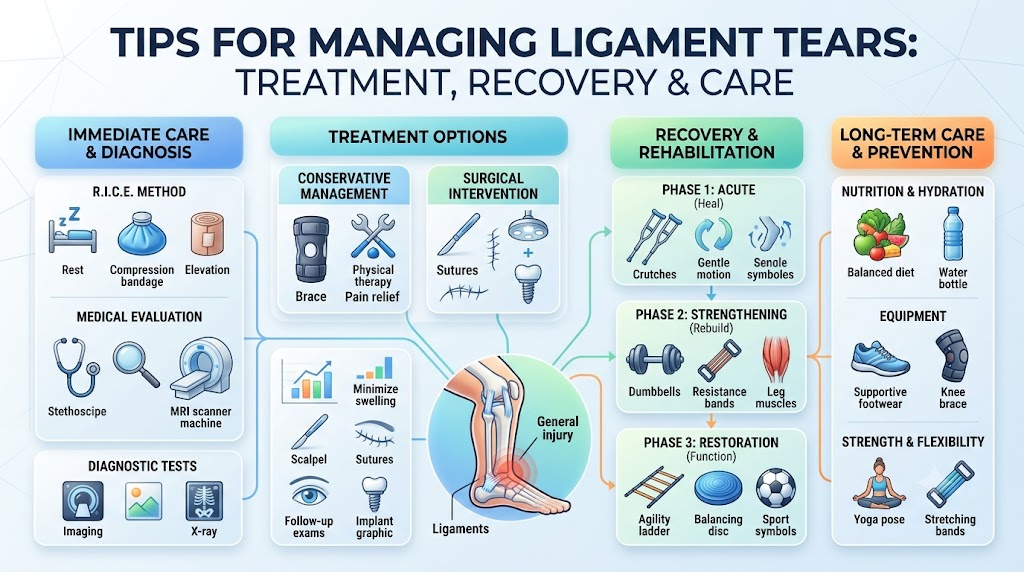
What to Do Immediately After a Ligament Injury
The first steps after an injury can help protect the joint and limit further harm. Stop the activity that caused the pain. Do not try to test the joint by twisting it or forcing it to move.
Follow these basic steps:
- Protect the joint: Avoid movements that increase pain. Use a suitable support if advised.
- Apply ice: Wrap an ice pack in a thin cloth and apply it for 15–20 minutes at a time. Never place ice directly on the skin.
- Use gentle compression: An elastic bandage may help control swelling. It should feel snug, not tight.
- Raise the injured area: When possible, rest the limb on pillows so it sits above heart level.
- Limit weight-bearing: If walking hurts, reduce pressure on the joint. Ask a healthcare professional whether crutches or another support would help.
Remove or loosen a bandage if you notice numbness, tingling, increased pain, or changes in skin color. Seek urgent care if these signs continue or the limb feels cold.
Avoid massaging a fresh injury or using forceful stretches. Do not return to sports simply because the pain begins to ease. A serious injury may still be present.
Tips for Managing Pain and Swelling
Resting the joint, using wrapped ice packs, and raising the injured limb may ease early pain and swelling. Avoid long periods of standing or other activities that make symptoms worse.
Pain medicines may help some people. However, they are not suitable for everyone. Ask a doctor or pharmacist before taking a medicine, especially if you have kidney or stomach problems, take blood-thinning medicines, have other health conditions, or are pregnant.
Follow the medicine label and professional advice. Do not take more than the recommended amount or combine medicines without checking their ingredients.
Mild swelling may improve with suitable care. However, seek medical advice if swelling increases, pain becomes worse, or movement remains limited. Sudden, major swelling after an injury needs prompt assessment.
How Doctors Diagnose Ligament Tears
Doctors begin by asking how the injury happened and what symptoms you have. They may check swelling, tenderness, movement, and joint stability. The examination helps them decide which injuries are most likely.
An X-ray may be used to look for a broken bone. It does not usually show a ligament tear directly. An MRI can show soft tissues and may help assess a ligament, cartilage, or other joint damage.
Not every ligament injury needs an MRI. The doctor may recommend imaging when the diagnosis is unclear, the injury seems severe, or the results could change treatment.
An orthopedic specialist may be helpful if the joint remains painful, feels unstable, or does not improve as expected. The specialist can explain the likely injury, suitable treatment choices, and the next steps for recovery.
Treatment Options for Ligament Tears
Ligament tear treatment varies with the location and severity of the injury. Many partial tears improve with non-surgical care. More serious injuries may need specialist treatment.
Common options include:
- Protection and activity changes: Avoid movements that place too much stress on the injured joint.
- Braces or supports: A suitable brace may help protect the joint during daily tasks or early recovery.
- Pain relief: A suitable medicine may help manage discomfort when used as advised.
- Physiotherapy: Guided exercises can improve movement, strength, balance, and joint control.
- Surgery: A specialist may consider surgery for selected severe tears, ongoing instability, associated damage, or particular activity needs.
Surgery is not needed for every ligament tear. The decision depends on the specific injury, the patient’s health, daily activities, and treatment goals.
Ask the treating specialist about the benefits, risks, expected recovery needs, and other options before making a decision. No treatment can promise the same result for every patient.
The Role of Physiotherapy and Rehabilitation
Ligament tear rehabilitation helps restore safe movement and joint control. Physiotherapy may begin with gentle movements and progress as the injury improves.
A rehabilitation plan may include:
- Gentle movement to reduce stiffness.
- Strength exercises for muscles around the joint.
- Balance training to improve control.
- Functional exercises for daily tasks.
- Gradual practice for work or sports activities.
The right plan depends on the injured ligament and the stage of healing. Exercises designed for an ankle injury may not be suitable for a knee or shoulder injury.
Follow the plan given by your physiotherapist or doctor. Do not increase the load or force a movement just to progress faster. Tell your care team if pain, swelling, or instability increases during or after exercise.
How Long Does a Ligament Tear Take to Heal?
Ligament tear recovery time can range from several weeks to several months. Mild injuries may improve sooner, while severe tears or injuries treated with surgery may need a longer period of recovery.
The exact time depends on the ligament, the extent of damage, overall health, treatment, and how well rehabilitation progresses. There is no single recovery period that applies to every patient.
Being able to walk or complete basic tasks does not always mean the joint is ready for hard work or sports. Return to demanding activity should depend on medical or physiotherapy assessment, good movement, enough strength, and stable joint control.
Daily Habits That Support Recovery
Small daily habits can support ligament injury recovery. They work best when combined with the treatment and rehabilitation plan recommended by your care team.
- Eat balanced meals: Include protein sources such as eggs, beans, fish, dairy products, or lean meat, along with fruit and vegetables.
- Get enough sleep: Good sleep supports general health and helps you manage recovery.
- Follow your exercise plan: Complete prescribed exercises at the recommended pace.
- Attend follow-up visits: These visits help your care team check progress and adjust treatment.
- Avoid smoking where possible: Smoking can interfere with tissue healing.
- Keep your home safe: Remove loose rugs, clear walkways, and use handrails when needed.
Do not rely on supplements or special foods as a cure for a torn ligament. Ask a healthcare professional before starting supplements, especially if you take other medicines.
When to Seek Urgent Medical Care
Some ligament injuries need prompt medical attention. Severe pain, major swelling, a visible deformity, or an inability to bear weight may signal a serious injury. A joint that feels very unstable also needs assessment.
Seek emergency care if the injured limb becomes cold, blue, pale, or numb, or if you develop lasting tingling or a sudden change in skin color. These signs may point to impaired blood flow or nerve damage.
A visible deformity or severe injury after a fall or accident may indicate a fracture or dislocation. Do not try to push the joint back into place. Keep it as still as possible and seek emergency help.
Early assessment can help identify injuries that need specific treatment. If pain or swelling persists or keeps returning, arrange a medical review even if the first symptoms seemed mild.
Ligament Tear Symptoms and Recommended Next Steps
| Symptom or concern | Possible meaning | Recommended action |
|---|---|---|
| Mild pain and swelling | Possible minor joint injury | Protect the joint and monitor symptoms |
| Bruising or stiffness | Possible soft tissue damage | Rest from painful activities and seek advice if symptoms persist |
| Popping feeling with pain | Possible ligament or other joint injury | Arrange a medical assessment |
| Difficulty bearing weight | Possible serious ligament injury or fracture | Seek prompt medical care |
| Major swelling or severe pain | Possible significant joint damage | Seek urgent assessment |
| Visible joint deformity | Possible fracture or dislocation | Seek emergency care; do not move the joint unnecessarily |
| Cold, blue, or numb limb | Possible blood flow or nerve problem | Seek emergency care immediately |
Symptoms alone cannot confirm a ligament tear or show how severe it is. A medical examination is needed to assess the cause.
Ligament Tear Treatment and Recovery Support
| Care option | Main purpose | Important consideration |
|---|---|---|
| Protection and rest | Prevent further injury | Avoid complete inactivity for longer than advised |
| Wrapped ice and elevation | Help ease pain and swelling | Protect the skin from direct ice contact |
| Braces or supports | Support or limit joint movement | Use the type and duration advised by a professional |
| Physiotherapy | Restore strength, movement, and balance | Follow an injury-specific plan |
| Pain medicine | Reduce discomfort | Check safety with a doctor or pharmacist |
| Surgery | Treat selected serious injuries | Benefits and risks depend on the injury and patient |
How to Choose an Orthopedic Hospital for Ligament Care
Choosing a suitable orthopedic hospital can help patients access the right assessment, treatment, and rehabilitation. Look for qualified orthopedic specialists who have experience with the type of joint injury you have.
Ask whether the hospital can provide suitable diagnostic tests, physiotherapy, follow-up visits, and support throughout recovery. Access to these services can make it easier to follow a coordinated care plan.
Before choosing a provider, consider these points:
- Qualifications: Check the specialist’s training and relevant experience.
- Diagnostic services: Ask which tests are available and when they may be needed.
- Treatment choices: Look for clear explanations of non-surgical and surgical options.
- Rehabilitation support: Ask how exercises and progress will be monitored.
- Communication: Choose a team that answers questions and explains risks in simple language.
- Access and cost: Check travel needs, appointment availability, fees, and likely follow-up costs.
Ask how treatment decisions will be made and who will guide your recovery. A good care plan should reflect your injury, health, needs, and personal goals rather than promise a fixed result.
Frequently Asked Questions About Ligament Tears
1. What are the common signs of a ligament tear?
Common signs include pain, swelling, bruising, stiffness, reduced movement, and joint instability. Some people feel a pop or struggle to bear weight. A medical assessment is needed to confirm the cause.
2. Can a ligament tear heal without surgery?
Yes. Many partial tears improve with protection, activity changes, and guided physiotherapy. Some severe injuries may need surgery, depending on the damaged ligament and joint stability.
3. What should I do immediately after a ligament injury?
Stop the activity, protect the joint, apply a cloth-wrapped ice pack for short periods, and raise the injured limb. Reduce weight-bearing if needed and seek medical care when symptoms are serious.
4. How can I reduce swelling from a ligament tear?
Rest from painful activities, apply wrapped ice, use gentle compression, and raise the injured area. Seek medical advice if swelling is severe, worsens, or does not improve.
5. When should I see an orthopedic specialist for a ligament injury?
Seek care for severe pain, major swelling, joint instability, or difficulty bearing weight. A specialist can also help if pain or limited movement persists despite initial care.
6. How long does a ligament tear take to heal?
Recovery may take weeks to months. The time depends on the ligament, tear severity, treatment, and personal health. Follow your care team’s advice about activity and recovery goals.
7. Can physiotherapy help with a torn ligament?
Yes. Guided physiotherapy can help restore movement, strength, balance, and joint control. Exercises should match the injury and your stage of recovery.
8. When can I return to sports after a ligament tear?
Return when your care team confirms that movement, strength, balance, and joint stability are suitable for your sport. Do not rely on pain relief alone to judge readiness.
9. Do all ligament tears require an MRI?
No. Many injuries can be assessed through a medical history and physical examination. An MRI may be advised when more detail is needed to guide treatment.
10. How can I help prevent another ligament injury?
Build strength and balance, warm up before exercise, use proper movement techniques, wear suitable footwear, and increase activity gradually. Follow rehabilitation advice before returning to demanding sports.
Conclusion
Managing a ligament tear takes proper care, patience, and the right treatment plan. Protecting the injured joint, reducing swelling, and following guided physiotherapy can support recovery. The healing time depends on the type of injury and its severity.
Seek medical care if pain, swelling, or joint instability continues. An orthopedic specialist can help you understand your treatment options and plan a safe return to daily activities, work, or sports. Follow professional advice and avoid rushing the healing process.