Introduction
Total knee replacement, or knee arthroplasty, is a highly effective surgical procedure designed to alleviate chronic joint pain and restore mobility in patients suffering from severe arthritis or joint damage. While the surgery itself is the primary intervention, the success of the procedure is deeply tied to the quality of preparation that takes place beforehand.At BestOrthoHospitals, we are dedicated to supporting you through every stage of your orthopedic care. This guide will provide you with the essential steps to prepare physically and practically for your total knee replacement, helping you take an active role in your own healing process.
Understanding Total Knee Replacement
In a total knee replacement, the damaged cartilage and bone of the knee joint are removed and replaced with artificial components, typically made of metal and high-grade plastic. The primary goal is to eliminate bone-on-bone friction, reduce pain, and improve the alignment and stability of the leg.
Most patients choose this surgery when non-surgical treatments—such as medication, weight management, or physiotherapy—no longer provide sufficient relief. By replacing the joint surface, the procedure allows patients to return to activities that were previously hindered by discomfort.
KNEE REPLACEMENT OVERVIEW TABLE
| Aspect | Description |
| Procedure Name | Total Knee Arthroplasty (TKA) |
| Main Purpose | Pain relief and restoration of joint function |
| Common Conditions | Osteoarthritis, rheumatoid arthritis, post-traumatic injury |
| Surgical Duration | Typically 1 to 2 hours |
| Expected Recovery Goal | Improved mobility, reduced pain, and return to daily living |
Why Preparation Before Knee Surgery Matters
Preparation is your best defense against surgical stress and postoperative complications. A proactive approach helps you build the “physiological reserve” needed to handle the recovery phase.
- Reduces Surgical Complications: Managing underlying health issues early lowers risks like infection or poor wound healing.
- Improves Recovery Speed: A stronger body transitions more quickly from hospital care to home independence.
- Helps Better Mobility: Pre-surgery conditioning prepares your muscles to take on the load post-surgery.
- Reduces Hospital Stay Stress: Having your home environment ready means you can focus entirely on healing.
- Improves Muscle Strength: Starting with strong quadriceps and hamstrings provides essential support for the new knee.
Medical Evaluation Before Knee Replacement
Before being cleared for surgery, your orthopedic team will conduct a thorough medical evaluation to ensure your body is ready.
PRE-SURGERY TESTS TABLE
| Test | Purpose | What It Checks |
| Blood Tests | Evaluate baseline health | Infection, anemia, blood sugar, organ function |
| ECG | Heart assessment | Cardiac rhythm and fitness for anesthesia |
| X-Ray | Joint imaging | Severity of joint damage and implant sizing |
| MRI (if needed) | Detailed soft tissue check | Ligament and cartilage condition |
| Physical Exam | General status | Mobility, skin condition, and vital signs |
Prehabilitation (Pre-Surgery Exercise)
“Prehab” is the practice of exercising before surgery to strengthen the muscles surrounding the knee. Stronger muscles mean a more stable joint post-surgery.
PREHAB EXERCISES TABLE
| Exercise | Purpose | Benefit |
| Quadriceps Strengthening | Thigh muscle support | Essential for balance and walking |
| Ankle Pumps | Blood circulation | Prevents blood clots post-op |
| Knee Bending | Maintaining range of motion | Reduces post-op stiffness |
| Walking Practice | Gait preparation | Builds confidence with assistive devices |
| Stretching | Joint flexibility | Improves movement range |
Hospital Pre-Admission Process
Hospitals have a structured admission flow designed to gather all necessary data and educate you on what to expect.
PRE-ADMISSION PROCESS TABLE
| Step | Description | Purpose |
| Consultation | Final surgical plan review | Addressing last-minute questions |
| Testing | Completing pre-op diagnostics | Confirming medical readiness |
| Anaesthesia Review | Discussing pain management | Ensuring comfort and safety |
| Education Session | Teaching post-op mobility | Preparing for your first post-op steps |
| Final Clearance | Reviewing all preparations | Ensuring nothing is missing |
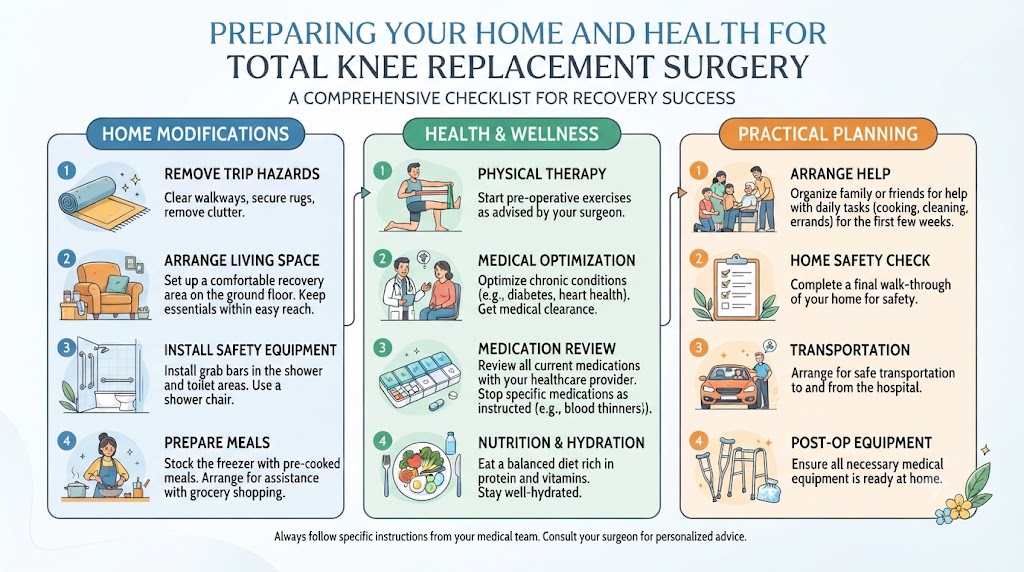
How to Prepare Your Home Before Surgery
Your home should be a “recovery-friendly” environment before you return from the hospital.
HOME PREPARATION CHECKLIST TABLE
| Item | Why Needed |
| Walker | Provides stability during initial walking |
| Raised Chair | Reduces stress on the new joint when sitting/standing |
| Ice Packs | Manages swelling and post-op pain |
| Grab Bars | Adds safety in the shower and bathroom |
| Comfortable Bed Setup | Ease of access and proper elevation |
Common Mistakes Patients Make
- Ignoring Physiotherapy: Skipping prehab exercises often leads to harder recovery.
- Not Stopping Risky Medications: Failing to stop blood thinners or herbal supplements can cause surgical bleeding.
- Poor Diet: Malnutrition or high sugar intake slows down wound healing.
- Smoking/Alcohol: Both drastically increase the risk of infection and delay healing.
- Ignoring Home Setup: Returning to a home full of trip hazards increases the risk of falls.
Future of Knee Replacement Care
Technological advancements are making knee replacements more accurate and recovery faster than ever before.
FUTURE OF ORTHOPEDIC CARE TABLE
| Innovation | Benefit |
| Robotic Surgery | Greater precision in implant placement |
| AI Planning | Better visualization of joint anatomy |
| Smart Rehab Tracking | Real-time monitoring of recovery progress |
| Custom Implants | Tailored fit for individual joint geometry |
| Remote Physio Support | Easier access to rehabilitation coaching |
FAQs
- What is total knee replacement? Replacing damaged joint parts with artificial ones.
- How long does recovery take? 3–6 months for full activity; initial healing is 6 weeks.
- Is knee surgery painful? It involves discomfort, but modern pain management is very effective.
- What tests are required? Blood tests, ECG, and X-rays are standard.
- Can I walk after surgery? Yes, usually within 24 hours with support.
- How do I prepare my home? Clear paths, add grab bars, and use a walker.
- What exercises should I do? Quads sets, leg raises, and ankle pumps.
- When can I return to normal life? Light activity in weeks, normal life in months.
- What foods help? High protein and vitamin C aid healing.
- Do I need physiotherapy? Yes, it is the most critical part of recovery.
- How long will the implant last? Usually 15–20+ years.
- Will I have a scar? Yes, but it will fade significantly.
- Can I kneel again? It depends, but it is often discouraged.
- How do I manage swelling? Use ice and keep the leg elevated.
- Is it covered by insurance? Most medical insurance plans cover it.
Final Thoughts
Preparing for your total knee replacement is an investment in your future mobility. By diligently following pre-operative guidelines, practicing your prehab exercises, and organizing your home, you set the stage for a successful and empowered recovery. Remember, the journey to a pain-free life is a marathon, not a sprint, and your active participation in the preparation phase is the most important indicator of your long-term outcome.For more resources, hospital comparisons, and support on your orthopedic journey, visit BestOrthoHospitals. You are taking a positive step toward better health—stay informed, stay proactive, and stay positive.