Introduction
Sports participation offers teenagers incredible opportunities to build confidence, teamwork, and physical health. However, the adolescent years are also a time of rapid growth, which can make young bodies uniquely vulnerable to specific types of orthopedic stress. Learning how to balance high-intensity activity with proper safety measures is vital for long-term health.At BESTORTHOHOSPITALS, we are dedicated to providing the educational resources necessary to keep young athletes active and healthy. In this guide, we will explore the common types of injuries, how to build a robust prevention routine, and when it is time to seek professional orthopedic care.
Understanding Sports Injuries in Teen Athletes
Sports injuries in teens generally fall into two categories: acute injuries and overuse injuries. Acute injuries happen suddenly—like a sprained ankle or a fractured bone from a direct impact. Overuse injuries, conversely, are the result of repetitive, chronic stress on muscles, tendons, and bones over time, often caused by year-round training or improper technique.Because teenagers are often experiencing growth spurts, their bones may grow faster than their muscles and tendons can adapt. This creates a state of temporary tension, making growth plates and soft tissues particularly susceptible to injury. Understanding this “growing” phase is key to keeping young athletes safe.
Common Sports Injuries in Teens
Recognizing the patterns of injury helps in identifying them early, which often prevents a minor issue from becoming a chronic problem.
- Sprains and Strains: Damage to ligaments (sprains) or muscles/tendons (strains) caused by overstretching.
- Stress Fractures: Tiny cracks in bones caused by repetitive force, commonly in the shins or feet.
- Growth Plate Injuries: Damage to the developing areas at the ends of long bones.
- ACL Injuries: Tears in the knee ligament, frequently seen in pivoting sports like soccer or basketball.
- Tendinitis: Inflammation of a tendon, usually due to overuse in the shoulder, elbow, or knee.
Common Sports Injuries Comparison
| Injury | Common Cause | Prevention Tip |
| Sprains | Twisting joints | Strength and balance training |
| Strains | Muscle overuse | Proper warm-up and stretching |
| Stress Fractures | Repetitive impact | Gradual training progression |
| ACL Injury | Sudden pivoting | Neuromuscular training |
| Shin Splints | Overtraining | Appropriate footwear and rest |
Risk Factors for Sports Injuries
Understanding what increases risk is the first step toward mitigation. Common factors include:
- Overtraining: Participating in one sport year-round without sufficient recovery time.
- Poor Conditioning: Starting a high-intensity season without proper base-level fitness.
- Incorrect Technique: Using improper form can put unnecessary force on joints.
- Rapid Growth Spurts: Bodies are structurally “different” during periods of fast growth and may need adjusted workloads.
- Inadequate Gear: Worn-out shoes or ill-fitted protective equipment.
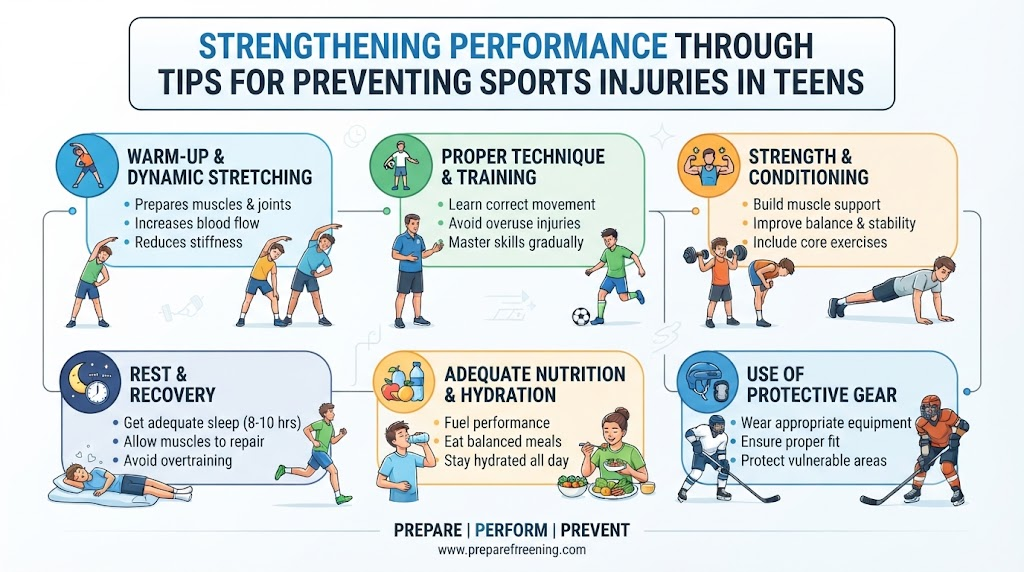
Essential Tips for Preventing Sports Injuries
Safety is not just about avoiding an accident; it is about creating a training environment that supports the body’s needs.
- Prioritize the Warm-up: Never jump into high-intensity activity “cold.” Spend 10–15 minutes doing dynamic movements to increase heart rate and blood flow to muscles.
- Gradual Progression: Follow the “10% rule”—never increase your weekly training distance or intensity by more than 10%.
- Listen to Your Body: Pain is a signal. Ignoring it often leads to longer recovery times.
- Prioritize Rest Days: At least one or two days per week should be completely free of structured, high-intensity training.
- Use the Right Gear: Replace athletic shoes regularly, as their cushioning loses efficacy over time.
Importance of Conditioning and Strength Training
Strength training is often misunderstood as “lifting heavy.” In reality, for teenagers, it is about functional stability.
- Core Strength: A stable trunk protects the spine and improves athletic balance.
- Neuromuscular Training: Exercises that focus on proper landing, jumping, and cutting patterns significantly reduce the risk of knee injuries like ACL tears.
- Flexibility: Regular stretching helps maintain the range of motion necessary for high-level movement.
Nutrition and Hydration for Young Athletes
A growing body requires specific “fuel” to repair itself after the stress of athletics.
- Protein: Essential for repairing muscle fibers broken down during exercise.
- Complex Carbohydrates: Provide the sustained energy needed for practices and games.
- Calcium and Vitamin D: Critical for bone density, especially during teenage growth spurts.
- Hydration: Water is the best tool. Thirst is often a late indicator of dehydration; athletes should drink consistently throughout the day.
Healthy Sports Habits Checklist
- Warm-up Routine: Consistent dynamic movements before every session.
- Proper Hydration: Carry a water bottle and track fluid intake.
- Balanced Nutrition: Eat a mix of protein, complex carbs, and veggies.
- Rest Days: Strictly observe time off from high-intensity training.
- Protective Equipment: Ensure gear is well-maintained and properly fitted.
- Medical Checkups: Schedule an annual physical with an orthopedic or sports health provider.
When to Seek Medical Care
Not every ache requires an office visit, but some signs should never be ignored. Seek an evaluation from an orthopedic professional if you notice:
- Severe or persistent pain that interferes with sleep or daily activities.
- Joint instability or the feeling that a joint is “giving out.”
- Visible deformity or persistent, localized swelling.
- Inability to bear weight on a limb.
- Signs of a concussion, such as dizziness, confusion, or headaches after a hit to the head.
Common Myths vs Facts
| Myth | Fact |
| Playing through pain builds strength. | Pain is a warning sign; playing through it often worsens injuries. |
| Stretching prevents all injuries. | Prevention requires a combination of conditioning, technique, and rest. |
| Young athletes don’t need rest. | Recovery is essential for growth and injury prevention. |
| Safety gear eliminates risk. | Equipment reduces risk but cannot prevent all injuries. |
Common Mistakes Parents and Athletes Make
- Year-Round Specialization: Focusing on only one sport year-round without cross-training increases the risk of overuse injuries.
- Returning Too Soon: Athletes are often eager to get back to play; however, returning before the injury is fully healed creates a cycle of recurring issues.
- Skipping the Warm-up: Treating the warm-up as optional is a leading cause of muscle strains.
Solution: Encourage cross-training (e.g., swimming or cycling) to build endurance without repetitive impact, and always follow a doctor-approved plan for returning to sports after an injury.
Real-Life Educational Scenarios
- ACL Prevention: An athlete incorporates specific balance and jumping drills into their soccer training, successfully learning to land with better knee alignment.
- Stress Fracture Management: A teen runner experiences persistent foot pain. Instead of ignoring it, they see a specialist early, receive a diagnosis, and rest for a few weeks, avoiding a full break.
- Overuse Recovery: A baseball pitcher experiencing shoulder fatigue is encouraged to take a month off throwing and focus on core stability, effectively resetting their shoulder health before the next season.
FAQs
- What are common teen sports injuries?
Sprains, strains, stress fractures, and tendon issues. - How can injuries be prevented?
Proper training, gradual progression, rest, and nutrition. - Importance of warming up?
It prepares muscles, improves performance, and reduces strain. - Should teens strength train?
Yes, with proper supervision and focus on form. - Recovery foods?
Protein for muscles and complex carbs for energy. - Water intake?
Drink consistently; don’t wait for thirst. - What are overuse injuries?
Chronic conditions caused by repetitive activity. - When to stop playing?
If pain is sharp, persistent, or changes your movement. - Safest return?
A gradual plan overseen by a healthcare professional. - Does footwear matter?
Absolutely; bad shoes change your mechanics. - How often should they rest?
At least one full day a week. - Importance of physicals?
They identify potential issues before the season starts. - Signs of serious injury?
Swelling, inability to move or bear weight. - When to see a specialist?
For any pain that doesn’t improve with a few days of rest. - How can coaches help?
By monitoring load and encouraging proper technique.
Final Thoughts
Preventing sports injuries is not just about avoiding “bad days”—it is about building a body that can handle the challenges of competitive athletics for years to come. By focusing on proper conditioning, allowing for adequate rest, and being willing to speak up when something hurts, teen athletes can enjoy all the benefits that sports provide while staying safe.For more information on musculoskeletal health and sports medicine, explore BESTORTHOHOSPITALS. We encourage you to work with qualified healthcare professionals to create a training plan that keeps young athletes strong, resilient, and ready for their next big game.