Introduction
Your joints are the pillars of your mobility, allowing you to move, work, and enjoy life with ease. When a joint is compromised by infection, it is not merely an uncomfortable nuisance—it is a condition that requires immediate medical intervention. A joint infection, medically known as septic arthritis, can escalate quickly, potentially causing permanent damage to cartilage and surrounding tissues if not addressed in time.At BESTORTHOHOSPITALS, we are dedicated to providing the educational resources you need to stay informed and proactive about your musculoskeletal health. In this guide, we will explore the symptoms, causes, and diagnostic paths for joint infections. Please remember: if you suspect a joint infection, this is a medical emergency that warrants an immediate visit to an orthopedic specialist or an urgent care facility.
What Is a Joint Infection?
A joint infection occurs when bacteria, viruses, or fungi enter the joint space. This is a serious situation because the joint is typically a sterile environment; once microorganisms enter, they can multiply rapidly, causing intense inflammation.
It is important to distinguish between “joint inflammation” (which can be caused by wear and tear or autoimmune conditions) and “joint infection.” While both involve swelling and pain, an infection is driven by pathogens that require targeted medical treatment, such as antibiotics or surgical intervention, rather than just rest or anti-inflammatory medication.
Why Early Recognition Matters
Time is the most critical factor when dealing with an infected joint. Because the infection causes an inflammatory response that can actually degrade the cartilage inside the joint, every hour counts. Early recognition allows for:
- Prevention of Permanent Damage: Prompt treatment can save the cartilage from irreversible destruction.
- Reduced Complications: Addressing the infection before it spreads to the bloodstream or bone.
- Faster Recovery: Patients who seek help early often face a much simpler and shorter recovery path.
Common Signs and Symptoms
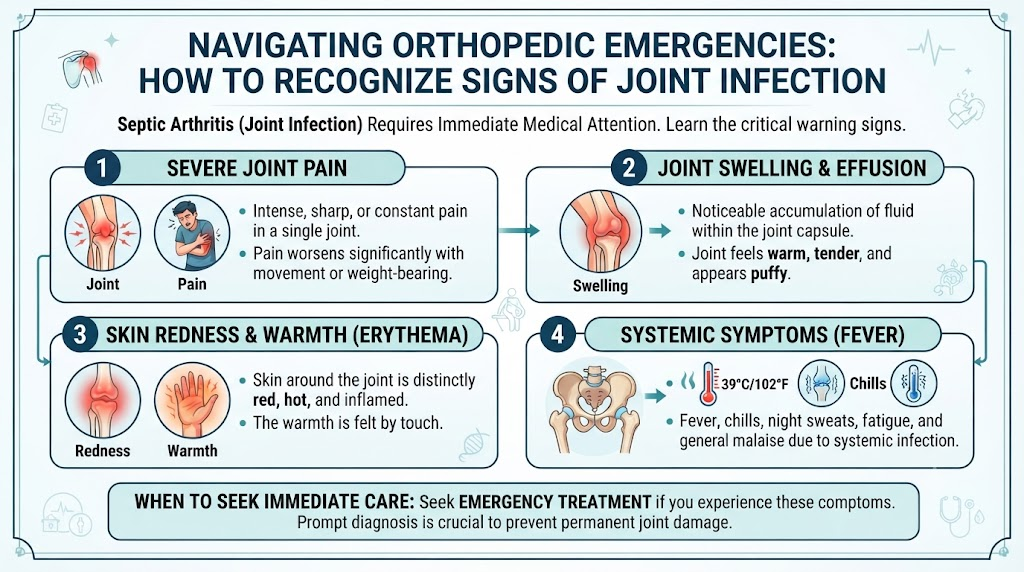
Joint infections often present with a specific cluster of symptoms. While they may vary in intensity, the most common indicators include:
- Severe Joint Pain: Often disproportionate to any known injury.
- Noticeable Swelling: The joint may look puffy, tight, or “full.”
- Warmth and Redness: The skin over the joint often feels hot to the touch and looks red or inflamed.
- Fever and Chills: A systemic response as your body fights the infection.
- Difficulty Moving: A profound inability to bend, straighten, or bear weight on the joint.
- Fatigue: Feeling generally unwell or “flu-like.”
- Drainage: If you have had recent joint surgery, any discharge or fluid leaking from the surgical site is a red flag.
Joint Infection Symptoms Comparison Table
| Symptom | Why It May Occur |
| Severe Joint Pain | Intense inflammation caused by the presence of infection |
| Swelling | Fluid accumulation triggered by the immune system |
| Redness & Warmth | Increased blood flow to the site of infection |
| Fever | The body’s systemic response to fighting off microorganisms |
| Limited Joint Movement | Pain and mechanical swelling restrict normal mobility |
Common Causes and Risk Factors
Joint infections can occur when bacteria enter the joint via the bloodstream, through a penetrating injury, or during a surgical procedure.
Risk Factors
- Chronic Health Conditions: Diabetes and rheumatoid arthritis can impair the body’s ability to fight infection.
- Weakened Immune System: Making it easier for bacteria to colonize a joint.
- Recent Orthopedic Surgery: Particularly joint replacements, which have a small but known risk of infection.
- Open Wounds: Bacteria from a skin infection can potentially travel to a joint.
- Age: Older adults or very young children may be at higher risk.
How Doctors Diagnose Joint Infections
Orthopedic specialists use a combination of physical and clinical data to confirm an infection:
- Medical History & Physical Examination: Evaluating your symptoms and the joint’s range of motion.
- Blood Tests: Checking for elevated markers of inflammation and infection.
- Joint Fluid Analysis: This is the “gold standard.” A doctor uses a needle to draw a small amount of fluid from the joint to test it for bacteria.
- Imaging: X-rays, MRI, or CT scans help assess the extent of bone and soft tissue involvement.
Treatment Options
Treatment is highly personalized based on the severity of the infection.
- Antibiotic Therapy: Usually administered intravenously to ensure it reaches the joint space effectively.
- Joint Fluid Drainage: Sometimes, the infected fluid needs to be drained to relieve pressure and remove the bulk of the bacteria.
- Surgical Treatment: In some cases, a surgeon may need to “wash out” the joint (debridement) to remove infected tissue.
- Rehabilitation: Once the infection is cleared, physical therapy is essential to restore range of motion and strength.
Prevention: Staying Proactive
While not every infection can be prevented, you can significantly reduce your risk:
- Proper Wound Care: Clean and cover any cuts or scrapes immediately.
- Good Hygiene: Handwashing remains the simplest way to prevent the spread of bacteria.
- Chronic Disease Management: Keeping conditions like diabetes well-controlled helps your immune system stay strong.
- Post-Surgical Vigilance: Always follow your surgeon’s postoperative instructions exactly, especially regarding wound care.
Choosing the Right Orthopedic Hospital
If you need orthopedic care, choose a facility that offers more than just standard treatment. Look for:
- Infection Management Expertise: Surgeons who specialize in treating orthopedic infections.
- Advanced Diagnostics: Access to rapid testing and specialized imaging.
- Comprehensive Rehabilitation: Support teams that help you regain movement after the infection has cleared.
Common Mistakes to Avoid
- Ignoring Pain: “Waiting to see if it gets better” can be dangerous with joint infections.
- Self-Medicating: Using leftover antibiotics or painkillers can mask symptoms without killing the bacteria, making the infection harder to diagnose.
- Stopping Care Early: Even if you feel better after a few days of antibiotics, complete the entire course as prescribed to ensure the infection is entirely gone.
Myths vs. Facts
| Myth | Fact |
| Every swollen joint is arthritis | Some swelling is caused by acute infection |
| Joint infections always develop slowly | Many can develop and cause damage within 24–48 hours |
| Fever is always present | Not everyone develops a fever, especially older adults |
| Painkillers can treat an infection | They only mask the pain; they do not kill the infection |
FAQs
- What is a joint infection?
An invasion of the joint space by harmful microorganisms. - What are the earliest signs?
Sudden, severe pain and warmth in the joint. - Can it be serious?
Yes, it is a medical emergency that can destroy cartilage. - Which joints are affected?
Large joints like the knee, hip, and shoulder are most common. - How are they diagnosed?
Usually through blood tests and joint fluid analysis. - Are they treatable?
Yes, if caught early with antibiotics or surgery. - Can implants get infected?
Yes, this is a serious complication that requires specialist care. - When to see a doctor?
Immediately upon noticing sudden swelling and severe pain. - How to reduce risk?
Practice good hygiene and manage chronic health issues. - Can children get it?
Yes, they require prompt pediatric orthopedic care. - How long is recovery?
Depends on the severity; includes antibiotics and rehab. - Is physical therapy important?
Yes, it prevents stiffness after the infection is gone. - Complications if delayed?
Permanent loss of joint motion and bone damage. - Is it an emergency?
Absolutely. - How does BESTORTHOHOSPITALS help?
We provide the clear, expert information you need to take action.
Final Thoughts
A joint infection is a serious matter, but it is also a highly treatable one—provided it is recognized in time. By listening to your body and seeking medical evaluation the moment you notice severe, unexplained joint pain, redness, or fever, you protect your future mobility.Your health is a partnership. Stay informed, stay vigilant, and never hesitate to prioritize your care. For more reliable information on musculoskeletal health and orthopedic care, we invite you to explore BESTORTHOHOSPITALS. If you are currently experiencing symptoms, please seek professional medical care immediately.