Introduction
Knee pain can make simple daily tasks difficult. Walking, climbing stairs, and standing may become painful. When other treatments no longer provide enough relief, doctors may suggest knee replacement surgery.
Understanding Knee Replacement Recovery helps patients prepare for life after surgery. The surgeon replaces damaged joint surfaces with artificial parts. This can help reduce pain and improve movement.
There are two main procedures: total and partial knee replacement. Bestorthohospitals.com Recovery after each procedure can be different. It also depends on age, general health, and physical strength.
Healing takes time and active care. Physical therapy, wound care, safe movement, and follow-up visits all play important roles. Knowing what to expect can help patients feel more prepared.
What Is Knee Replacement Surgery?
The knee is a joint where the thigh bone meets the shin bone. The kneecap also helps the joint move smoothly. Healthy cartilage covers the ends of these bones. It helps reduce friction during movement.
Arthritis can wear down this cartilage. Injuries and other joint problems can also damage the knee. This may cause pain, swelling, stiffness, and difficulty walking.
Knee replacement surgery removes damaged joint surfaces. The surgeon places artificial components made from medical-grade materials.
Total Knee Replacement
During total knee replacement, the surgeon replaces the damaged surfaces across the main parts of the knee joint. This procedure may help people with widespread joint damage.
Partial Knee Replacement
Partial knee replacement treats damage in only one part of the knee. The surgeon keeps the healthy parts of the joint. This procedure may suit selected patients with limited damage.
Why Is Knee Replacement Recommended?
Doctors may suggest surgery when severe knee pain affects daily life. Other treatments may no longer provide enough relief. These may include physical therapy, activity changes, and prescribed medicines.
Surgery is not suitable for everyone. The decision depends on symptoms, imaging, health, and personal needs. Patients should discuss the benefits and risks with an orthopedic surgeon.
What Happens Immediately After Knee Replacement Surgery?
The early recovery period usually begins in the hospital or recovery unit. Medical staff monitor the patient after anesthesia. They check breathing, blood pressure, heart rate, and pain.
The care team also checks the surgical wound. They watch for bleeding, swelling, and other early problems.
When it is safe, patients may begin moving the operated leg. A physiotherapist or nurse may help them sit, stand, and take their first steps.
Early care may include:
- Pain relief as prescribed by the medical team.
- Cold packs when recommended.
- Wound and dressing checks.
- Gentle movement exercises.
- Walking with a walker or other support.
- Guidance about safe transfers and movement.
- Planning for discharge and home care.
Some patients return home soon after surgery. Others need a longer hospital stay or extra support. The decision depends on their health and ability to move safely.
Before discharge, patients should understand their wound care plan. They should also know how to use walking aids and when to attend follow-up visits.
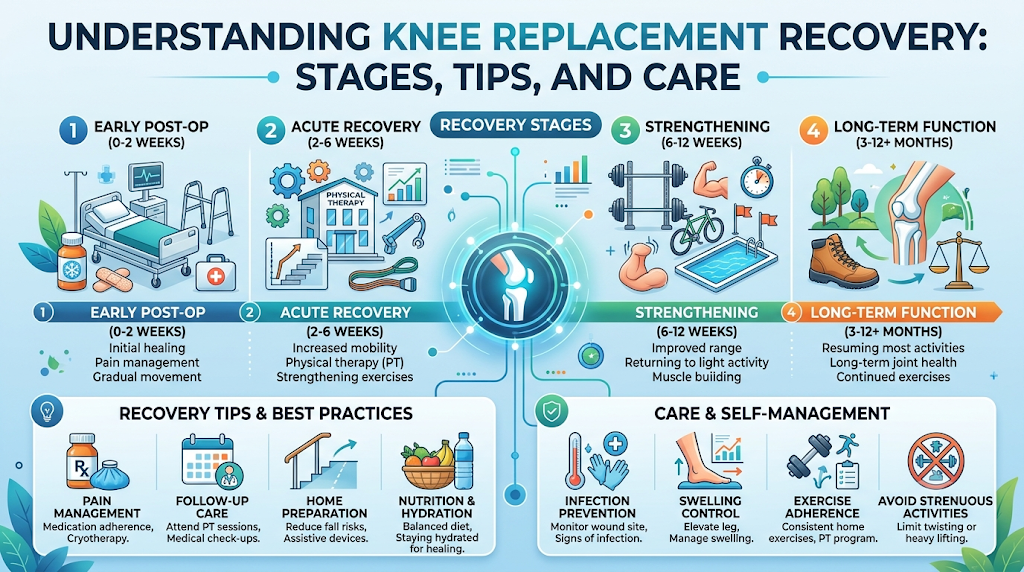
Stages of Knee Replacement Recovery
Recovery after knee surgery happens gradually. Each patient follows a different path. The type of surgery, general health, and therapy progress can affect healing.
Early Recovery
The first stage focuses on safe movement and basic care. Pain, swelling, bruising, and stiffness are common.
Patients may need help with bathing, dressing, and preparing meals. A walker or other support may be needed for walking.
The care team provides instructions about wound care and exercises. Patients should follow these instructions closely.
Building Strength and Movement
The next stage focuses on improving knee movement and leg strength. Physical therapy helps patients practice safe movements.
A therapist may work on:
- Bending and straightening the knee.
- Strengthening the muscles around the joint.
- Improving balance.
- Walking with better control.
- Using stairs safely.
- Reducing fear of movement.
Walking distance may increase as strength improves. However, patients should not push through severe pain.
Returning to Daily Activities
As recovery continues, patients may become more independent. They may find dressing, bathing, and household tasks easier.
Some patients gradually return to work or outdoor activities. The timing depends on their progress and job demands.
Long-Term Recovery
Long-term recovery focuses on strength, movement, and confidence. Patients may continue exercises after formal therapy ends.
Some stiffness or swelling may take time to settle. Regular follow-up helps doctors review progress and address concerns.
Pain, Swelling, and Bruising After Surgery
Some pain, swelling, warmth, and bruising are common after knee replacement. These changes are part of the body’s healing response.
Pain may feel stronger during movement or therapy. It should generally become easier to manage as recovery progresses.
Patients can support comfort by following their care plan:
- Take prescribed pain relief as directed.
- Use cold packs if the care team recommends them.
- Elevate the leg as instructed.
- Take short walks when advised.
- Rest between activity periods.
- Avoid sitting still for long periods unless instructed.
Do not place ice directly against the skin. Follow the care team’s advice about how and when to use cold packs.
Sudden worsening pain, increasing swelling, or new redness needs medical attention. Patients should report unusual changes rather than assuming they are part of normal healing.
Why Is Physical Therapy Important?
Physical therapy is a key part of knee replacement rehabilitation. Surgery changes the joint, but muscles still need time to regain strength.
A physiotherapist helps patients move safely. Therapy also supports balance and confidence during daily activities.
Common therapy goals include:
- Improving knee bending and straightening.
- Strengthening the thigh and leg muscles.
- Improving balance and coordination.
- Practicing safe walking.
- Learning to use walking aids correctly.
- Building confidence with stairs.
- Returning to suitable daily activities.
The therapist chooses exercises based on the patient’s condition. Some movements may be suitable early, while others need more time.
Patients should follow the exercise plan given by their surgeon or therapist. They should not copy another person’s routine. Doing too much too soon may increase pain or swelling.
Regular practice can support progress. However, rest is also important. Patients should discuss exercises that cause sharp pain or unusual symptoms.
Walking and Daily Activities After Knee Replacement
Walking often begins with support soon after surgery. A walker or other device helps patients stay balanced. The care team explains how to use it safely.
Patients can gradually work toward everyday tasks. These may include:
- Getting in and out of bed.
- Sitting down and standing up.
- Using the toilet safely.
- Dressing and bathing.
- Walking around the home.
- Climbing stairs with guidance.
- Completing light household tasks.
Stairs may feel difficult at first. A physiotherapist can teach safe techniques. Patients should use handrails and follow their personal instructions.
Driving requires good control of the operated leg. Patients should wait for medical approval before driving. They must also be able to react safely and control the vehicle.
Returning to work depends on the type of job. Desk work may require different recovery needs than work involving lifting or long periods of standing.
Avoid rushing activities. Increase movement only as advised by the care team.
Wound Care and Preventing Infection
The surgical wound needs proper care during recovery. Following discharge instructions can help reduce infection risk.
Patients should:
- Keep the dressing in place as directed.
- Follow instructions about bathing and showering.
- Wash hands before touching the wound area.
- Avoid applying unapproved creams or products.
- Attend wound checks as advised.
- Follow instructions about changing dressings.
Do not remove stitches, staples, or dressings unless instructed. Some wounds need special care based on the closure method.
Watch for signs of infection, including:
- Increasing redness around the wound.
- New or worsening warmth.
- Increasing pain.
- Pus or unusual drainage.
- Fever or chills.
- The wound opening.
Contact the healthcare team promptly if these signs appear. Early assessment can help doctors decide whether treatment is needed.
Nutrition, Sleep, and Home Support During Recovery
Good daily habits can support healing. They also help patients manage energy and return to regular activities.
Eat Balanced Meals
The body needs enough nutrients during recovery. Include suitable sources of protein, fruits, vegetables, and whole grains.
Protein supports normal tissue repair. Fluids also help the body function well, unless a doctor has advised fluid limits.
Patients with diabetes or other health conditions may need a specific meal plan. A dietitian can help when nutrition needs are complex.
No single food or supplement can guarantee faster joint healing. Discuss supplements with a doctor before using them.
Get Enough Rest
Sleep gives the body time to recover. Pain or swelling may make sleep difficult at first.
Follow the care team’s advice about comfortable sleeping positions. Ask for help if pain regularly prevents proper rest.
Prepare the Home
A safe home can make recovery easier. Before surgery, consider these changes:
- Remove loose rugs and floor clutter.
- Keep walking paths clear.
- Place essential items within easy reach.
- Use suitable bathroom support if recommended.
- Arrange a stable chair with armrests.
- Keep a phone nearby.
- Arrange help with shopping and household tasks.
Family members can assist with meals, transport, and daily needs. This support can reduce the risk of falls and unnecessary strain.
Possible Complications After Knee Replacement
Many patients recover without serious problems. However, every operation carries some risk. Knowing the warning signs helps patients seek care quickly.
Surgical Wound Infection
Bacteria can enter the wound and cause infection. Signs may include redness, warmth, drainage, fever, and increasing pain.
Blood Clots
A blood clot may form in a deep vein, often in the leg. This is called deep vein thrombosis.
Warning signs can include:
- New calf pain.
- Swelling in one leg.
- Warmth or redness in the calf.
Seek prompt medical assessment if these symptoms appear.
A clot can sometimes travel to the lungs. This is called a pulmonary embolism and is an emergency.
Persistent Stiffness
Some patients have difficulty bending or straightening the knee. Stiffness may relate to healing, swelling, or scar tissue.
The surgeon and therapist can assess movement and discuss suitable care.
Ongoing Pain
Pain may continue longer than expected in some patients. It can have several causes, including stiffness, infection, or implant-related problems.
New or persistent pain should be discussed with the surgeon.
Joint Instability and Implant Problems
Some patients may feel that the knee is unstable. Implant parts can also wear, loosen, or develop other problems over time.
A doctor may use an examination and imaging to check the joint.
Nerve or Blood Vessel Injury
Injury to a nearby nerve or blood vessel is less common. New numbness, weakness, or changes in foot movement need medical review.
Emergency warning Seek emergency care for sudden breathlessness, chest pain, coughing blood, or fainting. These symptoms may indicate a serious blood clot.
When Can Patients Return to Normal Activities?
There is no single return date for everyone. Recovery depends on the procedure, health, strength, and progress in rehabilitation.
Walking Outdoors
Patients may begin with short walks when their care team allows. They can increase distance gradually as balance and strength improve.
Returning to Desk Work
People with desk jobs may return when they can sit comfortably and travel safely. Some may need changes to their work routine.
Driving
Patients should not drive until their surgeon approves. They need enough strength, movement, and control to operate the vehicle safely.
Shopping and Household Tasks
Light tasks may become easier as walking improves. Carrying heavy items, bending repeatedly, or standing for long periods may need more time.
Exercise and Travel
Low-impact activities may be suitable after medical approval. Travel plans should account for comfort, movement, and clot prevention advice.
Patients should ask their care team before starting new exercise routines or demanding activities.
Long-Term Care After Knee Replacement
Recovery does not end when patients leave formal therapy. Long-term care helps maintain movement and strength.
Patients can support joint health by:
- Continuing suitable strengthening exercises.
- Staying active with approved low-impact activities.
- Maintaining a healthy weight.
- Attending recommended follow-up visits.
- Reporting new or persistent knee pain.
- Following advice about dental and other medical care.
- Asking about safe activities as fitness improves.
An artificial knee needs monitoring over time. Patients should tell healthcare professionals about their joint replacement during future medical visits.
The implant may need attention if problems develop. No fixed lifespan applies to every implant or patient. Regular care helps doctors assess the joint when needed.
Mandatory Table 1: Knee Replacement Recovery Stages
| Recovery Stage | Common Experiences | Main Care Goals |
|---|---|---|
| Early hospital recovery | Pain control, wound checks, assisted movement | Safe mobility and discharge planning |
| Initial home recovery | Swelling, basic walking, daily support | Wound care and following the exercise plan |
| Rehabilitation period | Gradual strength and movement improvement | Better balance, walking, and knee function |
| Later recovery | More independent daily activities | Building confidence and maintaining progress |
| Long-term care | Ongoing exercise and follow-up | Protecting mobility and monitoring the joint |
These stages are general. Each patient’s progress depends on their health, surgery, and rehabilitation needs.
Mandatory Table 2: Recovery Challenges and Helpful Actions
| Recovery Challenge | Possible Reason | Helpful Action |
|---|---|---|
| Knee swelling | Normal healing response or increased activity | Follow the care team’s advice about rest and cold packs |
| Pain or stiffness | Healing tissues and reduced movement | Follow the prescribed plan and attend therapy |
| Difficulty walking | Weakness, pain, or reduced balance | Use recommended walking support |
| Wound redness or drainage | Possible wound irritation or infection | Contact the healthcare team |
| Calf pain or swelling | Possible blood clot | Seek prompt medical assessment |
| Slow progress | Individual healing differences or other health factors | Discuss progress with the surgeon or therapist |
This table provides general awareness. It does not replace advice from a healthcare professional.
Frequently Asked Questions
1. How long does knee replacement recovery take?
Recovery varies from person to person. Some daily activities become easier as strength and movement improve. Full recovery may take several months or longer. Total and partial knee replacement can have different recovery needs. Your surgeon and physiotherapist can explain what progress may look like for your condition.
2. When can patients start walking after knee replacement surgery?
Many patients begin standing or walking with support soon after surgery, when it is safe. A nurse or physiotherapist usually helps with the first steps. Patients may use a walker or another device. The care team decides when and how walking should progress.
3. Is pain normal after knee replacement?
Yes. Pain, swelling, warmth, and bruising are common during early recovery. These symptoms should generally become easier to manage over time. Follow your prescribed pain plan. Contact your healthcare team if pain suddenly increases, becomes severe, or comes with other unusual symptoms.
4. How important is physical therapy after knee replacement?
Physical therapy is an important part of recovery. It helps improve knee movement, leg strength, balance, and walking ability. A therapist also teaches safe ways to manage daily tasks. Follow your personal exercise plan and report movements that cause sharp or unusual pain.
5. When can patients climb stairs after knee replacement?
Some patients practice stairs during early recovery with help from a therapist. The timing depends on strength, balance, and safety. Use handrails and follow the technique taught by your care team. Do not attempt difficult stairs alone until your therapist says it is safe.
6. When can someone drive after knee replacement surgery?
Driving should wait until the surgeon gives approval. Patients need enough strength and movement to control the vehicle and react safely. The operated leg, pain, and use of certain medicines may affect driving ability. Do not drive while taking medicines that make you sleepy or less alert.
7. What should patients avoid during knee replacement recovery?
Avoid rushing activities, ignoring pain, or walking without recommended support. Do not change your exercise plan without guidance. Avoid heavy tasks and risky movements until your care team approves them. Follow instructions about wound care, driving, bathing, and returning to work.
8. What are the warning signs of infection after knee replacement?
Warning signs include increasing redness, warmth, worsening pain, pus, unusual drainage, fever, or wound opening. Contact your healthcare team promptly if these symptoms appear. Do not apply unapproved creams or treatments. Early medical review can help identify infection and guide suitable care.
9. Can patients return to exercise after knee replacement?
Yes. Many patients return to suitable exercise as recovery improves. Walking and other low-impact activities may be part of a long-term plan. The right activities depend on strength, balance, and joint health. Ask your surgeon or physiotherapist before starting new or demanding exercise.
10. How can patients support long-term knee replacement results?
Continue suitable exercises and attend follow-up appointments. Maintain a healthy weight and choose activities approved by your care team. Report new pain, swelling, or changes in movement. Follow medical advice about other health needs. Regular care helps monitor the artificial joint over time.
Final Thoughts
Knee replacement recovery takes patience and steady effort. Pain and swelling may improve gradually as movement and strength return. Physical therapy, safe activity, and proper wound care all support recovery.
Every patient has different needs. Follow your surgeon’s instructions and attend planned check-ups. For general orthopedic hospital information, explore BestOrthoHospitals.com.