INTRODUCTION
Arthritis pain can make simple daily tasks feel difficult. Walking, climbing stairs, cooking, and getting dressed may become uncomfortable. Joint stiffness can also affect sleep and make mornings harder.
Arthritis is a group of conditions that affect the joints. Osteoarthritis and rheumatoid arthritis are two common types. However, they develop in different ways and need different care.
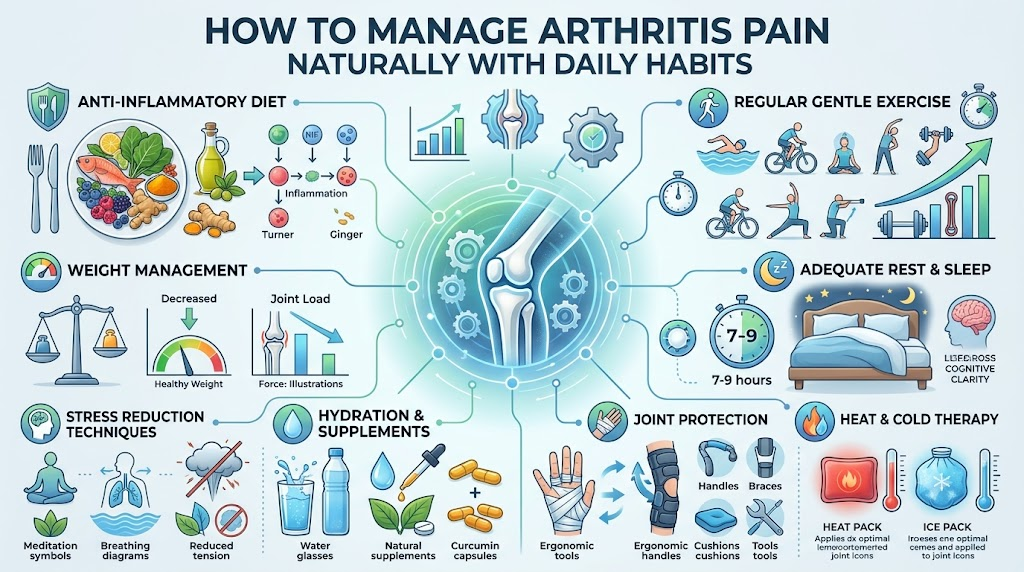
Some natural habits can help people manage pain and move more comfortably. Gentle exercise, balanced meals, healthy weight management, and proper rest may support joint health. Heat and cold therapy can also provide temporary relief.
These methods do not cure arthritis or replace needed medical treatment. They work best as part of a care plan that matches each person’s needs. Bestorthohospitals shares orthopedic health information to help readers understand joint conditions and make informed care decisions.
Understand Arthritis and Why It Causes Pain
Arthritis affects the joints, where two or more bones meet. Healthy joints allow people to bend, walk, lift, and move comfortably. Arthritis can change how these joints work.
Some types damage the smooth tissue that covers the ends of bones. This tissue is called cartilage. It helps bones move smoothly against each other. When cartilage wears down, movement may become painful.
Other types involve inflammation. Inflammation is the body’s response to injury or illness. It can cause swelling, warmth, stiffness, and pain around a joint.
Osteoarthritis often develops as joint tissues change over time. It commonly affects the knees, hips, hands, and spine. Pain may increase during movement or after long periods of activity.
Rheumatoid arthritis is an autoimmune condition. This means the immune system mistakenly attacks healthy joint tissue. It can cause swelling, pain, and stiffness. It may affect several joints and often needs specialist treatment.
Arthritis symptoms vary from person to person. Some people have mild stiffness, while others experience ongoing pain. The right care depends on the arthritis type, affected joints, and overall health.
Start With Gentle, Joint-Friendly Exercise
Regular movement is one of the most useful parts of arthritis care. Exercise can strengthen the muscles around joints. Stronger muscles help support the body during everyday activities.
Movement also helps maintain joint flexibility. It can improve balance, walking ability, and general fitness. However, the right activity should match your comfort and physical ability.
Consider these joint-friendly options:
- Walking: Start with short walks on flat surfaces. Increase the distance slowly as your comfort improves.
- Swimming: Water supports body weight and reduces pressure on many joints. Swimming may make movement easier.
- Water exercises: Gentle movements in a pool can help improve strength and flexibility.
- Stationary cycling: A stationary bike offers controlled movement without the impact of running.
- Gentle stretching: Slow stretches can help reduce tightness and maintain movement.
- Range-of-motion exercises: These movements help joints move through a comfortable range.
- Tai chi: Slow, controlled movements may improve balance and body awareness.
- Light strength training: Suitable resistance exercises can strengthen muscles around affected joints.
Start slowly, especially if you have not exercised for a while. A few minutes of activity may be enough at first. Add time gradually instead of pushing through pain.
Some mild muscle discomfort can happen when starting a new routine. However, sharp pain, increased swelling, or worsening symptoms are warning signs. Reduce the activity and seek professional advice if these problems continue.
A physical therapist can help create a safe exercise plan. This is especially useful for people with severe stiffness or limited movement.
Use Heat and Cold Therapy for Temporary Relief
Heat and cold therapy are simple home methods for managing arthritis symptoms. Each method may help in a different way.
Heat can relax tight muscles and ease stiffness. A warm shower may help people who struggle with morning stiffness. A warm towel or heating pad may also provide comfort.
Cold therapy can help reduce swelling and numb painful areas for a short time. It may be useful when a joint feels warm or swollen after activity.
Follow these safety tips:
- Place a towel between your skin and the heat or cold source.
- Apply heat or cold for around 15–20 minutes.
- Check your skin during treatment.
- Avoid very hot or extremely cold temperatures.
- Do not fall asleep while using a heating pad.
- Avoid applying heat to a newly swollen joint unless advised.
People with reduced skin sensation or circulation problems should seek medical advice first. They may not notice skin damage from extreme temperatures.
Heat and cold provide temporary symptom relief. They do not repair damaged cartilage or treat the cause of arthritis.
Maintain a Healthy Weight to Reduce Joint Stress
Body weight can affect pressure on weight-bearing joints. The knees and hips carry much of the body’s weight. Extra weight may increase the strain on these areas.
For some people, gradual weight loss can help reduce knee discomfort. It may also make walking and daily movement easier. However, weight loss is not necessary or suitable for everyone with arthritis.
A balanced approach is more helpful than strict dieting. Try these habits:
- Eat regular meals with vegetables and protein.
- Choose suitable portion sizes.
- Reduce frequent sugary drinks and highly processed snacks.
- Include regular movement that suits your joints.
- Set small and realistic health goals.
- Avoid crash diets and extreme food restrictions.
Healthy weight management should support strength and overall health. Older adults and people with other medical conditions may need individual advice.
A doctor or registered dietitian can help set safe goals. This is important if pain limits movement or other health concerns affect your diet.
Choose Foods That Support Overall Joint Health
Food cannot cure arthritis, but a balanced diet supports general health. It can also help people maintain energy and a healthy weight.
Try to include different food groups throughout the week.
Fruits and vegetables: Choose colourful options such as oranges, berries, carrots, spinach, and tomatoes. They provide vitamins, minerals, and fibre.
Whole grains: Oats, brown rice, and whole-wheat foods provide fibre and useful nutrients. They can also help make meals more filling.
Beans and lentils: These foods provide plant-based protein and fibre. They are useful options for everyday meals.
Nuts and seeds: Almonds, walnuts, flaxseeds, and chia seeds provide healthy fats and other nutrients. Eat suitable portions.
Fish: Salmon, sardines, and other oily fish contain omega-3 fats. These fats support overall health and may help with some inflammatory processes.
Lean protein: Eggs, fish, beans, lentils, and suitable dairy foods help support muscle health.
Water: Drink enough water throughout the day. Good hydration supports normal body functions.
No single food can remove arthritis pain. Be careful with diets that promise fast results or claim to reverse joint damage. A varied eating pattern is usually more practical than avoiding many foods without a medical reason.
Improve Daily Joint Protection
Small changes around the home can make daily activities easier. They can also reduce unnecessary pressure on painful joints.
Try using both hands when carrying heavy objects. This spreads the load and may reduce strain on one hand or wrist.
Choose comfortable footwear with good support. Shoes that fit well may help people feel more stable while walking.
For hand arthritis, tools such as jar openers and easy-grip handles can reduce effort. You can also use larger handles when cooking or cleaning.
Keep frequently used items within easy reach. This reduces repeated bending, stretching, and lifting.
Avoid repeating movements that cause strong pain. When possible, change tasks or use a different method. Maintain a comfortable posture while sitting, standing, and working.
Some people benefit from a walking stick or another mobility aid. A healthcare professional can help choose the right option and show how to use it safely.
Balance Activity With Proper Rest
Rest is important when joints feel painful or tired. However, staying inactive for long periods can increase stiffness and weaken muscles.
Try to balance movement with short breaks. If a task takes a long time, divide it into smaller steps. Rest briefly between activities when needed.
Avoid sitting or standing in one position for too long. Change positions regularly and take gentle movement breaks.
During a painful flare-up, reduce demanding activities. A flare-up is a period when symptoms become worse. Return to normal movement gradually as symptoms settle.
Sleep is also an important part of recovery. Keep a regular bedtime and make your sleeping area comfortable. If pain repeatedly interrupts sleep, discuss it with a healthcare professional.
Manage Stress and Support Better Sleep
Living with ongoing pain can feel tiring. Stress may also make pain harder to manage. Poor sleep can affect mood, energy, and daily coping.
Relaxation habits may help people feel calmer. Try slow breathing, mindfulness, or a few minutes of meditation. These activities do not treat arthritis itself, but they may support emotional well-being.
Gentle stretching before bedtime may help some people relax. Avoid movements that increase joint pain.
A regular sleep schedule can also help. Try going to bed and waking up at similar times. Keep the bedroom quiet and comfortable.
If joint pain regularly keeps you awake, seek medical advice. Better pain control may improve sleep and daily comfort.
Consider Physical Therapy and Complementary Approaches
A trained physical therapist can help people manage arthritis safely. They can assess movement, strength, balance, and joint function.
A suitable treatment plan may include:
- Exercises to improve joint movement.
- Muscle-strengthening activities.
- Walking and balance training.
- Water-based rehabilitation.
- Advice on safe daily movements.
- Guidance on using mobility aids.
An occupational therapist can also help people manage everyday tasks. They may suggest helpful tools and changes at home or work.
Some people explore massage, tai chi, yoga, or other mind-body practices. These approaches may support relaxation, flexibility, or balance. However, their benefits and suitability vary.
Choose gentle activities and avoid movements that cause pain. People with severe joint damage or inflammatory arthritis should discuss new activities with their healthcare team.
Avoid Unverified Natural Remedies
Many products claim to provide fast arthritis relief. Some promise to rebuild cartilage or reverse joint damage. These claims should be treated with care.
Herbal mixtures and supplements may have side effects. They can also interact with prescribed medicines. A product labelled natural is not always safe.
Be careful with:
- Supplements claiming to repair cartilage.
- Unverified herbal mixtures.
- Detox drinks and extreme diets.
- Products promising a permanent arthritis cure.
- Online treatments with no reliable medical evidence.
Ask a doctor or pharmacist before taking a new supplement. This is especially important if you use blood thinners or other regular medicines.
Never stop prescribed arthritis medicines without medical advice. Natural approaches can support a treatment plan, but they do not automatically replace medical care.
Know When Arthritis Pain Needs Medical Attention
Home care may help with mild symptoms, but it is not enough for every situation. Seek professional assessment if joint pain continues or becomes worse.
Arrange a medical appointment if you notice:
- Ongoing joint pain or swelling.
- Increasing difficulty walking or using your hands.
- Reduced joint movement.
- Pain that regularly interrupts sleep.
- New or unexplained joint symptoms.
- Stiffness that affects normal daily activities.
A suddenly hot, red, and swollen joint needs urgent medical assessment, especially with fever or feeling very unwell. These symptoms may indicate an infection or another serious condition.
An orthopedic specialist can assess joint problems and discuss suitable care. A rheumatologist can help diagnose and manage inflammatory arthritis. The right specialist depends on the symptoms and suspected condition.
Early assessment can help identify the cause of pain. It also helps people understand which treatments and lifestyle changes may be appropriate.
Table 1: Natural Methods for Managing Arthritis Pain
| Natural approach | Possible benefit | Safe practical tip |
|---|---|---|
| Gentle exercise | Supports strength and joint movement | Start slowly and increase activity gradually |
| Heat therapy | May ease stiffness and tight muscles | Use a warm towel for 15–20 minutes |
| Cold therapy | May reduce swelling and numb pain | Wrap the cold pack in a towel |
| Healthy weight management | May reduce pressure on weight-bearing joints | Choose gradual, realistic changes |
| Good sleep | Supports energy and daily pain management | Follow a regular sleep schedule |
| Stress reduction | May improve relaxation and coping | Try slow breathing or mindfulness |
| Joint protection | May reduce unnecessary joint strain | Use helpful tools and avoid painful movements |
Table 2: Joint-Friendly Activities and Their Benefits
| Activity | How it helps | Helpful precaution |
|---|---|---|
| Walking | Supports fitness and everyday mobility | Choose flat paths and comfortable shoes |
| Swimming | Allows movement with less weight pressure | Begin with gentle sessions |
| Stationary cycling | Supports leg movement and fitness | Adjust the seat for comfort |
| Gentle stretching | Helps maintain flexibility | Avoid forcing a joint beyond comfort |
| Tai chi | May improve balance and body awareness | Choose beginner-friendly movements |
| Light strength training | Builds muscles that support joints | Use light resistance and proper technique |
Frequently Asked Questions
1. What are the best natural ways to manage arthritis pain?
Gentle exercise, balanced meals, healthy weight management, and proper sleep may help manage arthritis symptoms. Heat and cold therapy can also provide temporary relief. Joint protection and stress management may make daily activities easier. The best combination depends on the arthritis type, affected joints, and overall health.
2. Can walking help reduce arthritis pain?
Walking may help people with arthritis maintain mobility, muscle strength, and general fitness. Start with short walks on flat surfaces. Increase the distance gradually as your comfort improves. If walking causes sharp pain or increased swelling, reduce the activity and discuss suitable options with a healthcare professional.
3. Which exercises are suitable for people with arthritis?
Many people benefit from low-impact activities. These include walking, swimming, stationary cycling, gentle stretching, and suitable strength exercises. Tai chi may also support balance and movement. Exercise should match your joint condition and ability. A physical therapist can help create a safe and practical routine.
4. Does heat or cold therapy work better for joint pain?
Both methods can help, but they serve different purposes. Heat may ease stiffness and tight muscles, while cold may reduce swelling and numb painful areas. Choose the method that suits your symptoms. Always protect your skin and limit each application to around 15–20 minutes.
5. Can changing your diet help with arthritis symptoms?
A balanced diet supports general health and helps maintain a suitable weight. Include fruits, vegetables, whole grains, beans, nuts, seeds, and suitable protein sources. Oily fish can provide omega-3 fats. However, no single food or diet can cure arthritis or replace prescribed treatment.
6. Does losing weight reduce knee arthritis pain?
For people carrying extra weight, gradual weight loss may reduce pressure on the knees. It may also make movement more comfortable. However, weight loss is not necessary for everyone with arthritis. A healthcare professional can help decide whether weight management is suitable for your health needs.
7. Can yoga or tai chi help people with arthritis?
Gentle yoga and tai chi may support flexibility, balance, and relaxation. They can also help people stay active without intense movements. Choose beginner-friendly sessions and avoid positions that cause joint pain. Ask a healthcare professional before starting if you have severe stiffness or joint damage.
8. Are herbal supplements safe for arthritis pain?
Not all herbal supplements are safe or effective. Some may cause side effects or interact with prescribed medicines. Products that promise to repair cartilage or cure arthritis may make unsupported claims. Speak with a doctor or pharmacist before taking any supplement, even if it is labelled natural.
9. Can arthritis pain improve without medication?
Some people manage certain symptoms with exercise, rest, heat or cold therapy, and lifestyle changes. However, these methods may not control every type of arthritis. Inflammatory conditions often need medical treatment to prevent joint damage. Never stop or change prescribed medicines without professional advice.
10. When should someone see an orthopedic specialist for arthritis?
See a specialist if pain persists, swelling increases, movement becomes difficult, or symptoms affect sleep and daily activities. A suddenly hot, red, swollen joint with fever needs urgent assessment. An orthopedic specialist or rheumatologist can help identify the cause and discuss suitable treatment.
Final Thoughts
Managing arthritis pain naturally starts with small, steady habits. Gentle exercise can support movement and muscle strength. Balanced meals, healthy weight management, and good sleep also support overall health. Heat and cold therapy may provide short-term comfort, while joint protection can make daily tasks easier.
The best approach depends on the type of arthritis, pain level, and personal health needs. Natural methods may help, but they cannot cure every form of arthritis or repair damaged joints. Professional advice remains important, especially when symptoms continue or become worse.
For more information about joint conditions and orthopedic care, readers can explore BestOrthoHospitals.com. Understanding arthritis and choosing safe daily habits can help people make better decisions about their joint health.