Introduction
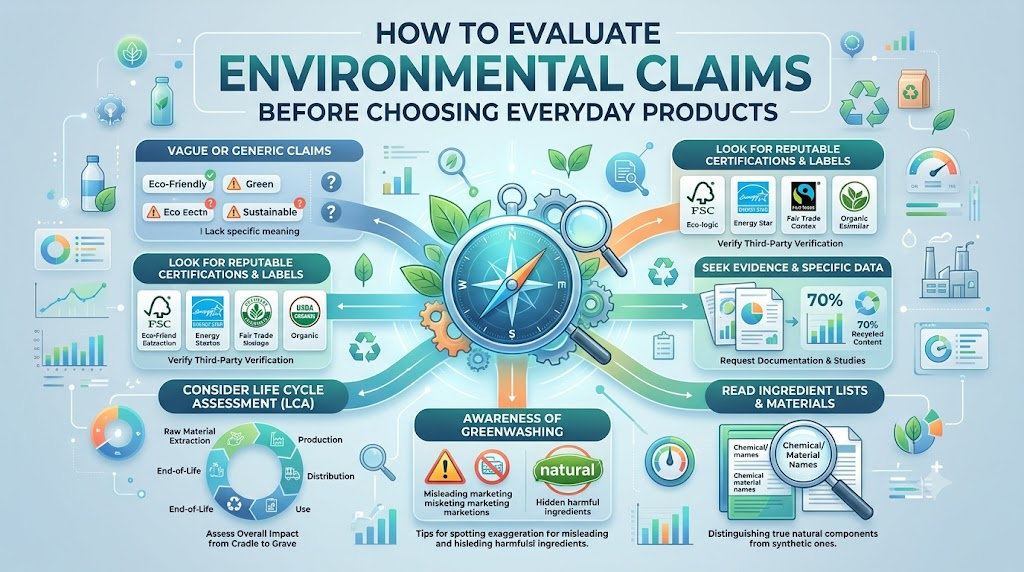
Many products are described with words such as eco-friendly, sustainable, natural, or environmentally responsible. These terms can attract attention, but they do not always explain the actual environmental impact of an item. A product may use recyclable packaging while still containing materials that are difficult to reuse. Another may promote energy savings without clearly explaining how those savings are measured.
Consumers need more than attractive environmental labels to make informed choices. They should understand what a claim means, what evidence supports it, and which parts of a product it actually covers.
Product Reviews India can help shoppers explore product details and customer experiences. Customer Reviews and Ratings may also highlight practical concerns about packaging, durability, repair, and disposal. Platforms such as iReviewed can support research by helping readers compare information before making decisions.
Understand What Environmental Claims Actually Mean
Environmental claims describe certain qualities or practices connected to a product. However, different words can refer to very different things.
A product described as recyclable may use materials that can be processed through suitable recycling systems. This does not mean every local collection facility accepts those materials.
Similarly, a reusable product is designed for repeated use. Its actual environmental value may depend on how often people use it and how long it remains functional.
Consumers should understand the specific claim instead of treating every green label as proof of overall environmental responsibility.
Common claims include:
- Recyclable: Certain materials can be processed for reuse under suitable conditions.
- Reusable: The product is intended for repeated use.
- Energy-efficient: The product is designed to use less energy under stated conditions.
- Biodegradable: The material can break down through biological processes under suitable conditions.
- Compostable: The material is designed to break down in an appropriate composting environment.
- Recycled content: Some material comes from previously used or recovered resources.
Best Products in India should be assessed through clear product information rather than environmental wording alone.
Look for Evidence Behind Green Labels
A green label can look convincing, but shoppers should examine the information supporting it.
A useful claim should explain what part of the product it covers. It should also provide enough detail for consumers to understand the basis of the statement.
For example, a package may say that it contains recycled material. Readers should check whether the claim applies to the entire package or only a particular component.
Useful evidence may include:
- Clear material descriptions.
- Relevant certification details.
- Testing or assessment information.
- Specific energy-use information.
- Manufacturing or packaging explanations.
- Instructions for disposal or recycling.
Consumers should avoid assuming that a green symbol automatically represents an independent certification.
Product Reviews India can help readers explore how products are described. However, important environmental claims should be checked against official product documentation and reliable supporting information.
Distinguish Between Recyclable and Recycled Materials
These two terms are related but have different meanings.
A recyclable product contains materials that may be processed for another use through suitable recycling systems. A product made with recycled materials already includes some material recovered from previous use or production.
This difference matters when comparing everyday items.
For example, a package may be technically recyclable but contain no recycled material. Another package may include recycled material but require special collection arrangements after use.
A Product Comparison Website should present these details clearly. Readers should not assume that recyclable packaging and recycled content mean the same thing.
Customer Reviews and Ratings may provide useful observations about packaging, but customers may not know the full material composition. Official specifications remain important for confirming such claims.
Examine Packaging Beyond Its Appearance
Packaging is often the first place where consumers notice environmental claims.
Some products use paper-based packaging, reduced plastic, reusable containers, or recycled materials. However, appearance alone cannot establish the environmental impact of packaging.
A paper-looking package may contain coatings or mixed materials. A reusable container may require careful cleaning and regular use to provide practical value.
Consumers can examine:
- The materials used in each packaging component.
- Whether different materials can be separated.
- Whether recycling instructions are available.
- Whether excessive packaging is used.
- Whether the package is designed for repeated use.
- Whether disposal information is clear.
A product with less packaging is not automatically better in every situation. Protection during transport and storage also matters.
Product Buying Guides India should encourage consumers to understand packaging claims rather than relying only on visual design.
Compare Energy Use in Electrical Products
Electrical appliances and electronic devices can have different energy requirements.
Consumers should check energy labels, technical specifications, and expected usage conditions when comparing products. A product’s energy consumption may depend on its settings, workload, size, and frequency of use.
For example, two household appliances may offer similar functions but differ in their energy requirements. Their actual running costs may also depend on local electricity rates and usage habits.
| Environmental detail | What consumers should examine | Why it matters |
|---|---|---|
| Energy consumption | Stated usage under defined conditions | Helps compare operating requirements |
| Material composition | Main materials and components | Explains what the product contains |
| Packaging | Material types and disposal guidance | Helps understand waste handling |
| Repair options | Available parts and service information | May support longer product use |
| Product lifespan | Warranty and maintenance information | Provides useful ownership context |
| Disposal guidance | Collection or recycling instructions | Helps avoid unsuitable disposal |
A Product Comparison Website can help readers organise technical details. Software Reviews and Comparisons can also cover digital tools that monitor energy use, where relevant.
Consider Product Durability and Repairability
A product that lasts longer may reduce the need for frequent replacement. Repairability can also affect how long consumers can continue using an item.
However, durability claims should not be accepted without examining supporting information.
Consumers can look for details about:
- Available replacement parts.
- Repair instructions.
- Service access.
- Warranty coverage.
- Material strength.
- Maintenance requirements.
- Whether important components can be replaced separately.
A product may have an attractive environmental label but limited repair options. Another may offer a simpler design that is easier to maintain.
Customer Reviews and Ratings can help identify reported experiences involving wear, maintenance, and repair. These experiences should be considered alongside official product information.
Product Reviews India become more useful when they cover ownership beyond the first few days of use.
Understand the Difference Between Natural and Environmentally Responsible
The word natural can create a positive impression. However, natural materials are not automatically harmless or environmentally responsible.
A natural material may require significant resources during production or transportation. A synthetic material may sometimes offer durability or reduce material use in a particular application.
Consumers should avoid judging a product only by whether its ingredients or materials sound natural.
They should consider:
- Where the materials come from.
- How they are processed.
- How much material is required.
- How long the product is expected to last.
- Whether it can be repaired or reused.
- How it should be disposed of.
These factors provide a broader picture than a single label.
Best Products in India should be compared through relevant evidence and practical suitability. Environmental wording should never replace a clear explanation of materials and performance.
Read Environmental Reviews With the Right Expectations
Customer reviews can help readers understand how environmental features work during everyday use.
A customer may describe whether reusable packaging was convenient or whether a product was easy to maintain. Another may report difficulty finding suitable disposal instructions.
Such experiences can be useful, but they do not establish the full environmental impact of a product.
Readers should separate personal observations from technical claims.
For example:
- A customer can report that packaging was easy to reuse.
- A customer may describe how long an appliance worked.
- A reviewer can mention whether repair information was available.
- A user may explain whether a refill system was convenient.
These are practical experiences, not independent environmental assessments.
Verified User Reviews can support consumer research when contributor checks and moderation are handled carefully. Readers should still use technical documents to confirm specialised claims.
Recognise Vague Environmental Marketing
Some product descriptions use broad environmental language without explaining what it means.
Phrases such as green choice, planet-friendly, or responsible design may sound impressive. However, they provide limited information when no specific evidence is offered.
Consumers should look for measurable or clearly explained details.
A useful description should identify:
- The feature being discussed.
- The material or process involved.
- The part of the product covered.
- Any relevant conditions.
- The source of supporting information.
Brand Reviews and Complaints may contain reports about confusing product claims. Readers should examine the details rather than treating every complaint as proven evidence of misleading conduct.
A responsible Product Comparison Website should avoid presenting vague marketing language as confirmed environmental performance.
Check Disposal and End-of-Life Instructions
Environmental research should include what happens when a product is no longer useful.
Different materials require different disposal methods. Some electronic products contain components that should not be mixed with ordinary household waste.
Consumers should check the instructions provided by the manufacturer or relevant local collection services.
Important details include:
- Whether the product can be repaired.
- Whether parts can be separated.
- Whether a collection programme is available.
- Whether specialised recycling is required.
- Whether packaging needs separate disposal.
- Whether the product contains batteries or electronic components.
A recyclable label does not guarantee that suitable collection facilities are available everywhere.
Service Reviews India may include customer experiences with collection or recycling services. Such feedback can help identify practical issues, but official disposal guidance should remain the main reference.
Compare Environmental Claims Across Different Categories
Environmental claims appear in many product categories. Their meaning and importance can differ depending on how an item is used.
For example, an energy-related claim may be important for an appliance that runs regularly. Repairability may matter more when comparing equipment with replaceable components.
For personal-care products, packaging and ingredient information may receive greater attention. For digital services, energy and data-centre information may be relevant when reliable details are available.
Consumers should compare claims that are relevant to the product category.
Software Reviews and Comparisons can examine whether digital products explain their resource use or data practices when such information is available. A Product Comparison Website should avoid forcing the same environmental checklist onto every category.
The best comparison focuses on evidence that actually matters to the item being considered.
How to Evaluate Brand Environmental Statements
Brands may publish information about packaging, manufacturing, sourcing, or energy use. Consumers should examine the scope of each statement.
A claim about one product should not automatically be applied to every item sold by the same company.
Readers can check:
- Which product or product range the statement covers.
- Whether the information is specific or general.
- Whether supporting documents are available.
- Whether independent assessments are mentioned.
- Whether limitations are clearly explained.
- Whether the information is recent enough to remain relevant.
Brand Reviews and Complaints can help consumers identify questions about public environmental statements. However, customer opinions should not be treated as technical proof.
Readers should distinguish between a company’s stated goal, its reported activity, and independently supported results.
How iReviewed Can Support Better Environmental Research
iReviewed helps Indian consumers explore product information, compare alternatives, and understand customer experiences across different categories.
Environmental claims can be another useful area of consumer research. Readers may want to examine packaging details, product lifespan, repair options, energy requirements, and disposal guidance before making a choice.
Product Reviews India can support this process by bringing different types of information into a more understandable research experience.
A responsible review platform should distinguish between customer observations and verified technical information. It should also avoid treating promotional environmental language as established evidence.
An AI Product Comparison Tool could potentially help organise environmental information across products in the future. Such a tool would need reliable source data and clear explanations of its limitations. This is a possible future direction, not a claim that the feature is currently available on iReviewed.in.
A Practical Checklist for Responsible Product Research
Consumers do not need to become environmental experts to examine product claims more carefully.
A simple checklist can help them identify useful information.
Product information
- Read the full material description.
- Check the exact environmental claim.
- Identify which product component it covers.
- Look for relevant supporting documents.
Everyday use
- Consider expected product lifespan.
- Check maintenance and repair options.
- Examine energy requirements where relevant.
- Understand whether reusable features are practical.
Packaging and disposal
- Check packaging materials.
- Look for recycling instructions.
- Identify special disposal requirements.
- Confirm whether local collection options exist.
Review research
- Read detailed customer experiences.
- Separate personal opinions from technical evidence.
- Compare similar products.
- Check official information before accepting major claims.
Product Buying Guides India can encourage this approach by focusing on practical evidence rather than attractive labels.
Frequently Asked Questions
1. What should consumers check before trusting an eco-friendly product claim?
Consumers should identify the exact feature covered by the claim and look for supporting information. They can examine material descriptions, certifications, energy details, and disposal instructions. Broad environmental wording should not be treated as proof unless the product information explains what the claim actually means.
2. Is recyclable packaging always better for the environment?
Not necessarily. Recycling depends on the materials used and the availability of suitable collection and processing systems. Packaging may also contain mixed materials that are difficult to separate. Consumers should check the full packaging information and local disposal options before drawing conclusions.
3. What is the difference between recyclable and recycled content?
Recyclable describes materials that may be processed for reuse under suitable conditions. Recycled content means a product includes material recovered from previous use or production. These terms describe different qualities, so shoppers should check which one applies to the product or package.
4. Does natural automatically mean environmentally responsible?
No. Natural materials can still require significant resources during production and transportation. Their environmental impact also depends on processing, durability, and disposal. Consumers should examine the complete product information instead of relying only on the word natural.
5. Why is product repairability important in environmental research?
Repairability can help consumers continue using a product instead of replacing it when one component stops working. Available parts, service access, maintenance instructions, and warranty conditions can provide useful information about long-term ownership. However, actual product lifespan depends on several factors.
6. How can shoppers evaluate energy-efficiency claims?
Shoppers should check official energy information and compare products under similar usage conditions. They should also consider the product’s size, settings, and expected frequency of use. A clear comparison is more useful than relying on a general energy-saving statement.
7. Can customer reviews prove that a product is environmentally friendly?
No. Customer reviews can describe practical experiences with packaging, durability, and everyday use. They cannot independently establish every environmental claim. Readers should use feedback alongside technical information, relevant certifications, and official product documentation.
8. What is greenwashing in product marketing?
Greenwashing generally refers to environmental marketing that creates a misleading or unsupported impression about a product’s environmental benefits. Consumers can reduce confusion by checking specific claims, supporting evidence, and the exact product features being discussed rather than relying only on promotional wording.
9. How should consumers compare environmental claims from different brands?
Consumers should compare similar product categories and examine the same types of evidence. They can check materials, energy use, repair options, packaging, and disposal guidance where relevant. Claims should be evaluated within their stated scope rather than treated as proof of overall environmental performance.
10. How can iReviewed.in help consumers research environmental product features?
iReviewed.in helps consumers explore product information, compare alternatives, and understand customer experiences. Readers can use available feedback as part of their research and check official documentation for technical claims. This balanced approach helps consumers make more informed decisions.
Final Thoughts
Environmental claims deserve careful attention before consumers make purchasing decisions. Words such as recyclable, natural, and energy-efficient can describe useful features, but their meaning depends on clear evidence and suitable conditions.
Shoppers should examine materials, packaging, durability, repair options, and disposal instructions. Customer feedback can add practical context, while official documents help confirm technical details.
Product Reviews India can support more informed research by helping readers compare different experiences and product information. Platforms such as iReviewed can contribute to better decisions when environmental claims are presented with clarity, context, and responsible explanations.