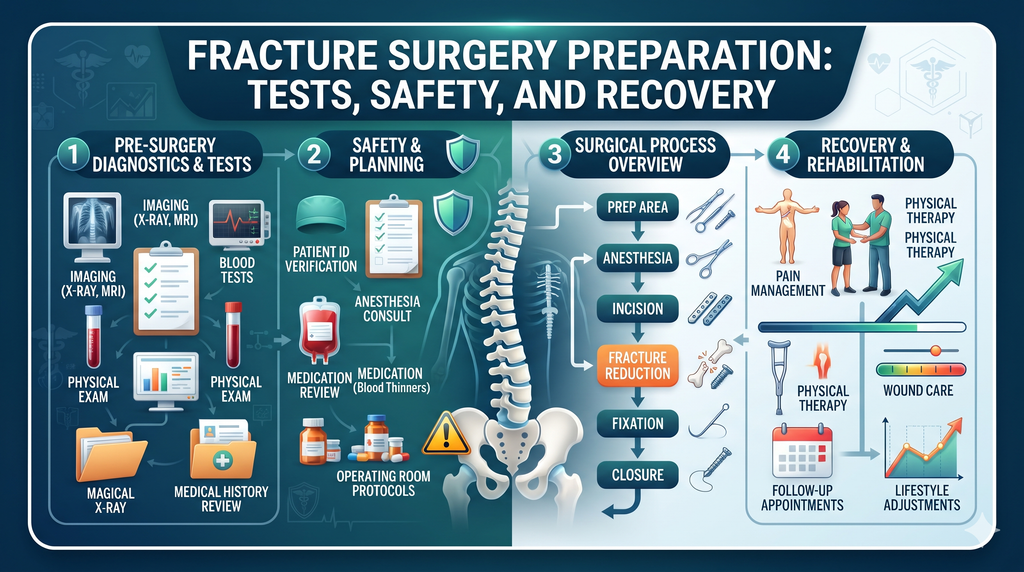
Introduction
A fracture is a break or crack in a bone. Some fractures heal with a cast or splint. Others need surgery to help the bone heal in the right position.
Doctors check the type, location, and severity of each fracture. They also consider the patient’s age and general health. These details help the orthopedic team choose the right treatment.
Preparing for fracture surgery can make the process easier. Patients need to understand their procedure, medicines, tests, and recovery plan. Good preparation also helps the hospital team provide safe care.
BestOrthoHospitals can be explored for general information about orthopedic hospitals and care. Patients should confirm all treatment details directly with their chosen hospital and surgeon.
What Is Fracture Surgery?
Fracture surgery is an operation to repair a broken bone. It helps bring the broken parts into the right position. It may also keep them stable while they heal.
Surgeons may use special devices to hold the bone in place. These devices are part of a method called internal fixation.
Common devices include:
- Plates: Metal pieces fixed along the bone.
- Screws: Small devices that hold broken bone parts together.
- Rods: Metal supports placed inside certain bones.
- Pins: Thin metal pieces used to hold bone parts in place.
Not every broken bone needs surgery. Some fractures heal well with a cast, brace, or splint. The doctor chooses treatment after checking the injury.
Common Types of Fractures That May Need Surgery
Some fractures are more complex than others. Their shape and position may affect the treatment plan.
- Displaced fracture: The broken bone ends have moved out of their normal position.
- Comminuted fracture: The bone has broken into several pieces.
- Open fracture: The injury has an open wound that connects with the fracture.
- Joint fracture: The break extends into a joint.
- Unstable fracture: The bone may not stay in the right position without support.
- Complex fracture: The injury may affect nearby tissues, joints, or other structures.
These fractures may need surgery, but the decision is not the same for everyone. The orthopedic surgeon checks the injury and explains the safest treatment options.
An open fracture needs urgent medical care. It may carry a higher risk of infection. Do not try to push a bone back into place.
When Is Fracture Surgery Needed?
Doctors consider surgery when a broken bone cannot stay in a good position. Surgery may also help restore joint movement and bone stability.
It may be recommended when:
- The bone ends have moved far apart.
- The fracture has many broken pieces.
- The injury affects a joint surface.
- The bone is unstable.
- The fracture is open.
- The bone has not healed as expected.
Doctors use X-rays to check the bone’s position. A CT scan may help show complex injuries in more detail.
Age, health, and daily activity needs may also affect treatment. For example, an older adult may need a different recovery plan from a young athlete.
The surgeon should explain why surgery is being considered. Patients can ask about other treatment options and the expected benefits.
Medical Assessment Before Fracture Surgery
Before surgery, the team reviews the injury and the patient’s health. This helps them plan the operation and reduce avoidable risks.
The assessment may include:
- Medical history: The doctor asks about health conditions and past treatments.
- Physical examination: The injured area is checked for swelling, pain, and movement.
- Circulation checks: The team checks blood flow to the injured arm or leg.
- Movement and sensation checks: They assess movement and feeling near the injury.
- X-rays: These images show the bone and its position.
- CT scans: These may help with complex fractures.
- Blood tests: These may be needed to check general health or prepare for surgery.
- ECG: This test records the heart’s electrical activity. It may be needed for selected patients.
Not everyone needs every test. The tests depend on the patient’s health and the planned operation.
Tell the team about any new symptoms before surgery. A recent fever or infection may affect the care plan.
What Patients Should Tell Their Surgeon
Clear health information helps the surgical team plan safe care. Share details even if they seem unrelated to the broken bone.
Tell your surgeon about:
- Existing health conditions.
- Previous operations.
- Past problems with anesthesia.
- Known medicine or food allergies.
- All prescription medicines.
- Pain medicines and over-the-counter drugs.
- Vitamins, herbal products, and supplements.
- Blood thinner use.
- Diabetes or high blood pressure.
- Smoking and alcohol use.
- Recent fever, infection, or other new health problems.
Bring a written list of your medicines. Include the names and doses when possible.
Do not hide health details because you fear a delay. Your team needs accurate information to make safe decisions.
Medication Safety Before Fracture Surgery
Some medicines can affect bleeding, blood sugar, or anesthesia. Your doctor needs to review them before surgery.
Pay special attention to:
- Blood thinners: These medicines may increase bleeding risk.
- Diabetes medicines: Some may need changes around surgery.
- Pain medicines: The team should know what you take.
- Supplements: Some vitamins and herbal products may affect bleeding or other medicines.
- Blood pressure medicines: Your team will advise which ones to take.
Never stop a prescribed medicine on your own. Do not change a dose unless your doctor tells you to.
Ask for clear instructions about medicines on the day of surgery. If you are unsure, contact the hospital before taking or skipping a dose.
Fasting and Food Instructions Before Surgery
Patients may need to stop eating or drinking before anesthesia. This is called fasting.
Fasting helps reduce the risk of stomach contents entering the lungs during anesthesia. This can be dangerous.
Your hospital will give you exact instructions. The timing may depend on the operation, anesthesia, and your health.
Before surgery:
- Ask when you must stop eating.
- Ask when you must stop drinking.
- Check whether you can take certain medicines with a small sip of water.
- Follow any special instructions from the anesthesia team.
- Tell the team if you have diabetes or other conditions that affect eating and drinking.
Do not follow a fasting schedule from another patient or website. Instructions can differ between procedures.
If you accidentally eat or drink after the stated time, tell the hospital team. Do not hide it. They will decide what should happen next.
Understanding Anesthesia for Fracture Surgery
Anesthesia helps prevent pain during an operation. The anesthesiologist reviews your health and helps choose a suitable method.
Common options include:
- General anesthesia: You are unconscious during the operation.
- Regional anesthesia: Medicine numbs a larger area of the body.
- Local anesthesia: Medicine numbs a small area. It may suit selected minor procedures.
- Nerve block: Medicine is placed near a nerve to reduce pain in a specific area.
The right choice depends on the fracture and the planned surgery. Your health and past anesthesia experiences also matter.
Tell the anesthesiologist about allergies and previous reactions. Ask what you may feel before and after the procedure.
The team will monitor you during surgery. They will check your breathing, heart rate, and other vital signs.
Preparing for Hospital Admission
Planning ahead can make hospital admission less stressful. Ask the hospital what you need to bring.
Useful steps include:
- Confirm your admission time and location.
- Carry identification and required medical documents.
- Bring X-rays, scan reports, and test results.
- Pack comfortable, loose clothing.
- Carry a list of medicines and allergies.
- Bring basic personal care items.
- Arrange help from a family member or caregiver.
- Avoid bringing valuable items.
- Ask about the expected hospital stay.
- Confirm how you will return home after discharge.
You may need help with walking or daily tasks after surgery. Arrange support before admission when possible.
What Happens on the Day of Fracture Surgery?
The hospital team will guide you through each step. The exact process may differ between hospitals and operations.
Usually, the day includes:
- Registration: Staff confirm your details and admission.
- Health checks: The team reviews your medical history and test results.
- Surgical site check: The correct patient, procedure, and body part are confirmed.
- Consent: The surgeon explains the operation, possible risks, and expected benefits.
- Anesthesia preparation: The anesthesiologist checks your health and discusses the plan.
- Monitoring: Staff check your vital signs before and during surgery.
- Operation: The surgeon repairs the fracture using the planned method.
- Recovery room: Staff watch you as you wake from anesthesia.
The length of surgery and hospital stay depends on the injury and treatment. Your team can explain what to expect in your case.
Ask questions if anything is unclear before signing the consent form.
Possible Risks of Fracture Surgery
Fracture surgery can help repair a broken bone. However, every operation has possible risks.
These may include:
- Infection: Germs may enter the wound or deeper tissues.
- Bleeding: Some blood loss may occur during surgery.
- Blood clots: Clots may form in the legs or other areas.
- Anesthesia problems: Some patients may have reactions or breathing problems.
- Nerve or blood vessel injury: Nearby structures may be affected.
- Delayed healing: The bone may take longer than expected to heal.
- Poor bone alignment: The bone may heal in the wrong position.
- Joint stiffness: Movement may become limited after the injury or operation.
- Another procedure: Some patients may need further treatment.
The risks depend on the fracture, operation, and patient’s health. Smoking, certain health conditions, and the injury itself may affect healing.
Ask your surgeon which risks matter most in your case. Also ask how the team will help prevent or manage them.
Planning for Recovery Before Surgery
Recovery planning should begin before the operation. This helps patients manage daily needs after leaving the hospital.
Consider these steps:
- Arrange help with cooking, bathing, and dressing.
- Prepare a safe place to rest.
- Keep water, medicines, and other items within easy reach.
- Remove loose rugs and objects that may cause falls.
- Arrange transport for follow-up visits.
- Ask whether you may need crutches, a walker, or a wheelchair.
- Plan time away from work or school.
- Discuss when physical therapy may begin.
- Ask how to care for the wound.
Your needs will depend on the injured bone. A broken leg may affect walking, while an arm fracture may affect dressing or cooking.
Ask your care team what help you may need at home.
What to Expect After Fracture Surgery
Pain and swelling are common after fracture surgery. Your team may provide medicine and other ways to manage discomfort.
You may need a cast, splint, or brace. These supports help protect the injured area while it heals.
Your surgeon will explain:
- How to care for the wound.
- When to change or protect the dressing.
- Which pain medicines to use.
- How much weight you may place on the injured leg.
- When you can move the injured arm or leg.
- When to begin physical therapy.
- When to return for follow-up checks.
Some patients need follow-up X-rays. These help doctors check bone healing and the position of any plates or screws.
Do not rush back to normal activity. Follow the movement and weight-bearing limits given by your surgeon.
Warning Signs After Surgery
Some discomfort is expected after an operation. However, certain symptoms may signal a problem.
Contact your surgical team promptly if you notice:
- Increasing pain or swelling.
- Fever or chills.
- Redness, warmth, or discharge around the wound.
- New numbness or weakness.
- Fingers or toes that become cold, pale, or blue.
- Severe calf pain or swelling.
These signs may need urgent assessment. Do not wait if symptoms are getting worse.
Call emergency services or seek emergency care for sudden chest pain, severe breathing difficulty, or signs of serious blood flow problems.
Follow the discharge instructions and keep the hospital’s contact details nearby.
How to Choose the Right Hospital for Fracture Surgery
Choosing a suitable hospital is an important part of care. Patients should check whether the hospital can meet their treatment needs.
Consider these points:
- Qualified orthopedic surgeons: Check the surgeon’s training and experience.
- Fracture experience: Ask about experience with your type of injury.
- Operating facilities: Confirm that suitable surgical equipment is available.
- Anesthesia services: Ask who will manage anesthesia and monitoring.
- Infection control: Learn how the hospital reduces infection risks.
- Emergency support: Ask about emergency care and blood bank support when needed.
- Imaging facilities: Check access to X-rays and other scans.
- Rehabilitation: Ask whether physiotherapy support is available.
- Discharge guidance: Check whether written home-care instructions are provided.
- Follow-up care: Understand how future visits and X-rays will be arranged.
Compare hospitals based on your needs, not advertisements alone. Ask for clear details about costs, facilities, and the proposed treatment.
How BestOrthoHospitals Can Help Patients
BestOrthoHospitals.com can be explored for general information about orthopedic hospitals. Patients can use such information as a starting point when learning about fracture care.
Before choosing a hospital, confirm important details directly with its staff. Ask about surgeon qualifications, available facilities, treatment costs, and follow-up care.
Discuss your injury and treatment choices with a qualified orthopedic surgeon. Online information cannot replace a medical examination or a personal treatment plan.
Fracture Types and Possible Surgical Needs
The table below explains common fracture types and possible treatment choices. The final plan depends on medical assessment.
| Fracture Type | What It Means | Possible Treatment | Important Consideration |
|---|---|---|---|
| Displaced | Bone ends have moved out of position | Realignment, casting, or surgery | The amount of movement affects treatment |
| Comminuted | Bone has broken into several pieces | Surgery may use plates, screws, or rods | The number and position of pieces matter |
| Open | Fracture connects with an open wound | Urgent wound care and possible surgery | Infection risk needs careful attention |
| Joint | Break extends into a joint | May need surgery to restore joint alignment | Joint movement and surface shape matter |
| Unstable | Bone may not stay in the right position | Support with a cast or surgical fixation | Doctors assess whether the bone can remain stable |
Fracture Surgery Preparation Checklist
Use this checklist to discuss your preparation with the hospital team. Follow the instructions given for your own operation.
| Preparation Stage | What Patients Should Do | Why It Matters |
|---|---|---|
| Medical history | Share health conditions, allergies, and past operations | Helps the team plan safe care |
| Medicine review | Provide a full medicine and supplement list | Helps prevent medicine-related problems |
| Medical tests | Complete the tests ordered by the team | Checks health and supports surgical planning |
| Fasting instructions | Follow the exact eating and drinking times given | Helps reduce anesthesia-related risks |
| Hospital documents | Carry identification, reports, scans, and test results | Helps staff review your care |
| Transport | Arrange a safe way to reach and leave the hospital | Supports safe admission and discharge |
| Home preparation | Clear walking paths and arrange daily help | Reduces falls and makes daily tasks easier |
| Recovery planning | Ask about wound care, movement, and follow-up visits | Helps you prepare for healing |
Frequently Asked Questions
1. Why do some fractures need surgery?
Some fractures are unstable or badly displaced. They may not heal in the right position with a cast alone. Surgery can help restore bone alignment and hold the broken parts in place. The orthopedic surgeon decides based on the fracture, nearby tissues, and the patient’s health.
2. What tests are done before fracture surgery?
Tests may include X-rays, a physical examination, and blood tests. A CT scan may be needed for complex fractures. Some patients may also need an ECG or other health checks. The doctor chooses tests based on the injury, planned operation, and medical history.
3. Should patients stop medicines before fracture surgery?
No medicine should be stopped without medical advice. Some medicines, such as blood thinners or diabetes medicines, may need special instructions. Tell your team about all prescription drugs, pain medicines, vitamins, and supplements. Follow the exact plan given by your surgeon or anesthesiologist.
4. How long should patients fast before fracture surgery?
Fasting times depend on the operation, anesthesia, and the patient’s health. The hospital will tell you when to stop eating and drinking. Follow those exact instructions. Ask whether you can take regular medicines with a small sip of water. Tell the team if you accidentally eat or drink.
5. What types of anesthesia are used for fracture surgery?
Fracture surgery may use general, regional, or local anesthesia. A nerve block may also help control pain in a specific area. The anesthesiologist reviews your health, allergies, and past experiences before choosing a suitable method. Ask what to expect before and after anesthesia.
6. What should patients bring to the hospital?
Bring identification, medical records, X-rays, scan reports, and test results. Carry a list of medicines and allergies. Pack comfortable clothing and basic personal items. Ask the hospital about any extra documents. Arrange help from a family member or caregiver when possible.
7. What are the possible risks of fracture surgery?
Possible risks include infection, bleeding, blood clots, and anesthesia problems. Nearby nerves or blood vessels may also be affected. Some bones heal slowly or in the wrong position. Risks vary by injury and health. Ask your surgeon which risks apply to your operation.
8. How long does recovery from fracture surgery take?
Recovery time depends on the bone, type of fracture, and operation. Age and general health can also affect healing. Some patients need weeks of support, while others need longer rehabilitation. Follow-up visits and X-rays help the doctor check progress. Your surgeon can give a more personal estimate.
9. When can patients start walking after fracture surgery?
This depends on the injured bone and how well it has been repaired. Some patients can walk with support soon after surgery. Others must avoid putting weight on the injured leg for a period. Follow your surgeon’s instructions before standing or walking.
10. How can patients prepare their homes for recovery?
Clear loose rugs and objects from walking paths. Keep medicines, water, and daily items within easy reach. Arrange help with meals, bathing, and dressing if needed. Prepare a safe place to rest. Ask whether you need crutches, a walker, or other support before discharge.
Final Thoughts
Knowing how to prepare for fracture surgery can make the process clearer and safer. Share your full medical history and medicine list. Follow the exact fasting and medication instructions from your care team.
Plan for hospital admission and arrange support at home. Ask about anesthesia, possible risks, wound care, and rehabilitation. Every fracture is different, so recovery plans must match the injury.
Stay in touch with your orthopedic team throughout treatment. Follow their advice and attend all follow-up visits. Careful preparation can help you take each step with greater confidence.